



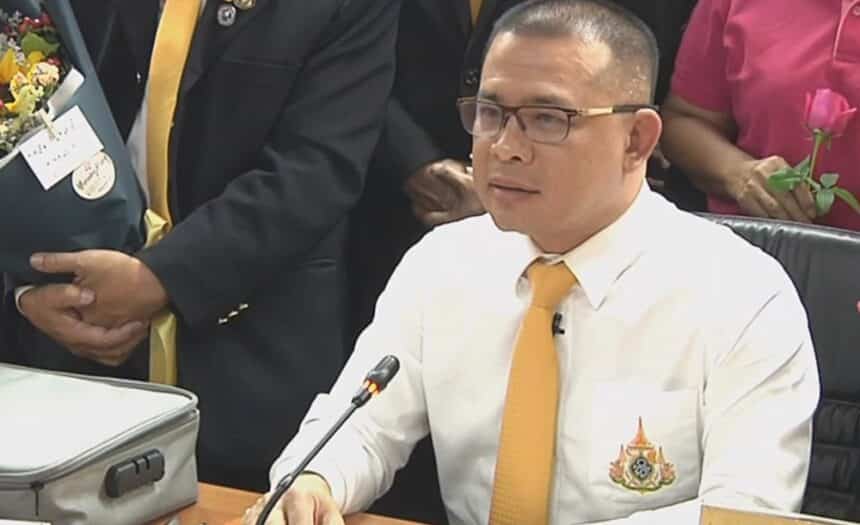
BANGKOK – The Criminal Court has handed down one of Thailand’s toughest fraud sentences in recent years, targeting businessman Prasit Jeawkok and those tied to his scheme. Prasit, who once promoted himself as a generous tycoon and called himself the “Jack Ma of Thailand”, received a headline-grabbing 1,210-year prison sentence for running unlawful loan operations that fooled hundreds of people.
The ruling follows a long investigation into lending and investment activities carried out through companies linked to Prasit. Prosecutors said Prasit and his co-defendants, including an associate named Wimgrit and two company entities, worked together to commit public fraud, breach the Public Borrowing Act, and violate the Computer Crime Act.
According to the court, victims were drawn in through online adverts and word-of-mouth referrals. They were told they could earn high returns through loan and investment offers that looked legitimate on the surface.
Behind the marketing, prosecutors said, was an illegal public borrowing operation that lacked proper approval. Money was collected from people across Thailand, many of whom believed they were joining a safe and profitable scheme.
During the trial, multiple complainants described losing large sums. Total losses ran into the hundreds of millions of baht.
The court found Prasit guilty on 242 counts of fraud. Each count carried a five-year term, which added up to 1,210 years. The two companies involved were each fined 121 million baht at first. The court later reduced those fines to around 80 million baht after partial admissions and co-operation during proceedings.
Why Prasit’s Sentence Won’t Mean 1,210 Years in Prison
Even though the total sentence is huge on paper, Thai law limits how long someone can actually serve for this type of case. Under the Penal Code, the maximum enforceable prison term for multiple fraud convictions is 20 years.
That means Prasit and Wimgrit will each serve no more than 20 years, even though the court listed a much larger total to reflect the number of offences. This approach has appeared in other major Thai fraud cases. It allows the court to show the scale of harm without imposing a prison term that goes beyond legal limits.
Prasit has faced major fraud convictions before. In July 2023, the same court sentenced him to 1,155 years in prison in a separate investment scam, also capped at 20 years. That case involved more than 300 victims and claims about very high returns linked to luxury goods rentals, tour packages, and co-operative style ventures. Compensation orders topped 1 billion baht, showing the heavy impact on everyday people who trusted his public image.
A native of Krabi, Prasit built a reputation as a self-made billionaire and promoted charitable projects such as “Kuen Khun Pandin” (Paying Back the Land). He attracted celebrity support and presented himself as a patriotic giver. Investigators later described a very different picture, including hard-selling online promotions, claims of 40 to 50 percent annual returns, and a collapse once payouts stopped.
Victims Speak of Broken Trust
His name drew even more attention after a dramatic incident in 2022 at the Criminal Court. Authorities alleged he tried to escape by changing clothes, adding a fake moustache, and removing ankle restraints during a toilet break. The episode triggered checks into whether anyone helped him from the inside.
Many victims attended court to hear the verdict. Several appeared distressed as the judge set out how the fraud worked. One complainant, a retired teacher who said she lost her life savings, told reporters outside that she believed his claims about helping the country. She said families had suffered because of greed.
Financial literacy groups have pointed to the case as a clear warning as online investment scams increase in Thailand. Officials continue to urge the public to check any investment or lending offer with the Securities and Exchange Commission (SEC) or the Bank of Thailand before handing over money.
Prasit and the other defendants can still challenge the ruling. Under Thai procedure, an appeal must be filed within 30 days with the Court of Appeal, and the case can later reach the Supreme Court.
What the Case Means for Thailand’s Fraud Crackdown
Given Prasit’s past approach in court, an appeal is expected. His legal team has previously claimed the cases were politically driven, an argument the court rejected. Even if the appeal process takes time, Prasit remains in custody at Bang Kwang Central Prison, and earlier capped sentences already mean he faces a long time behind bars.
The verdict adds to a growing list of strong court responses to public fraud, especially schemes promoted through online channels. Thailand has seen other massive combined sentences in cases tied to pyramid operations and call-centre gangs, with prison time still capped under the law.
Consumer protection bodies welcomed the decision and renewed calls for tighter action against unlicensed lending. A spokesperson linked to the Economic Crime Suppression Division said cases like Prasit’s damage public confidence in genuine investments.
As Thailand continues its post-pandemic economic recovery, high-profile convictions like this send a clear warning. Promises of easy money can carry serious consequences for those running the schemes, and the courts are prepared to impose tough penalties.