


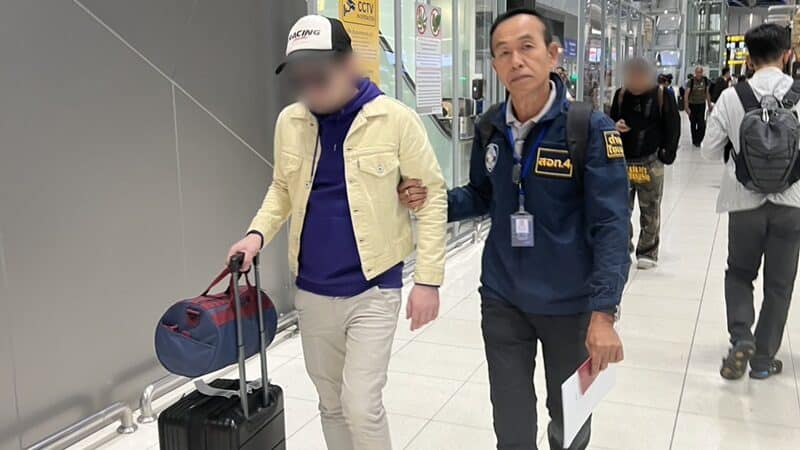
BANGKOK – Thai cybercrime police arrested a 31-year-old Russian national, identified only as Gabriel, at Suvarnabhumi Airport on Friday evening. Officers say he led a complex online investment scam that tricked Thai victims.
The arrest was made by the Technology Crime Suppression Division (Cybercrime Police). It adds to Thailand’s growing push against cross-border cyber fraud groups, many of which have used the country to plan and run scams.
Cybercrime Police stopped Gabriel after he arrived at Suvarnabhumi Airport, Bangkok’s main international airport. Officers said he was detained calmly, then taken in for questioning.
Investigators believe he had been living in Chonburi, east of Bangkok, using a student visa. Since 2023, he has travelled in and out of Thailand often. Police suspect those trips helped him run scams while staying under the radar.
Romance Message Leads to Investment Scam
The investigation began with a complaint filed in 2023 by a businessman from Nakhon Sawan. He told police he was fooled after starting an online relationship with someone posing as an attractive woman.
According to investigators, the scammer built trust over time, then pushed him towards short-term gold trading through a fake platform called “ATFX”. The pitch promised high returns with low risk.
Police say Gabriel led the group behind this kind of “pig butchering” scam, where victims are drawn in with attention and affection, then pressured into sending money. The victim lost a large amount, but officials did not share the exact figure.
Authorities say the case reflects a wider pattern. Foreign nationals have used Thailand’s visa routes to set up scams aimed at both locals and foreigners. Many schemes start on social media or dating apps, then shift into investment offers.
In November 2025, cyber police arrested another Russian, 34-year-old Pavel, in a luxury condominium in Bangkok. He was accused of taking more than 11.6 million baht from a 70-year-old Thai businesswoman through a similar investment trick. Earlier in the year, police also broke up groups including Chinese, Taiwanese, and Australian suspects, accused of running boiler-room fraud from rented homes around Bangkok.

Cybercrime Pressure Continues Across Thailand
Thailand has become both a target and a base for cybercrime across Southeast Asia. From January to November 2025, authorities logged nearly 887,000 cybercrime complaints, with losses reported at more than 89 billion baht (about $2.6 billion USD).
Investment and romance scams remain among the most common. Many are tied to cross-border networks linked to border areas in Myanmar and Cambodia. Police also say more cases now involve foreigners operating inside Thailand on long-stay visas.
Earlier this month, a major crackdown led to more than $300 million in assets being seized. Police also issued 42 arrest warrants aimed at scam networks linked to Chinese-Cambodian tycoons. Separate nationwide raids in November led to more than 300 arrests, including suspects tied to mule accounts and mixed scam methods.
The Thai government has stepped up its response. Measures include limits on SIM card ownership to reduce untraceable numbers, the freezing of thousands of suspect bank accounts, and joint work with international partners such as Interpol and the FBI.

International Support Helps Track Suspects
Police say Gabriel’s arrest shows how much intelligence sharing matters. While key details have not been released, investigators suggested that victim reports and digital tracing helped identify him before he arrived at the airport.
Other high-profile arrests in 2025 included a Chinese fugitive detained at Suvarnabhumi Airport with a fake passport, linked to a billion-baht scam. Several Russians were also arrested on hacking and fraud claims.
A TCSD spokesperson warned that Thailand must stay alert to protect its reputation as a safe place for tourists and expats. The spokesperson said these groups take advantage of the country’s openness, but added that Thailand will not be a safe refuge for scammers.
Gabriel now faces charges that include public fraud, entering false data into computer systems, and involvement in a transnational criminal organisation. Police are checking seized devices for possible links to other victims and additional suspects.
As the case moves forward, authorities are urging the public to check online investment offers carefully and report suspicious contacts through Thai Police hotlines and official online channels.
The arrest is the latest sign that Thailand is increasing pressure on cybercrime groups, even as scam tactics keep changing.