



Last Updated on August 25, 2026 by Jeff Tomas
BEIJING – Typhoon Narra has brought the busy region of southern China to a complete and sudden standstill this week. The incredibly powerful storm unleashed torrential rain and devastating flash floods across many densely populated areas.
Fast-moving floodwaters quickly swallowed entire residential neighborhoods and completely blocked several important transportation routes. As a result, tens of thousands of terrified residents had to flee their homes to find immediate safety.
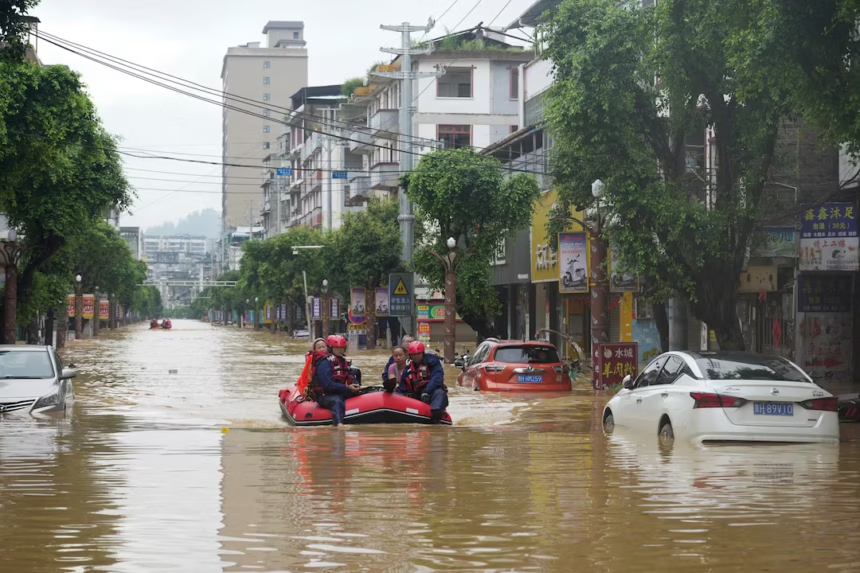
The Chinese government sprang directly into swift action as the dangerous weather conditions rapidly worsened. Emergency teams quickly relocated around 54,000 people from the hardest-hit locations of Guangxi province. Brave rescue workers paddled small rubber boats through knee-deep brown water to save stranded families. Right now, dedicated local officials are tirelessly working around the clock to prevent further loss of human life.
Key Takeaways
- Typhoon Narra forced the urgent and necessary evacuation of over 54,000 residents in southern China due to extreme flooding.
- Heavy and constant rains pushed water levels in 15 different rivers well above their dangerous early warning limits.
- The severe weather caused widespread regional travel chaos and even delayed a major lunar space launch in Hainan.
Cities Underwater as Rivers Overflow
The sheer volume of constant rainfall has easily overwhelmed many local city water management systems. Water levels at 20 different monitoring stations across 15 important rivers have dangerously passed critical warning limits. In the flooded city of Chongzuo, aerial videos show murky waters completely taking over the busy city streets. Abandoned cars and the first floors of small commercial buildings are completely hidden under the destructive murky waves.
Scared families had very little time to pack their essential bags before the dangerous waters rushed in. Many heartbroken residents watched helplessly as their precious personal belongings floated away right from their living rooms. First responders have quickly set up large temporary shelter camps on higher ground for those who lost everything. The sudden and forced displacement has left many innocent people feeling highly anxious about what the future holds.
Local hardworking farmers are also facing a massive and incredibly heartbreaking crisis due to the powerful storm. The relentless heavy rains have deeply flooded thousands of acres of highly important agricultural crop fields. This widespread environmental destruction could easily lead to severe food shortages and much higher prices in local markets. Rebuilding these vital rural farming communities will likely take many long months of intense and dedicated hard work.
Determined city officials are doing their absolute best to properly manage the constantly growing flood crisis. They have aggressively deployed hundreds of heavy-duty water pumps to actively clear the deeply flooded main roads. However, the continuous heavy rain makes it almost completely impossible to make any real or lasting progress. Local people are being strongly urged to stay far away from unstable riverbanks and dangerous low-lying valleys.
A Storm Refusing to Leave
Typhoon Narra is quickly proving to be a very stubborn and highly dangerous tropical weather system. Instead of moving quickly over the land, the massive storm completely stalled directly over the Beibu Gulf. This unusually slow movement means that the heavy rain just keeps falling on the exact same flooded areas. Meteorological experts confidently say the constant torrential downpours are making the regional flooding much worse than usual.
The China Meteorological Administration had to quickly raise its official weather emergency response to Level 3. This serious upgrade effectively means the national government is taking the threat very seriously and sending more help. Fangchenggang city officially recorded a staggering 15.9 inches of rain in a very short and condensed amount of time. Local authorities fully expect the heavy and destructive rains to continue punishing the southern region for several more days.
The surprisingly powerful storm has completely messed up the busy region’s highly important public transportation networks. Dangerous mudslides and extremely deep water forced transportation officials to suspend multiple passenger train services through Thursday. Major connected highways between big cities are currently completely blocked by thick slippery mud and heavy fallen trees. People desperately trying to travel or escape are currently finding themselves completely stuck with absolutely nowhere to go.
Regional local airports have also officially canceled dozens of scheduled flights due to the absolutely terrible weather conditions. Thousands of stranded passengers are uncomfortably sleeping on airport floors, simply hoping for a quick break in the rain. Airline officials publicly say it could easily take several long days to fully clear the massive backlog of delayed flights. Commercial travel directly in and out of flooded southern China has basically ground to a complete and total halt.
Space Missions and Daily Life Disrupted
The extreme local weather is even heavily affecting China’s highly ambitious and very important national space program. Government officials had to suddenly delay the planned launch of the uncrewed Chang’e-7 lunar mission this week. The advanced spacecraft was originally supposed to quickly lift off from the busy Wenchang Space Launch Site in Hainan. However, the exceptionally high winds and pouring heavy rain made it far too dangerous to safely fly into space.
Widespread power outages are another really major problem for the scared and isolated people currently left behind. Tens of thousands of flooded homes are currently sitting in the pitch dark without basic electricity or running water. Utility repair crews cannot safely fix the heavily broken power lines until the torrential rains finally stop. Trapped families are completely relying on small emergency flashlights and battery radios to get vital local storm updates.
Public schools and local businesses across flooded Guangxi province currently remain tightly closed for absolute community safety reasons. The protective local government has strongly ordered all civilian people to stay inside and avoid any unnecessary dangerous travel. Regional hospitals are constantly running on noisy backup generators to keep critical life-saving machines working for sick patients. Almost everyone is nervously holding their breath, just anxiously waiting for the dangerously dark skies to finally clear up.
Clean drinking water supplies are also quickly becoming a truly major concern for exhausted local public health workers. The dirty floodwaters very often mix with raw sewage, heavily contaminating the regular municipal tap water supply systems. Brave volunteers are quickly rushing to safely distribute thousands of heavy bottled water cases to the affected shelter camps. Staying properly healthy and hydrated during this massive disaster is rapidly becoming much harder for absolutely everyone involved.
Part of a Troubling Weather Trend
Typhoon Narra is certainly not an isolated or incredibly rare tropical weather event for the busy region this year. It is actually the 19th powerful typhoon to officially form in the western Pacific during this highly active season. That surprisingly high number is actually nine massive storms higher than the usual historical average for this specific time. Top weather experts strongly believe that prevailing El Niño conditions are directly driving these incredibly frequent and powerful storms.
Southern China is still desperately trying to fully heal from previous terrible natural disasters that happened quite recently. Just last month, the massive Typhoon Maysak brought very similar and incredibly destructive flooding to the rural Guangxi region. That severely devastating storm tragically killed 159 innocent people and directly affected over 1.6 million struggling residents. Having yet another massive storm brutally hit so soon is pushing critical local emergency resources to the absolute limit.
Global climate scientists strongly warn that we might easily see far more dangerous storms like this in the future. Noticeably warmer ocean temperatures directly provide extra dangerous energy that simply makes seasonal typhoons much stronger and wetter. Vulnerable coastal cities will urgently need to thoughtfully build much better drainage systems to handle these massive amounts of water. Actively preparing for highly extreme weather events is very quickly becoming a completely necessary part of modern daily life.
Concerned governments around the entire world are watching the unfolding situation in southern China very closely right now. Many vulnerable countries are suddenly realizing that their own coastal towns are simply not ready for such massive floods. Openly sharing successful rescue tactics and effective disaster plans is becoming increasingly more important for general international public safety. The difficult lessons learned from surviving Typhoon Narra could eventually help save many precious lives somewhere else entirely.
The Long Road to Recovery
When the dark and dangerous floodwaters finally recede, the truly hard work will officially begin for southern China. Safely cleaning up the thick, smelly mud and sharp debris from ruined homes will take an army of volunteers. Dedicated health officials will also need to watch very closely for dangerous diseases that spread through dirty, stagnant water. Ensuring totally easy and reliable access to perfectly clean drinking water remains the absolute top priority for the coming weeks.
The overall financial cost of surviving Typhoon Narra will be absolutely massive and deeply painful for the local economy. The busy government will have to spend millions of dollars quickly repairing severely broken roads, public bridges, and essential railways. Struggling small business owners will deeply need immediate financial loans and government grants to quickly replace their completely ruined inventory. It will certainly take a massive, highly united, and dedicated joint effort to get the local economy successfully running again.
Despite the incredibly painful ongoing tragedy, the enduring spirit of the resilient local people remains incredibly strong and inspiring. Generous neighbors are selflessly sharing warm food and extra medical supplies with those who lost everything in the awful flood. Extremely brave rescue workers proudly continue to heavily risk their own lives every single day to save total strangers. This incredibly strong community bond will definitely be essential as the damaged region slowly rebuilds from the muddy ruins.


