



CHIANG RAI – Police arrested three suspected drug traffickers at the Chiang Rai Bus Terminal 2 as they were about to board a coach, each carrying luggage. A fourth suspect was later detained at a house.
On Friday, Pol Lt Gen Manop Senakool, Commander of Chiang Rai Provincial Police, and Pol Col Rattaphon Noichangkit, Deputy Commander, instructed Pol Lt Col Kriangsak Thongsiri, Superintendent of Chiang Rai City Police, to lead an operation that resulted in the arrest of Mr Phongsak, Ms Phirunphorn (both from Phetchabun Province), and Mr Ratchata (from Chiang Rai Province).
Officers seized 1 million methamphetamine tablets and 1 kilogram of crystal meth. The arrests took place at Chiang Rai Bus Terminal 2.
The operation followed intelligence suggesting drugs were being moved into areas across Thailand. Officers checked coaches arriving at the terminal and noticed a car dropping off passengers with two suitcases before quickly driving away.
The team reported unusual behaviour and examined the suitcases, which felt heavier than expected. Officers asked Mr Phongsak and Ms Phirunphorn to open the luggage. Inside, they found 400,000 methamphetamine tablets and 1 kilogram of crystal meth.

Further enquiries led police to Mr Ratchata, described as the driver who delivered the drugs. He was arrested later at his home in Rob Wiang Subdistrict, Mueang Chiang Rai District, Chiang Rai Province. During the follow-up action, officers seized another 600,000 methamphetamine tablets.
He reportedly admitted collecting the drugs from Mae Sai District, splitting them into suitcases, and sending them by coach to other provinces. He said he planned to return to pick up the remaining drugs, but was arrested before he could do so. The suspects and seized narcotics were handed to the Mueang Chiang Rai Police Station for legal proceedings.
Chiang Rai Central Prison Raid
In the early hours of December 25th, Chiang Rai Central Prison became the focus of a major crackdown as Chiang Rai Province launched an operation called “Dawn at Doi Hang”. The search targeted drugs and banned items inside the prison, using a structured, step-by-step plan.
At 5.00 am at Chiang Rai Central Prison, Moo 3, Doi Hang Subdistrict, Mueang Chiang Rai District, Chiang Rai Province, Governor Chuchip Phongchai assigned Deputy Governor Rujtisak Rangsri to chair the opening of the first search operation of fiscal year 2026.

A total of 210 officers participated in the mission, drawn from multiple law enforcement agencies. The group included prison staff from Chiang Rai Central Prison, officers from Mueang Chiang Rai Police Station and Maeyao Police Station, soldiers from the 37th Military Circle, and representatives from the Chiang Rai Provincial Administrative Organisation.
The search lasted about one hour, from 5.30 am to 6.30 am. Teams carried out close checks of seven cell blocks and storage areas. More than 100 male and female inmates were randomly screened for drug use.
Deputy Governor Rujtisak Rangsri said Chiang Rai Central Prison presently holds 4,326 inmates, including 3,600 men and 690 women. Officers did not find drugs, drug users, or any prohibited items during the operation.
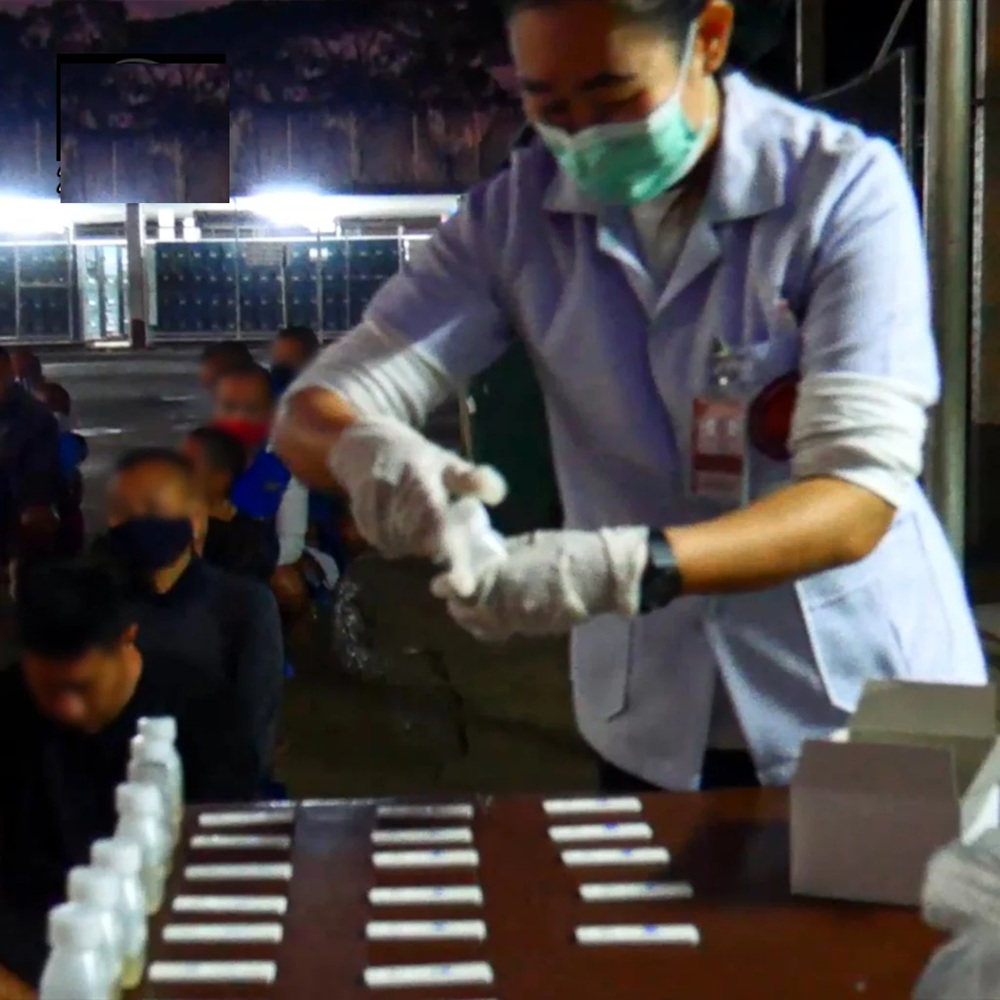
Authorities said the goal was to stop the prison from being used as a base for drug trafficking from inside, and to reassure the public that Chiang Rai Province and the Department of Corrections take prison control, supervision, and rehabilitation seriously, to help inmates return to society in a lasting way.
Phasaphong Jaikhlongkaew, Governor of Chiang Rai Central Prison, said the prison runs joint searches with outside agencies at least twice a year. This was the first joint search of fiscal year 2026. The Department of Corrections also sets a target of two joint searches each year across regional prisons.
Inside the prison, staff also carry out searches at least once a month without a fixed schedule, alongside daily random checks in each area. Over the past year, officials reported no illegal items or wrongdoing. Chiang Rai Central Prison said it will continue strict inspection measures to deter offences and support safety and transparency within the prison.