


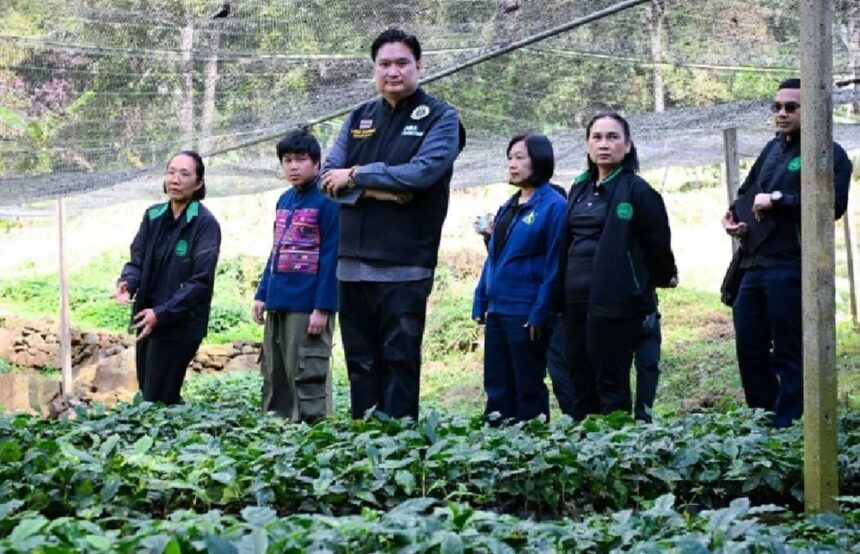
CHIANG RAI – On Sunday, Rapeepat Chantrasriwong, Director-General of the Department of Agriculture, visited the Chiang Rai Highland Agricultural Research and Development Centre to inspect the progress on the ground, with a clear plan to elevate the centre into an integrated Arabica coffee production centre of excellence. Sasiyya Phantan, Deputy Director-General, and a team of senior staff joined him.
The centre is also expected to support the “ one million coffee trees project”, which follows the policy direction set by General Thammanat Prompao, Deputy Prime Minister and Minister of Agriculture and Cooperatives.
The Director-General said Arabica coffee is a key cash crop for highland communities. Thailand currently has around 129,778 rai of Arabica coffee farms, covering more than 15,568 farming households. About 98% of these farms are in the Upper North, and Chiang Rai is the country’s largest Arabica growing area. Even so, national output still falls short of demand, which leads to imports of more than 80,000 tonnes each year.
Highland Arabica coffee farmers also face practical limits that hold production back. These include yield and crop efficiency, plot management, pest control, and post-harvest handling of coffee trees. Each issue affects bean quality and the final price.
Chiang Rai to Be Full-Cycle Model for Arabica Coffee
For this reason, the Department of Agriculture has chosen Chiang Rai as a pilot province to build a full-cycle model for high-quality coffee production. The plan is to use the model as a template for other areas over time, while reducing long-term reliance on imports.
With this approach, the Chiang Rai Highland centre is being set up as a working model across the whole Arabica coffee value chain, from upstream to downstream. Its work covers plant selection and propagation, farm management, pest and disease control, coffee processing, roasting, and product development. This supports the next phase of expanding the “1 million coffee trees in highland areas” programme.
A key part of the model is the promotion of Department of Agriculture-recommended coffee varieties, including Chiang Rai 1, Chiang Rai 2, and Chiang Mai 1. In parallel, the centre is developing and multiplying Geisha coffee, a high-grade Arabica coffee variety that is popular in the speciality coffee market and can command a higher value.
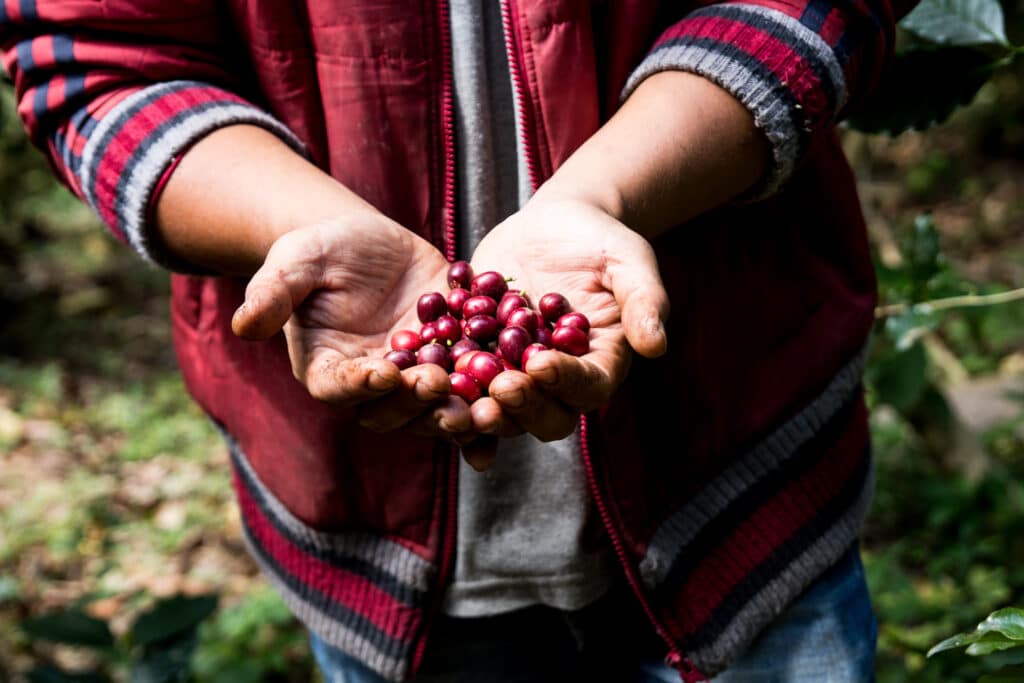
For pest management, the centre is using a biological control agent, Beauveria bassiana strain DOA-B18, to manage the coffee berry borer. This helps cut chemical pesticide use and supports bean quality. The centre is also developing practical tools for growers, such as a coffee bean colour chart that helps farmers pick cherries at the right ripeness, improving consistency and overall quality.
High-Quality Coffee for Global Markets
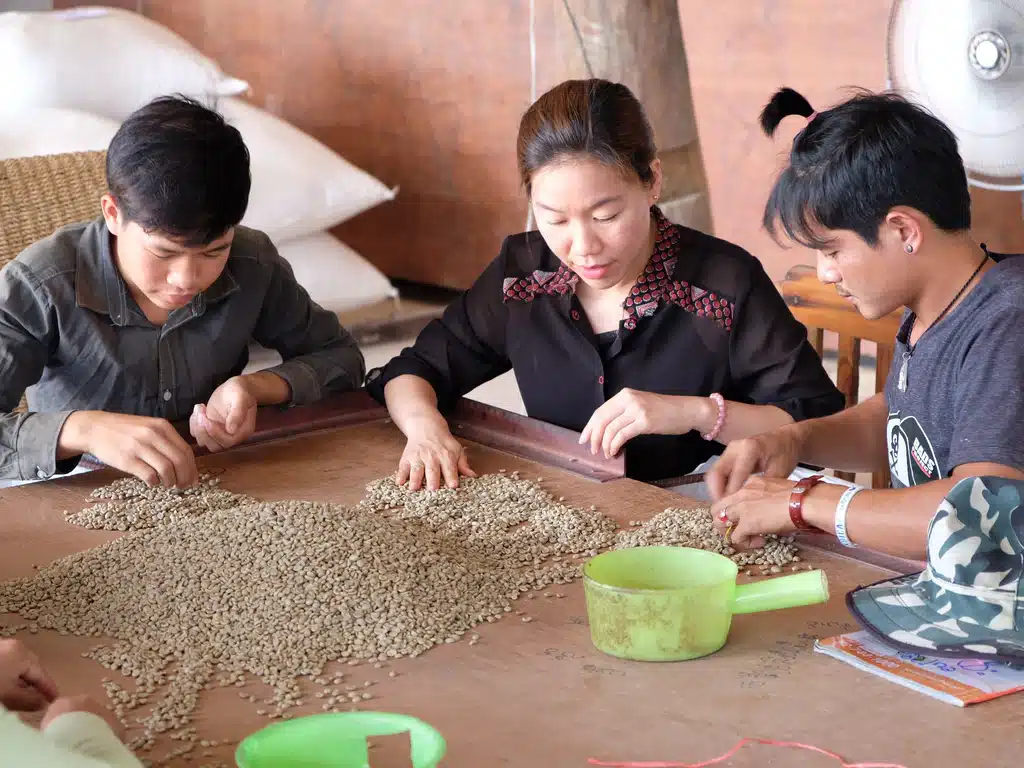
Post-harvest support is another focus. The centre has set up solar-powered coffee drying equipment, a coffee processing system, and a pilot roasting facility. These steps help add value to local produce, not just sell raw beans. The centre is also encouraging other high-value coffee tree crops suited to highland farming, such as macadamia, to make better use of available land and spread income sources for farming families.
The Director-General stressed that the Chiang Rai Highland centre must act as a hub for hands-on technology transfer.
The goal is for farmers to access the knowledge and apply it in real conditions, from Geisha coffee and macadamia propagation to producing high-quality coffee trees that meet standards, and moving towards more advanced processing. When this know-how is used in the field, the expected results are higher incomes, better coffee bean quality, and more stable livelihoods across highland communities.
The Department of Agriculture is also preparing to work with private sector partners, co-operatives, and local entrepreneurs. The aim is to support Thai high-quality coffee in global markets, reduce dependence on imports, and strengthen economic security for highland farmers, using practical, area-based planning that fits local crops and conditions.