





CHIANG RAI – On February 24, 2026, a community-led meeting took place at Laksanawann Hotel in Mueang Chiang Rai District. The focus was a public policy proposal tied to concerns about toxic contamination in the Kok River, Chiang Rai Province. Academic teams joined the session to share research findings and discuss next steps.
Dr. Siriwan Kantisin, a lecturer in Occupational Health and Safety at Mae Fah Luang University (School of Health Science), shared results from a study that collected nail samples from adults and hair samples from children.
The team gathered samples from four areas: Ban Tha Ton in Mae Ai District, Chiang Mai, Doi Hang in Mueang Chiang Rai District, Chiang Rai, Ban Saeo, and communities along the Kok River in Chiang Saen District, Chiang Rai. Lab analysis found arsenic accumulating in the participants’ bodies.
According to a Top News report, researchers randomly screened 90 people. They found 16 individuals with arsenic levels in nails above 0.5 milligrams per kilogram, or 17.78 percent.

Arsenic in Urine Samples
Some people with higher levels had started showing clinical symptoms, such as numbness in hands and feet, muscle weakness, skin irritation, abnormal skin color, thickened spots similar to calluses, breathing-related problems, and swollen feet.
Assistant Professor Satian Chantha from Chiang Rai Rajabhat University (Faculty of Science and Technology) said that detecting arsenic in nails and hair clearly suggests the body cannot fully eliminate the toxin.
Although Thailand still lacks a firm national threshold for when accumulated arsenic becomes dangerous, he said the findings can be compared with World Health Organization guidance and used to support public health policy.
He also urged the government to quickly verify the situation with more field investigations and to put clear response measures in place. In his view, the Ministry of Public Health and the Ministry of Interior should work together in a coordinated way.
He added that the Department of Disease Control had previously found arsenic in urine samples from residents along the Kok River, yet policy action has remained slow.
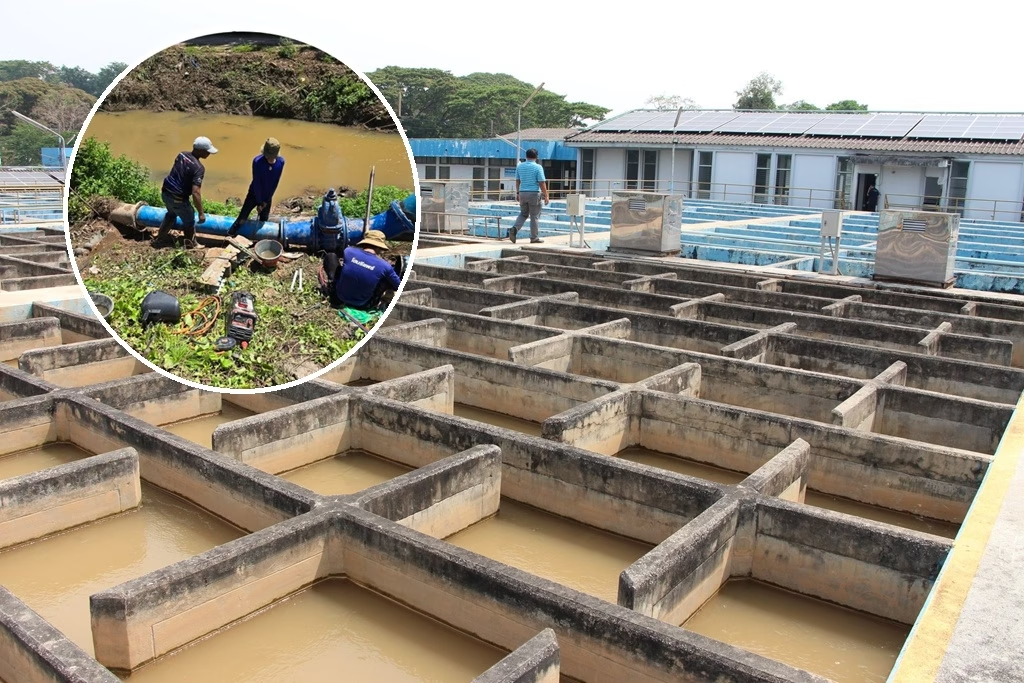
Kok River Water Treatment
Meanwhile, Somporn Pengkham, Director of the Institute for Health Impact Assessment System Development, said the research points to early-stage arsenic buildup. If exposure isn’t reduced, especially through contaminated water and food, more arsenic poisoning cases could appear later.
She highlighted rice grown in fields that use contaminated water as a major concern. As a result, she proposed listing “arsenic poisoning” as a monitored disease under the Occupational Diseases and Environmental Diseases Act (2019).
She also recommended strengthening the capacity of village water supply committees. This includes training on arsenic and heavy-metal treatment systems, plus regular water quality testing, so community tap water meets safety standards.
Seubsakul Kitnukorn, an academic from Mae Fah Luang University, raised concerns about inconsistent public statements on water quality from state agencies. He pointed to cases where agencies relied only on field test kits. He also warned that advising people to swim or do activities in the river could raise risk, because sediments containing heavy metals can spread into the water and nearby areas.
Overall, the academic group called for an official joint meeting that includes government agencies, Chiang Rai Province, researchers, local communities, and businesses. The goal is to agree on a clear direction and long-term measures to address cross-border pollution across the Kok, Sai, Ruak, and Mekong river basins in a structured and sustainable way.


