



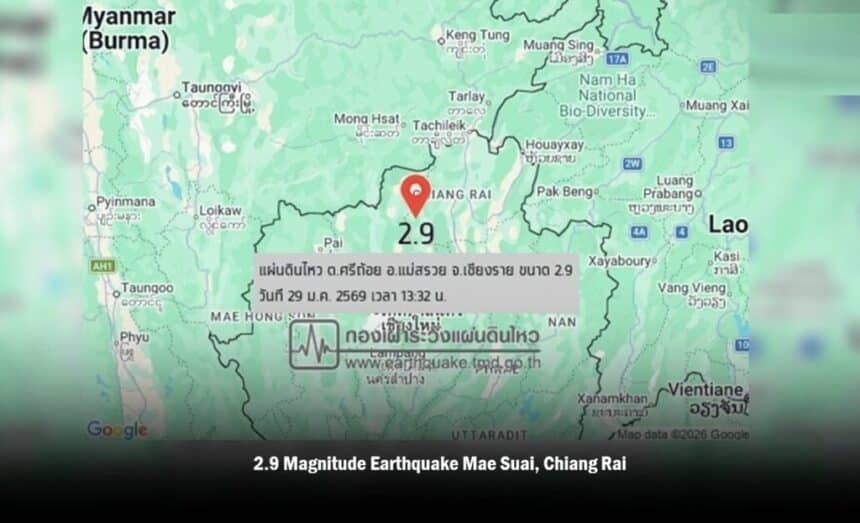
CHIANG RAI – A small earthquake gave residents in Sri Thoi Subdistrict, Mae Suai District, a quick jolt yesterday afternoon. The tremor was short, but many people noticed it.
The Earthquake Monitoring Division of the Thai Meteorological Department reported the quake at 1:32 PM on January 29, 2026. It measured 2.9 in magnitude. The epicenter was recorded at 19.647°N, 99.367°E, at a shallow depth of 5 kilometers.
People in Sri Thoi said they felt light shaking inside homes and other buildings. Some described a gentle sway and stepped outside for a moment. No injuries were reported, and there were no signs of structural damage or major disruption right after the event.
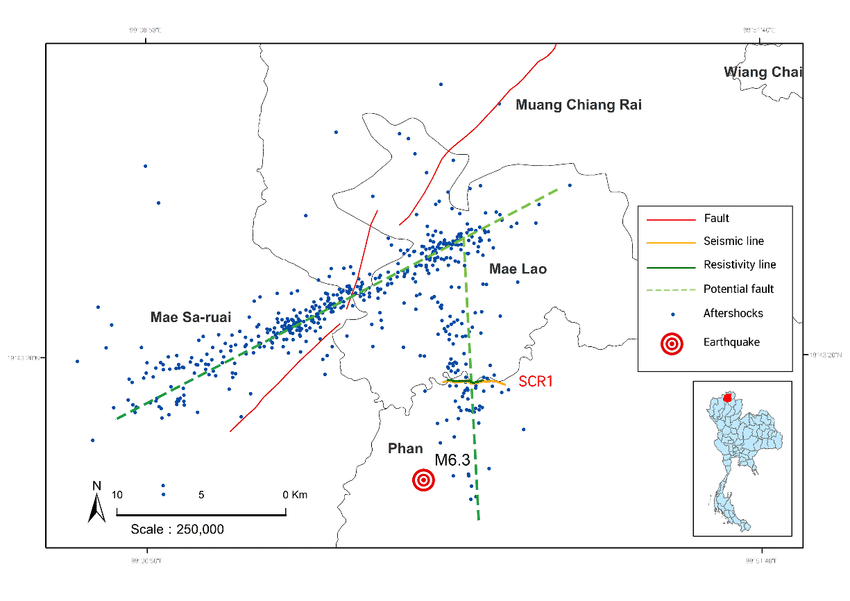
Chiang Rai’s Earthquake Risk
Chiang Rai Province sits near active fault zones in northern Thailand. These include the Mae Lao Fault Group, along with impacts from nearby systems such as the Mae Chan Fault. Because of this location, the province sees occasional small to moderate earthquakes.
Most local quakes are minor, but the area has also felt stronger events in the past, including:
- The May 5, 2014, Mae Lao earthquake (magnitude 6.1–6.3) was the strongest recorded by instruments in modern Thai history. It damaged homes, schools, temples, and roads across Mae Lao, Mae Suai, and Phan, and caused one death and dozens of injuries.
- The 1988 Lancang–Gengma earthquakes (magnitudes 7.6 and 7.2 near the Myanmar-China border) were felt in Chiang Rai and caused minor damage in some areas.
- A 2007 magnitude 6.3 earthquake in Laos (Bokeo Province) was felt in parts of Chiang Rai.
- Other smaller quakes over the years, including tremors tied to fault activity near the Myanmar border, such as a 5.2 magnitude event felt across several districts.
These past events show that major earthquakes are rare, but northern Thailand remains an active tectonic area. Officials are still tracking updates, and residents are urged to stay prepared. Shallow quakes like this one can feel stronger than expected, even when the magnitude is low.
The Meteorological Department asks anyone who felt the shaking or noticed unusual effects to report it through official channels to support ongoing monitoring.