



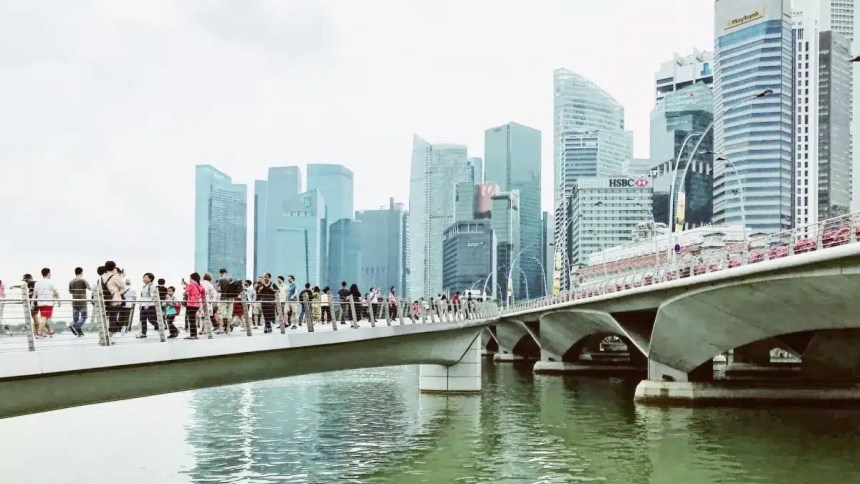
Singapore built one of the world’s most productive and prosperous societies. Its students lead international rankings in math, reading, and science, while its public housing system is often held up as an answer to housing shortages elsewhere.
Yet the country is now confronting the human cost of a system built around performance. What is prosperity for if people face intense pressure at school, at work, and while trying to build a family?
That question helps explain why Singapore is adjusting the model that made it successful.
Singapore’s Success Has Created a Different Problem
By conventional measures, Singapore’s development has been extraordinary. It combined open markets with strong government control over land, housing, savings, and economic development. The result was wealth, widespread homeownership, economic security, and a highly productive workforce.
For decades, the national priority was clear. Singapore needed jobs, better schools, homes, and a path out of poverty. Its leaders focused on making people more productive because people were the country’s greatest resource.
Now that Singapore has achieved much of that original mission, the challenge has changed. The country is no longer focused only on becoming richer. It is trying to make prosperity translate into a better life for the people who created it.
Singapore’s question has shifted from how much more its people can achieve to what that achievement gives them in return.
Independence Left Singapore Vulnerable
A difficult separation in 1965
In 1965, Singapore separated from Malaysia. Its first prime minister, Lee Kuan Yew, announced the split after spending years trying to prevent it. Singapore had joined Malaysia only two years earlier because its leaders believed the small island was too vulnerable to succeed alone.
Those fears were understandable. Singapore had almost no farmland or natural resources, limited freshwater supplies, a small domestic market, and high unemployment. A significant part of the economy also depended on the British military, which soon announced it would leave.
Lee’s first task was survival. Within weeks, Singapore joined the United Nations to gain international recognition. However, recognition did little to change the country’s geography or its security concerns.
Building an army with Israeli help
Malaysia sat immediately to Singapore’s north, while Indonesia lay across the narrow straits. Lee concluded that Singapore needed an army, but the new country had little experience building one.
He turned to Israel, another small country surrounded by larger neighbors. Israeli advisers secretly helped Singapore design and train its armed forces.
Singapore’s early priorities were direct:
- Gain international recognition.
- Build a military capable of defending the country.
- Create an economy that could survive without British military support.
The Economic Model That Transformed Singapore
Invite foreign companies in
Lee sought help from a United Nations team led by Dutch economist Albert Winsemius. Winsemius argued that Singapore should not try to keep foreign competition out. Instead, it should invite foreign companies in.
Lee and his ministers adopted that strategy. Their goal was to make Singapore extremely attractive to foreign companies by offering tax incentives and presenting the country as stable and trustworthy.
The government also expanded the powers of its Anti-Corruption Board. Bribery could lead to prison, regardless of a person’s position. American, European, and Japanese manufacturers began arriving.
Schools, English, and skilled workers
Foreign investment created jobs, but Singapore still needed workers who could fill them. In the mid-1960s, the country was poor and much of its workforce had low skills.
The government reshaped the school system around the needs of the economy. Over time, English became the main language of education and work. Schools became a major part of Singapore’s effort to build a workforce that could support more advanced industries.
Public housing and mandatory savings
Singapore also needed decent homes for its workers. The government bought land and built homes at extraordinary speed. In 1960, only 9% of the population lived in public housing. By the late 1980s, well over 80% did.
Rather than building a Western-style welfare state, Singapore created a path to wealth through housing. Workers had to place part of every paycheck into a central fund. They could use that money for retirement savings and to buy a first home.
The model combined several connected policies:
- Foreign investment and tax incentives.
- Strict anti-corruption enforcement.
- Education shaped around economic needs.
- Large-scale public housing construction.
- Mandatory savings tied to retirement and homeownership.
- Strong government control over key parts of the economy.
Singapore’s economy is now more productive than Malaysia, the United Kingdom, and other highly developed Asian economies. However, the same system that created opportunity also placed heavy demands on individuals.
Sponsored: Building Credit With Kikoff
The video’s sponsor, Kikoff’s credit-building plans, start at $5 per month. Users build credit by keeping an account open and making payments, with Auto Pay available to make those payments easier.
Kikoff reports payments to all three credit bureaus. According to the video, users with credit scores below 600 gain an average of 25 points in their first month and up to 86 points after their first year.
The offer linked by the creator provides 80% off the first month, bringing the first month’s cost as low as $1.
Education Pressure Starts Early
The PSLE carries major consequences
Singapore built an education system intended to identify talent early and develop it efficiently. Students spend six years in primary school before taking the Primary School Leaving Examination, or PSLE.
The result helped determine which secondary-school track students entered:
- Express
- Normal Academic
- Normal Technical
Parents understood that these results could shape later opportunities. As a result, many tried to give their children every possible advantage.
Private tuition has become a costly response
More families began turning to private tuition. Group classes can cost around 30 Singapore dollars per hour for primary school students and $55 or more per hour at the junior college level. Private classes can cost considerably more.
Since 2002, spending on private tuition has more than doubled. It reached $1.8 billion in 2023.
The pressure becomes difficult to avoid because parents may feel their child will fall behind if other students receive extra lessons and theirs does not. Children attend school during the day, then may spend evenings and weekends studying at tuition centers.
Singapore has become exceptionally good at academic performance. Still, fierce competition is part of what produces those results.
Work Pressure Follows Students Into Adulthood
The demands do not stop after school. Singapore built one of the most productive workforces in the world, but it also developed a culture of unusually long working hours.
Singaporeans work around 2,300 hours per year. That is roughly 900 hours more than workers in Germany or Denmark.
A system centered on achievement can produce a highly capable workforce. Yet it can also make daily life more demanding, especially for younger adults who have already spent years in competitive schools and tuition programs.
The original goal was to help people become more productive and prosperous. The harder question is whether a productive society gives people enough time, flexibility, and security in return.
Housing Still Creates Pressure for Young Buyers
Public housing remains central to Singapore’s model
Singapore continues to build thousands of new homes each year. These flats come in different sizes and are deliberately priced below market rates, with the intention of providing affordable first homes.
Buyers can also purchase secondhand public housing through the resale market. Someone who bought a government-built flat may later sell it to another eligible buyer if they meet certain conditions.
The two parts of the system work differently:
| Housing type | How it is priced | Main purpose |
|---|---|---|
| New public housing | Government-built and priced below market rates | Affordable first homes |
| Resale public housing | More influenced by market conditions | Existing flats in established locations |
The resale market gives buyers more choice. It also exposes them more directly to rising prices.
Resale prices have climbed since 2020
Resale prices for government-built public homes have risen sharply since 2020. That is good news for existing homeowners, whose properties may become more valuable. It is far less welcome for people trying to buy their first home.
Location adds another difficulty. The government builds new homes every year, but those homes may not be in a neighborhood where a buyer wants to live. Families looking for a particular area, perhaps near a preferred school, may need to turn to the more expensive resale or private market.
For many young adults, housing pressure arrives after years of academic competition and demanding work. It becomes another major decision in an already crowded path toward adulthood.
Family Plans Are Getting Harder to Achieve
In 2024, Lawrence Wong became Singapore’s fourth prime minister and promised change. One of the clearest reasons is the country’s falling fertility rate, which has declined for decades and recently reached around one child per woman.
People are marrying later and having children later. Some also have fewer children than they had originally wanted.
Studies cited in the video show that most married couples want two or more children. However, only about half go on to have a second child. The issue is not simply that people no longer want children. Many appear to find the family life they want increasingly difficult to achieve.
In a country with widespread poverty, prosperity has an obvious purpose: create jobs, build homes, and expand opportunity. Singapore has already achieved much of that. Its challenge now is to make the conditions of everyday life work better for people who want a home, a family, and more control over their time.
Mental Health Has Become Part of the Debate
The pressure on younger adults has also raised concerns about mental health. In 2017, around 16% of younger adults reported poor mental health. By 2024, that figure had risen to roughly 25%, or one in four.
Competitive exams, expensive tuition, long working hours, housing costs, and difficult decisions around marriage and children are all part of the wider context. No single factor explains the increase, but together they show the strain that can accompany a system focused heavily on productivity.
A society can be highly effective at producing wealth while still making ordinary life feel harder for many people.
Lee Kuan Yew’s generation faced the task of making Singapore prosperous. The current generation faces a different question: what should that prosperity be used for?
Singapore Is Adjusting, Not Abandoning, Its Model
More flexibility in secondary education
Singapore has begun changing institutions created during Lee’s era. The old secondary-school streams have been abolished, giving students more flexibility and reducing rigid sorting at a young age.
That change responds to the concern that a single major exam can shape a child’s future too early. Students have more room to move between subjects and pathways rather than being fixed into one stream.
Stronger rights to request flexible work
At work, employees have gained stronger rights to request flexible contracts. The change recognizes that work cannot be judged only by output and long hours.
Singapore still values productivity. However, workplace flexibility gives people more ability to fit work around the rest of their lives.
More housing and family support
The government is building more flats and expanding housing options for singles. It has also expanded parental leave and child care support for families.
These policies address the practical pressures that affect decisions about marriage, housing, and children. Recent reporting on Singapore’s pro-family measures has also focused on the country’s effort to make family life more manageable amid low fertility.
Singapore is not discarding the system that created its wealth. It is adapting that system to put more weight on quality of life.
Singapore’s Next Measure of Success
Singapore’s first model focused on survival. It then focused on jobs, education, housing, productivity, and economic security. Those efforts produced results that few countries have matched.
Now the country is trying to make that success feel more livable for its people. Prosperity cannot be measured only by output, homeownership, or academic results if the people inside the system struggle to build the lives they want.
Singapore’s next chapter depends on whether its extraordinary capacity to create wealth can also give people more room to live well.


