



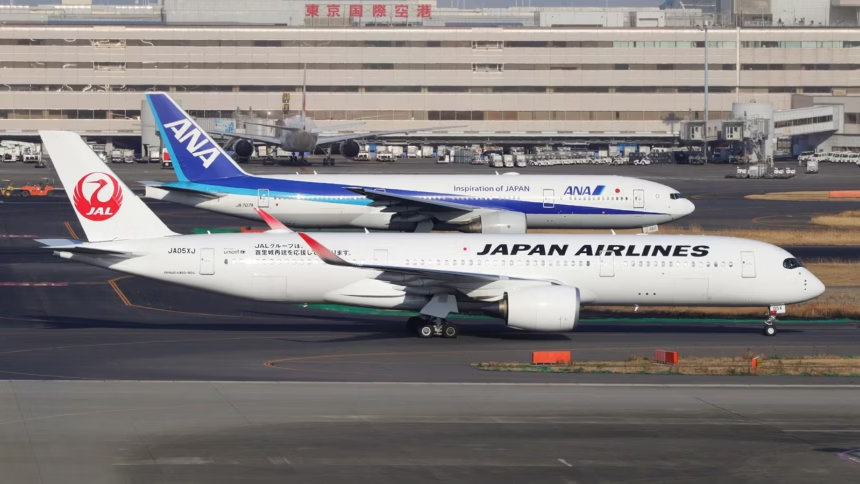
TOKYO, Japan – Anyone planning a major trip from Japan to Western countries this summer will definitely need to stretch their vacation budget a little further. Japan Airlines and All Nippon Airways have officially announced record-high fuel surcharges for upcoming flights to North America and Europe. Importantly, these expensive new travel fees will apply to all international tickets issued during the months of July and August.
Key Takeaways
- Record high fees: Passengers will now pay 65,000 yen one-way in extra fuel fees for flights to North America and Europe.
- Round-trip impact: A standard round-trip ticket will include roughly 130,000 yen just to cover the added fuel costs.
- Global causes: Higher market prices for jet fuel and ongoing conflicts in the Middle East are heavily driving these changes.
- Government help: Travel costs would actually be much higher if the Japanese government did not provide special financial support.
The commercial aviation industry is currently facing a very tough time with the rising cost of keeping passenger planes in the sky. Airlines always base their extra travel fees on the changing prices of kerosene, which is the main ingredient in standard jet fuel. Lately, the overall cost of essential kerosene has spiked significantly across various global energy markets.
This rapid price jump is mainly due to the growing tensions and instability occurring throughout the Middle East. When major oil-producing regions experience widespread conflict, global fuel supplies often tighten and become much more expensive to purchase. Furthermore, a significantly weaker Japanese yen makes buying essential fuel from overseas even harder for local aviation companies.
The Real Cost for Summer Travelers
Travelers booking long-distance flights for July and August will certainly feel the financial impact directly in their wallets. For a single one-way ticket to destinations like the United States or the United Kingdom, the fee will hit 65,000 yen. Consequently, a family of four will pay a small fortune in extra fees before they even purchase their actual airfare.
To put this situation in perspective, the fee was just 56,000 yen for standard tickets issued in May and June. This sudden and sharp increase is a heavy blow to everyday people hoping to enjoy a summer vacation abroad. Local travel agencies are already worried that these high prices will stop many eager tourists from booking international trips.
Believe it or not, the current pricing situation could actually be much worse for everyday international passengers. Based on standard airline rules, the current cost of aviation fuel should technically push these fees well past 70,000 yen. However, both Japan Airlines and All Nippon Airways decided to securely cap the charges to support their loyal customers.
To make this happen, both airlines worked closely with Japan’s government to find a fair and reasonable solution. The government successfully provided special financial subsidies to lower the overall operating burden on the commercial airlines. By carefully applying these helpful subsidies, the airlines managed to keep the maximum fee at 65,000 yen for now.
How Surcharges Are Actually Calculated
Airlines do not simply guess when they set these extra travel fees for their international passengers. They always use a very strict formula based on the average price of aviation fuel over a specific two-month period. For the upcoming July and August tickets, the airline companies looked directly at global fuel prices from April and May.
Since global oil prices were incredibly high during the spring, the summer fees naturally jumped up to match that peak. Furthermore, the companies also look very closely at the exchange rates between the Japanese yen and the US dollar. Because international fuel is bought in dollars, a weak yen automatically makes the fuel more expensive for Japanese airlines.
Aviation companies are still actively trying to recover from the massive drop in global travel over the past few years. While passenger demand has been steadily bouncing back, these new fuel costs clearly create a major roadblock for future growth. Ultimately, airlines are caught between paying higher daily bills and potentially scaring away their most valuable and loyal customers.
As a direct result, many travel companies may need to drastically change their marketing plans for the upcoming holiday season. They might start promoting more local trips or shorter flights to closer destinations within Asia to keep vacation packages affordable. Until global fuel prices finally settle down, flying long distances will unfortunately remain a very costly luxury for most people.
Nobody knows exactly when these extra flight charges will finally start to drop back to normal levels again. Both Japan Airlines and All Nippon Airways review their specific fuel fees every two months based on current market averages. Therefore, if the Middle East situation improves and fuel gets cheaper, passengers might hopefully see lower fees by autumn.
For now, travel experts strongly suggest that passengers should always book their flights carefully and compare all available options. If you must travel to North America or Europe soon, be ready to set aside extra money for these unavoidable fees. Always remember to check directly with the specific airlines for the most up-to-date pricing before you lock in your travel plans.
Trending News:
Immigration Police Capture Japanese Scam Network Mastermind in Bangkok
Japan’s Gen Z Ditches Digital Screens for Print Media and Handmade Zines


