



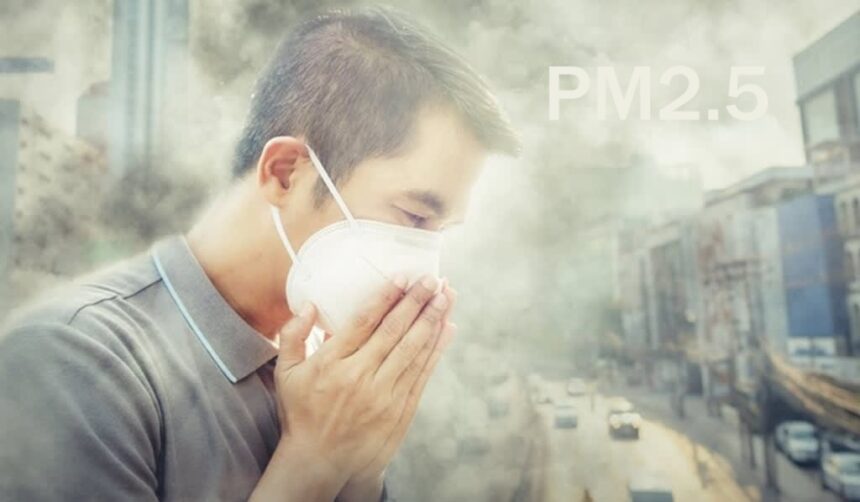
BANGKOK – Christmas Day brought more haze than cheer for many people in Bangkok. Air quality fell fast as PM2.5 (tiny dust particles) climbed into the orange band in several districts. Many residents woke on 25 December to a grey skyline, followed by fresh health advice from officials.
The Bangkok Air Quality Information Centre said at 7 am on Christmas morning that PM2.5 readings had jumped across the capital. Several areas moved into the orange alert level, meaning pollution had reached a point where it can start to affect health.
Nong Khaem, Sathon, and Chatuchak were among the areas reporting higher levels. In parts of northern Bangkok, readings sat between 31.8 and 43.2 micrograms per cubic metre (µg/m³).
Thailand’s 24-hour PM2.5 safety limit is 37.5 µg/m³. Once air moves into the orange level, some people may notice symptoms such as breathing trouble, sore eyes, or throat irritation. Children, older adults, and people with existing health conditions face higher risks.
The Pollution Control Department advised people to wear certified PM2.5 or N95 masks outside and to avoid heavy exercise. A spokesperson also urged residents to cut outdoor time if symptoms appear, such as coughing or eye irritation. Keeping windows shut and using air purifiers indoors were suggested while the haze lingered during the holiday.
Citywide averages stayed mostly in the moderate range, but the sudden rise compared with the day before caught many Christmas visitors and locals off guard.
Cool Season Conditions Help Trap Pollution
Bangkok’s seasonal PM2.5 problem often gets worse in the cool, dry months from November to February. Temperatures tend to sit around 22 to 32°C, with low humidity and little rain. The weather feels pleasant, but it can leave pollution hanging in the air.
A moderate cold air mass moving down from China can trigger a temperature inversion. This happens when cooler air sits near the ground under warmer air higher up, which slows the spread of pollutants. Light winds and still conditions make the problem worse, letting emissions build into a visible haze.
In December 2025, forecasters warned that PM2.5 could stay high from 20 to 26 December and possibly beyond. In Bangkok, vehicle fumes remain the main source, mixed with industrial emissions and occasional smoke drifting in from outside areas. In cooler air, these pollutants can hang around longer.
Bangkok’s Yearly Fight With PM2.5
PM2.5 pollution is a familiar issue in Bangkok, and it usually peaks during the dry season. These particles are smaller than 2.5 micrometres, so they can move deep into the lungs and enter the bloodstream. Health experts link repeated exposure to higher risks of heart and lung disease, asthma flare-ups, and early death.
Traffic adds much of the city’s pollution load, while seasonal burning in nearby provinces can drive extra spikes. This year, still weather has still made local emissions more noticeable. There have been no major northern burning hotspots dominating Bangkok’s readings so far.
Experts say long periods of poor air affect millions across the region. Residents are encouraged to check real-time updates on apps such as Air4Thai or AirBKK and follow the colour alerts, green (good), yellow (moderate), orange (starting to affect health), and red (unhealthy).
Health Impacts and Ways to Reduce Exposure
Orange-level pollution can cause quick symptoms, including stinging eyes, a scratchy throat, and worse breathing for people with asthma. Over time, exposure can raise the chance of serious heart and lung problems.
Officials recommend:
- Wearing a PM2.5-rated mask outdoors.
- Cutting back on outdoor exercise, especially for at-risk groups.
- Use air purifiers indoors and keep windows closed.
- Avoid open burning and choose public transport where possible.
With January and February often bringing the worst air of the year, experts expect more spikes unless winds strengthen or tougher controls are applied to traffic and industry.
What Comes Next, Pressure for Longer-Term Fixes
For many in Bangkok, Christmas 2025 was a reminder that air pollution remains a daily problem during the cool season. Environmental groups have repeated calls for long-term action, including stronger emissions rules, wider support for electric vehicles, and co-operation across the region to reduce agricultural burning.
For now, residents are being asked to stay alert and protect their health. A resident in Sathon summed it up simply, The cool weather feels good, but the air does not. With New Year’s events approaching, officials say they will keep a close watch on air quality as the city moves into 2026.