


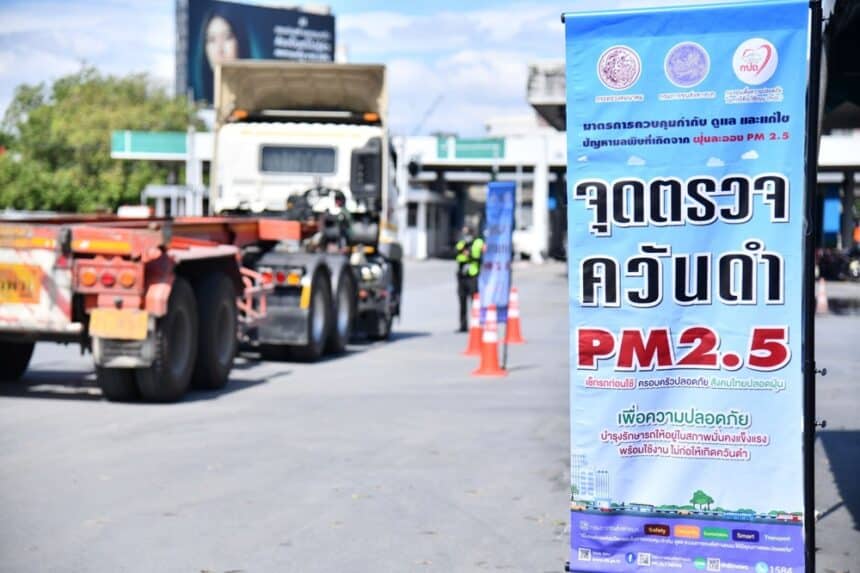
BANGKOK – The Bangkok Metropolitan Administration (BMA) says it will expand its Low Emission Zone (LEZ) to cover all 50 districts. The plan is designed to cut PM2.5 pollution by limiting access for heavy vehicles during high-smog days, focusing on one of the biggest sources of fine particle pollution.
Under the new approach, vehicles with six wheels or more will be stopped from entering any district when pollution hits dangerous levels, unless they appear on the BMA’s “Green List”. This covers trucks, buses, and other large vehicles. Vehicles can qualify if they are electric vehicles (EVs), natural gas vehicles (NGVs), or meet Euro 5 to Euro 6 emissions standards.
Until now, the LEZ has mostly focused on central areas, including the Ratchadaphisek ring road. The earlier scheme delivered encouraging results. PM2.5 levels fell by up to 15.6% inside restricted areas compared with nearby zones, and large truck traffic dropped by about 12%. By extending the rules across Bangkok, the BMA expects to see bigger improvements, and not just in the inner city.
Governor Chadchart Sittipunt said the restrictions will only be used when conditions become unsafe. This often happens when PM2.5 readings rise above safe limits in several districts for more than one day.
He described the policy as a targeted action during air pollution crises, not a permanent ban. He also pointed to diesel emissions from poor combustion as a major PM2.5 driver, and said stopping non-compliant vehicles during peak episodes should help protect public health.
Health concerns rise as seasonal haze returns.
Bangkok’s worst air often arrives between November and March. Stagnant weather, traffic fumes, and smoke from biomass burning across the region all add to the problem. PM2.5 particles are small enough to enter deep into the lungs and can reach the bloodstream. Doctors and health specialists link long-term exposure to breathing problems, heart disease, and early death. Children, older people, and those with existing health issues face higher risks.
The LEZ expansion sits inside a wider 10-year plan for 2026. This includes tougher checks for black smoke, with the limit tightened to 20% opacity. It also promotes work-from-home options during pollution spikes, plus support for better vehicle upkeep. Through the “Green List Plus” scheme, even owners of four-wheeled vehicles are encouraged to change oil and filters, with discounts offered to help reduce emissions.
Heavy vehicle operators are being asked to sign up through https://lez.bangkok.go.th. Maintenance, such as oil changes and filter replacement, can help vehicles meet entry rules. In past rounds, more than 57,000 large vehiclehave been s have been registered. The BMA wants stronger participation this time to reduce disruption while improving air quality.
Pressure on transport, and why co-operation matters
Environmental groups have welcomed the move, but parts of the transport industry are worried. Some logistics firms say detours and delivery delays during ban periods could push up costs. The BMA argues that cleaner air brings long-term gains, including fewer health costs and less pressure on hospitals.
The city also knows it can’t solve PM2.5 alone. Working with the Pollution Control Department, the Department of Land Transport, and nearby provinces will shape how well the plan works. Much of the pollution comes from outside Bangkok, so action on farm burning and factory emissions remains part of the wider response.
From the north, the policy feels familiar. Chiang Rai and other provinces see their own haze season linked to burning. Bangkok’s tougher rules may help set an example for stronger national action. With recent readings reaching hazardous red levels in places such as Bang Na, many residents hope the expanded Low Emission Zone brings real relief.
Public help still matters. People can report black-smoke vehicles, use public transport when possible, and support cleaner choices. Bangkok’s PM2.5 problem affects everyone, and shared action is the only way to keep the air safer for millions.