




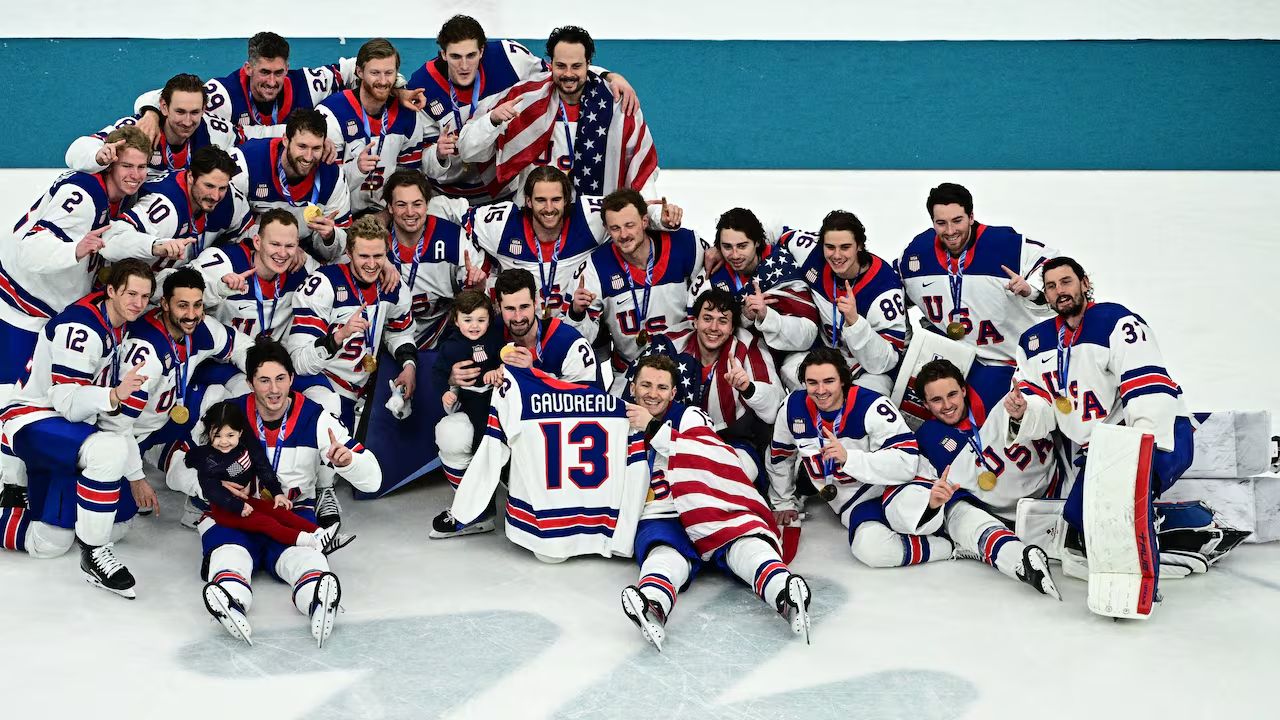
The United States beat Canada 2-1 (OT) to win men’s ice hockey gold at the 2026 Winter Olympics in Milan, the first men’s Olympic gold for the US since 1980.
The result matters because it ends a 46-year gap, lands in the middle of the USA-Canada rivalry, and comes with NHL players back at the Olympics for the first time since 2014.
At a glance: USA vs Canada Olympic hockey final 2026

| Detail | Game fact |
|---|---|
| Final | USA 2-1 Canada (OT) |
| Venue | Milano Santagiulia Arena |
| Goals | Matt Boldy (USA), Cale Makar (CAN), Jack Hughes (USA, OT) |
| Goalie headline | Connor Hellebuyck, 41 saves |
| Big absence | Sidney Crosby missed the final (knee injury) |
| Key stat | Shots on goal 41-26 (Canada-USA) |
Overtime used 3-on-3 sudden death with no shootout.
How the gold medal game was won, key moments that decided USA 2-1 Canada overtime
First period: Boldy’s solo moment breaks it open
The opening minutes felt like playoff hockey, heavy hits, tight gaps, and few clean looks. Both teams kept the middle of the ice crowded, so shots came from the outside.
Matt Boldy changed that with one strong rush. He picked up the puck in his own half, chipped it past pressure, then outmuscled a defender to stay on it. Boldy finished the move around Jordan Binnington to put the US ahead 1-0.
For the basic stat line and timings, the ESPN game page and final score matched the flow, Canada carried long stretches, but the US struck first.
Second period: Canada answers through Makar late
Canada’s pace improved as the game settled. The puck moved quicker through the neutral zone, and the US spent more time defending after icings and extended shifts.
A key survival point came on a 3-on-5 US penalty kill. Canada had space to set up, but the US blocked lanes and kept rebounds from sitting in front.
Late in the period, Canada finally tied it. A quick switch opened the right side, Devon Toews found Cale Makar, and Makar’s shot beat Connor Hellebuyck with 1:44 left in the second to make it 1-1.
Third period: Canada presses, Hellebuyck holds the line
The third period tilted toward Canada. Zone time stacked up, and the shot count climbed because pucks kept coming back to the points.
Hellebuyck’s saves shaped the final 20 minutes. He stopped a Mitch Marner chance when the puck came through traffic, then stayed set as Nathan MacKinnon missed a close look that usually hits the net.
The US still had a moment that could’ve ended it. Brock Faber’s shot rang off the post, a reminder that one bounce can flip a final.
Overtime: Hughes ends it in 101 seconds in 3-on-3 sudden death
Jack Hughes finishes the overtime winner sequence, created with AI.
The gold medal game used 3-on-3 sudden death, and it ended fast. With more open ice, every turnover turns into a chance.
Both teams traded early looks, then the US found the gap. Jack Hughes scored at 1:41 of overtime (101 seconds) to end it.
Hughes later said he played through a broken tooth. The goal still counted the same, one clean finish, and a tournament ends.
The turning point: USA’s 3-on-5 penalty kill swung the final

A 3-on-5 means two players sit in the penalty box, so the defending team has only three skaters. In a final packed with NHL shooters, that’s usually where the game breaks.
The US killed it, kept the game from slipping away, and forced Canada to chase again. It also changed the feel of the night because Canada didn’t get the payoff from its highest-danger minutes.
Canada piled up shots, but the US survived the one situation where a single pass can end a gold medal game.
More detail from the official-style recap appeared in NHL.com’s gold medal game report, including late clears and the final overtime timing.
Heroes, key performers, and the plays fans will remember
- Jack Hughes: overtime winner, played through a broken tooth.
- Connor Hellebuyck: 41 saves, calm under heavy pressure.
- Matt Boldy: opening goal, created offense from nothing.
- Cale Makar: late second-period equalizer, kept Canada alive.
- Jordan Binnington: solid despite the loss, and he faced fewer shots.
After the handshake line, the US marked the moment with a tribute. Players carried the jersey of former teammate Johnny Gaudreau, who was killed by a drunk driver in August 2024.
Why Canada fell short, despite 41 shots and long stretches of control
Canada’s 41 shots did not turn into enough goals. Many looks came from the perimeter, and the best chances often lacked a clean screen in front.
Hellebuyck also erased the mistakes that did show up. Marner’s third-period chance got stopped, and a few loose pucks never found the rebound finish. On a day like this, one missed close look becomes the story.
Sidney Crosby’s absence mattered too. He missed the final with a knee injury suffered earlier in the knockout rounds, and Canada lacked a steadying shift when the game tightened late. That’s not one player fixing everything, but leadership and pace control count in a one-off final.
In 3-on-3 overtime, small breakdowns get punished fast. With more space, one missed check ends the night.
For pregame context on how this matchup built toward a rivalry final, Chiang Rai Times’ Canada vs USA men’s ice hockey Olympic final preview laid out the stakes that ended up deciding it.
Why this USA Olympic hockey gold matters, and what comes next

The headline is simple: first USA men’s Olympic hockey gold since 1980, ending a medal drought that lasted 46 years. That’s why the phrase USA Olympic hockey gold 46 years fits this game, it’s history tied to a single overtime shot.
NHL players returning to the Olympics for the first time since 2014 raised the level across the bracket. The pace looked closer to an NHL playoff game, and finishing chances arrived faster.
The atmosphere also matched the rivalry. A Canadian-leaning crowd brought boos, and the shifts felt tense even without constant scrums.
Next, the results settle quickly. The US closed the Games with another gold elsewhere on the final weekend, while Canada left with a disappointing finish in the main hockey event. In the bronze medal game, Finland beat Slovakia 6-1, according to the official results reporting.
For a broader official recap and tournament framing, see Olympics.com’s report on the USA overtime win.
FAQs about the USA vs Canada Olympic hockey final 2026
Did USA win men’s Olympic hockey gold in 2026?
Yes. The US won 2-1 (OT) against Canada, the first men’s gold since 1980.
Who scored the OT winner for USA vs Canada?
Jack Hughes scored 1:41 into overtime (101 seconds) in 3-on-3 sudden death.
How long was overtime in the Olympic final?
The winner came 101 seconds into OT. There’s no shootout in the gold medal game, play continues until a goal.
How many saves did Connor Hellebuyck make?
41 saves. Canada finished with 41 shots on goal to the US’s 26.
Why didn’t Sidney Crosby play in the gold medal game?
He missed the final with a knee injury suffered earlier in the knockout rounds, so he was not in the squad.
When was USA’s last men’s Olympic hockey gold before 2026?
1980 (the “Miracle on Ice”).
Conclusion
The US won USA 2-1 Canada (OT) on the biggest stage, with Jack Hughes as the overtime winner and Connor Hellebuyck (41 saves) as the difference. It delivered the first men’s gold since 1980, ending the USA Olympic hockey gold 46 years drought. In a rivalry final this tight, special teams survival and one 3-on-3 mistake decided everything.
Sources
- BBC Sport match report
- Olympics official results (Milano Cortina 2026)
- NHL.com game recap