



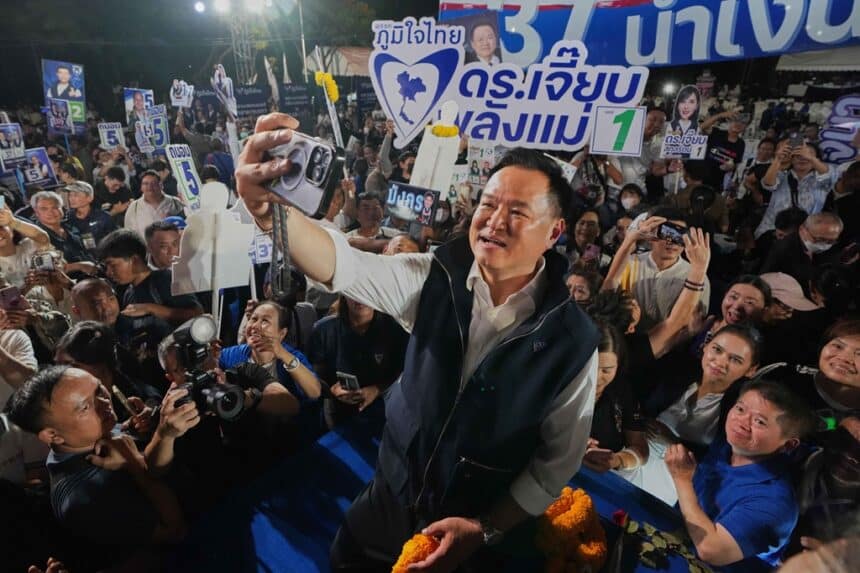
BANGKOK – On February 8, 2026, Thailand held a rare two-part vote on the same day. Voters chose a new 500-seat House of Representatives in a snap general election and weighed in on a national referendum about writing a new constitution to replace the 2017 military-backed charter.
Prime Minister Anutin Charnvirakul called the election after dissolving parliament in late 2025. The vote took place during a tense period, with a border conflict with Cambodia stoking nationalist feelings. Turnout was high, with more than 52 million registered voters. The country had also gone through three prime ministers in just two years, adding to the sense of urgency.
The outcome surprised many observers. Opinion polls before election day had pointed to a stronger showing for progressive groups. Instead, voters handed a clear win to conservative, establishment-friendly parties that stressed nationalism, stability, patriotism, and support for the monarchy. For many voters, keeping things steady seemed safer amid security worries, economic strain, and political division at home.
The General Election: Results and Seat Breakdown
The 2026 general election put the Bhumjaithai Party, led by Prime Minister Anutin Charnvirakul, in front by a wide margin. With about 91-95% of ballots counted by early February 9, Bhumjaithai had won 194 seats in the 500-member House. That was a major improvement from past results. Still, it fell short of a majority, since 251 seats are needed to control government formation without partners.
Anutin declared victory on election night and said the win belonged to “all Thais.” He framed his campaign around unity and protecting Thailand’s sovereignty. Support for that message grew during the Cambodia border dispute, which played a big role in the final weeks of the race.
The progressive People’s Party, led by Natthaphong Ruengpanyawut, came in second with 116 seats (some estimates ranged from 108-116 as counting continued). The result fell below expectations after polls had suggested they could take the lead. Ruengpanyawut conceded and pointed to the public’s move toward conservative politics and promises of stability.
In third place, the Pheu Thai Party won 76 seats. The party remains tied to the Shinawatra network and former prime minister Thaksin Shinawatra, who stayed influential despite imprisonment. The lower seat total signaled a split in the pro-Shinawatra vote and less unity among its supporters than in earlier elections.
Smaller parties and independents won the remaining seats, but the top three groups shaped the overall picture. Early election commission figures showed Bhumjaithai performing well in both rural and urban areas, especially where messages about national security and traditional values landed best.
No party reached a majority, but Bhumjaithai’s lead made it the clear front-runner to build the next government, most likely through a coalition with smaller conservative or centrist parties.
Commentators described it as the most convincing House win for a royalist, establishment-aligned party in years. It also suggested many voters were not ready for fast, wide reforms.
The Constitutional Referendum: Public Backing for a New Charter
Running alongside the election, the referendum asked one question: “Do you approve that there should be a new constitution?” Voters could pick “Yes,” “No,” or “No opinion.” This was only the first step.
Under rules set by the Constitutional Court, the process would still require more referendums, including one on how the charter would be drafted and another for final approval. That timeline could stretch out over several years.
The measure passed by a strong margin. With about 95% counted, “Yes” was ahead at roughly 65.43% (around 19.7 million votes) while “No” stood at 34.57% (about 10.4 million votes). Valid ballots topped 30 million, and turnout tracked closely with the general election.
The “Yes” vote gave clear permission to begin work on a new constitution. Supporters hope the process could reduce the power of unelected bodies, including the military-appointed Senate and parts of the judiciary, which pro-democracy groups have criticized for years. Conservative voices warned that quick changes could trigger instability. Still, the split result across the two votes was striking: many people backed conservative rule in parliament while also supporting long-term constitutional reform.
What Drove These Results
A few forces shaped the election and referendum outcomes. The rise in nationalism tied to Thailand-Cambodia border tensions helped Anutin and boosted messages about strong leadership and national pride.
Economic pressures, including household debt and global trade headwinds, pushed some voters toward parties promising steadier governance. The People’s Party stayed popular with many urban and young voters, but it lost momentum after softening some proposals to avoid legal trouble.
At the same time, the referendum result showed that demands for a more democratic system haven’t gone away. Many voters seem open to structural change, just not at the pace some progressive groups want.
What It Means for Thailand Next
Bhumjaithai’s win put Anutin Charnvirakul in the best position to remain prime minister, assuming coalition talks go smoothly and parliament confirms the government. That could bring more day-to-day stability than Thailand has seen in recent years.
The referendum approval also opened the door to a new constitution. Still, a parliament led by conservatives will likely shape the drafting process and could slow or limit bigger changes.
In the end, February 8, 2026, showed two strong currents in Thai politics. Voters rewarded conservative parties in the general election, yet they also backed the idea of rewriting the rules of government over time.
Trending News:
Anutin Charnvirakul Claims Thailand Election Victory: Unofficial Results, What’s Next (2026)