


On a bad-air morning in Bangkok, it starts the same way. Kids clear their throats in the car, parents check an air-quality app at red lights, and school chat groups fill with short messages about PE class, masks, and whether pickup will change.
Fine dust pollution (PM2.5) is harmful to children because their lungs are still developing and they breathe faster than adults. The bangkok dust free classroom expansion is one practical response: schools are setting up “safe-zone” rooms so students can spend more of the day in cleaner indoor air.
This guide explains what dust-free classrooms are (and aren’t), what Bangkok has reported so far, how schools usually act during spikes, and what families can do on high-PM2.5 days.
What a “dust-free classroom” really is (and what it is not)
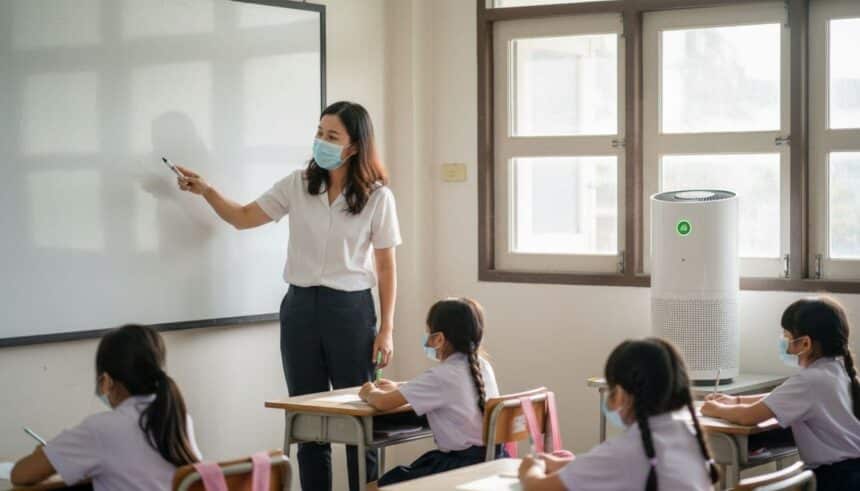
A dust-free classroom is a PM2.5-safe room within a school. It’s designed to reduce indoor fine dust levels during pollution spikes. Think of it as a safer indoor pocket of air, not a magic bubble.
The goal is less exposure during school hours, when children sit in the same room for long stretches. These rooms don’t promise “zero dust,” and they can’t protect students when they’re outside, commuting, or walking between buildings.
In most Bangkok schools, dust-free classrooms are built using existing structures. A regular classroom or shared room is upgraded with a focus on keeping dirty air out and cleaning the air inside.
Common features parents often hear about include:
- Doors and windows that can be kept closed during spikes (a “sealed classroom” approach when needed)
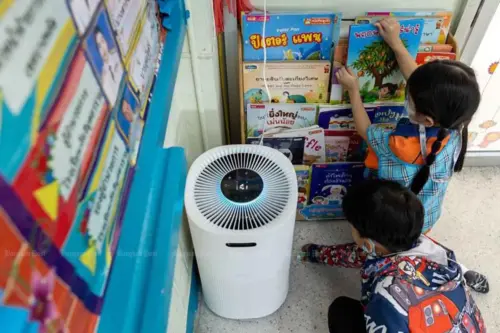
- One or more HEPA air purifier classroom units (portable or fixed)
- Basic indoor air quality checks, such as a PM2.5 display or spot checks by staff
- Simple routines for bad-air days, like moving indoor activities into the safe-zone room
For families who want a plain-language explanation of clean-air rooms and purifier choices in Thailand, the Health Intervention and Technology Assessment Program has a useful guide on choosing a clean air room and air purifier for PM2.5.
How HEPA air purifiers and sealed rooms help during fine dust pollution
PM2.5 is so small it can remain suspended in the air and enter buildings through open doors and gaps. A HEPA filter works like a tight net. Air passes through, and many small particles are trapped in the filter fibers rather than remaining in the room.
That’s also why “keep the door closed” matters. If the purifier is cleaning the air but the room continues to draw in polluted outdoor air, it’s like trying to dry a floor while the tap is still running.
Bangkok officials and city reports indicate that PM2.5-safe-zone rooms can reduce indoor PM2.5 levels by 20-70%, depending on room conditions and equipment. Results vary for simple reasons: room size, purifier strength, how often doors open, and whether windows seal well.
Limits parents should know about, kids still breathe PM2.5 outside the room
Dust-free classrooms reduce risk, but they don’t erase it. Students still face exposure during the commute, at pickup, and at any time outdoors.
Even inside the room, air quality can slip if:
- Filters aren’t replaced on time
- The purifier is too small for the room
- Doors stay open for long periods
- A crowded room overwhelms the purifier’s capacity
It helps to treat a dust-free classroom like a seatbelt. It’s a strong safety measure, but it doesn’t prevent all potential exposures.
What Bangkok is accelerating, how many classrooms are upgraded, and what comes next
Bangkok’s push follows the same pattern families already know: PM2.5 often rises during the cooler months, and schools need a plan that works on regular class days, not only during emergencies.
Bangkok Metropolitan Administration (BMA) reporting has put clear numbers on the rollout. The city has upgraded 744 of 1,966 BMA classrooms to dust-free. Officials also reported distributing 1,743 portable air purifiers to schools to support indoor air cleaning.
Public updates and media coverage have described the city’s goal to finish upgrades across BMA schools by the end of 2025, so classrooms are ready for broader use in 2026. (As with many city projects, timelines can shift, so families should watch for school-level updates.)
A summary of the policy push and the 744-of-1,966 figure has appeared in reporting such as Bangkok’s commitment to dust-free classrooms. For the wider set of city actions that often come with pollution season, including work-from-home measures, see BMA’s work-from-home plan to reduce PM2.5.
Which students and schools are typically prioritized first
When equipment and space are limited, schools often prioritize students who benefit most immediately. Officials have said the focus is on protecting children during the hours they are in their care, typically school hours indoors.
In practice, schools often prioritize:
Younger students who spend more time in one classroom, children with asthma or other breathing concerns (based on what families report to the school), and campuses in higher-exposure areas. If a school has only one PM2.5-safe-zone room, staff may reserve it first for at-risk students during periods of elevated PM2.5 levels.
This is sensitive, and it’s worth asking about politely. The aim is to reduce harm, not to label children.
What upgrades usually look like on the ground, purifiers, monitors, and room setup
Parents usually notice the change in small, visible ways. A room may have a sign marking it as a clean-air room. A purifier may run through the school day. Teachers may keep doors closed during alerts, even if it feels stuffy at first.
Some schools also use simple monitoring. That could mean a small PM2.5 display, a log sheet, or checks linked to public reporting levels such as the Air4Thai color categories. Bangkok research has also examined school indoor air interventions and monitoring, including peer-reviewed studies such as a Bangkok school indoor air quality intervention study.
What schools do when PM2.5 spikes is a clear playbook parents can expect
On high-PM2.5 days, the biggest difference for families is routine. The best schools act early, communicate clearly, and don’t wait for panic. Bangkok schools often follow pollution-response guidelines, and national education guidance (including OBEC guidance, as referenced by officials) supports the use of dust-free classrooms for at-risk children when levels reach higher color bands, such as yellow, orange, and red.
While each school’s details differ, parents can often expect a version of this playbook:
- suspend outdoor activities
- use safe-zone rooms
- mask guidance
- communicate with parents
- temporary closures if needed
This matters because children’s exposure is shaped by the minutes they spend outside. A few outdoor periods can add up, especially when PM2.5 stays high for days.
For a wider view of Thailand on how serious PM2.5 can become, including cases where closures were ordered in other regions, see Northern Thailand PM2.5 dust spike forces school closures.
Outdoor activities, sports, and field trips, what changes first
Outdoor time usually changes before anything else. Schools commonly pause PE, sports practice, and outdoor assemblies first because these activities increase breathing rate.
“Modified recess” can mean indoor play, staying in classrooms, or shorter transitions between buildings. Some schools reschedule field trips or switch to indoor trips if possible.
Families can ask two simple questions: what PM2.5 level triggers indoor-only rules, and how the school sends updates (LINE, email, app, paper notice).
Masks at school, what families should ask about fit, comfort, and rules
Mask rules vary by school and by public health advice at the time. A practical way to think about it is this: purifiers help most indoors, masks help most outdoors and during commutes.
If a school recommends masks during spikes, families can ask about fit and comfort. A mask that gaps around the cheeks won’t work well. Children also need breaks when it’s safe, such as in a clean room, while seated, and when teachers can supervise.
Families should also ask whether the school keeps spare masks for emergencies and what the rules are for sports or heat.
A parent’s checklist for dust-free classrooms and simple high-PM2.5 day tips
When schools say they have dust-free classrooms, parents often want one thing: clarity. A quick, calm conversation with a homeroom teacher or administrator can answer most concerns.
Here are useful questions to ask about a dust-free classroom setup:
Which room is the PM2.5-safe zone?
Ask where it is and when students use it.
How many students fit in it?
Capacity affects how well purifiers can keep up.
How does the school monitor indoor air quality?
Even simple checks help.
When are HEPA filters changed?
A schedule matters more than a promise.
How will families be updated on bad-air days?
Clear messages reduce confusion.
Simple family tips for high-PM2.5 days:
- Plan your commute to minimize time spent outside when possible.
- Limit outdoor play after school on the worst days.
- Pack a well-fitting mask if the school advises it.
- Encourage water breaks, dry air can irritate throats.
- Watch for symptoms in vulnerable children, and follow a clinician’s advice if a child has a known condition.
- Follow official air-quality updates and the school’s messages.
Many Bangkok families also seek community reporting and practical perspectives during the haze season, including discussions such as “Bangkok families and the air we breathe.”
What to look for at your child’s school, signs that the program is working
A dust-free classroom program shows up in routine behavior, not slogans. Signs that it’s working include a clearly designated safe-zone room, purifiers that run consistently, and doors kept closed during alerts.
A maintenance habit is also a strong signal. Schools may not post a public “filter log,” but staff should be able to explain the replacement schedule and who is responsible.
Equity also matters. If a school has limited rooms, it is helpful to ask how it prioritizes vulnerable children during spikes and whether additional rooms are planned as part of the Bangkok Dust-Free Classroom expansion.
FAQ, quick answers parents search for during pollution season
What is a dust-free classroom in Bangkok?
It’s a classroom or designated room set up to reduce PM2.5 indoors during pollution spikes. It usually uses HEPA air purifiers and keeps doors and windows closed when outdoor air is poor.
Do air purifiers remove PM2.5 in classrooms?
Yes, HEPA-based purifiers can reduce PM2.5 in a room by filtering particles out of the air. How well they work depends on the purifier size, the room size, and how well the room is sealed.
Are dust-free rooms available in every school in Bangkok?
Not in every school or in every classroom. BMA schools are expanding coverage, but capacity varies by campus and by the number of rooms upgraded.
What should parents do when PM2.5 is high?
Follow official air-quality updates and school messages first. Reduce outdoor time when possible, plan the commute to limit exposure, and ask the school how it uses safe-zone rooms on alert days.
Should children wear masks at school during pollution spikes?
Schools may recommend masks based on conditions and guidance. Masks are most effective outdoors and during commutes, while clean rooms and purifiers are most effective indoors. Families should focus on fit and comfort.
When do schools close because of PM2.5 in Bangkok?
Closures are usually a last step after outdoor activities are suspended and safe-zone rooms are used. Officials and schools decide based on reported PM2.5 levels and local conditions, so the trigger can vary.
How can I check Bangkok air quality in my area?
Many families use official reporting tools, city updates, and school notices tied to those readings. Schools often refer to color categories (such as yellow, orange, and red) when they explain decisions.
How often should HEPA filters be replaced?
It depends on the purifier model, operating hours, and air quality. Schools should follow the manufacturer’s schedule and adjust during periods of high PM2.5, officials said.
Conclusion
Dust-free classrooms are not a complete shield, but they can reduce indoor exposure when Bangkok’s air quality is unhealthy. The Bangkok dust-free classroom expansion has reached 744 of 1,966 BMA classrooms, and the city has reported that 1,743 portable air purifiers have been sent to schools, with officials targeting full upgrade completion by the end of 2025 to support 2026 readiness. During spikes, families can expect indoor-only routines, use of the safe-zone room, and clear messages from schools. The next step is simple: follow official air-quality updates, ask the school about its clean-room plan, and focus on small moves that reduce PM2.5 exposure.