


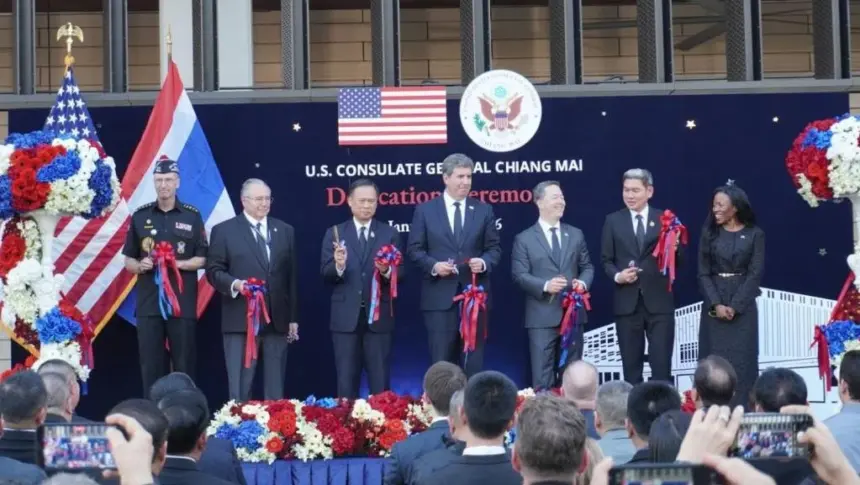
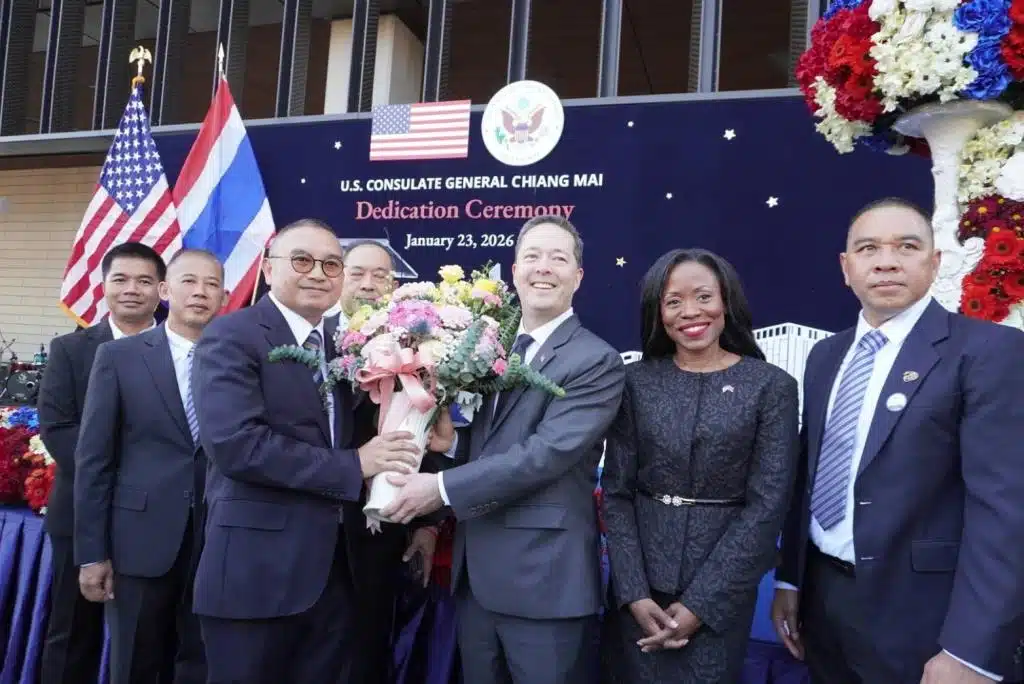
CHIANG MAI – US Deputy Secretary of State for Management and Resources Michael J. Rigas, together with US Ambassador to Thailand Sean K. O’Neill, officially opened the new US Consulate General in Chiang Mai. The new facility replaces the previous consulate building that had been in use for more than 75 years.
The project cost more than $273 million (about 8.5 billion baht). It’s designed as a modern, secure hub to support consular services for more than 21,000 US citizens across 15 northern provinces. The consulate also aims to strengthen cooperation between Thailand and the United States in areas tied to shared safety, economic growth, and long-term ties.
The ceremony took place on January 23, 2026, at the new consulate site on the Chiang Mai to Lampang Superhighway in Nong Pa Khrang, Mueang Chiang Mai District, Chiang Mai. Senior Thai officials, along with representatives from public and private organizations across the 15 northern provinces, attended the event.
US Presence in Chiang Mai Since 1950
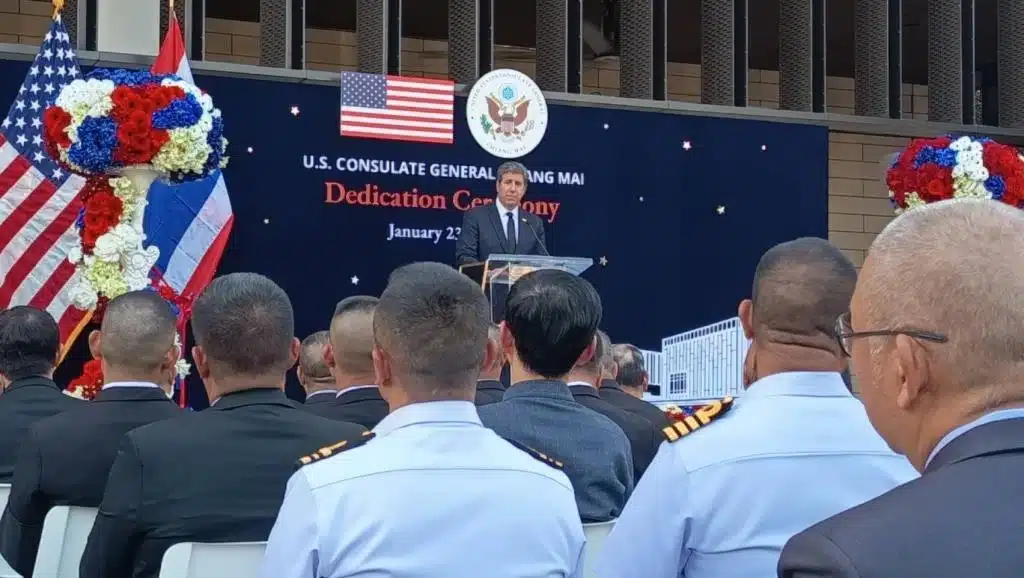
Speakers highlighted the role of the new consulate as a safe, up-to-date center for assisting Americans living in or visiting northern Thailand. They also pointed to ongoing work with Thai partners to support shared goals for security and prosperity.
Michael J. Rigas said the new Chiang Mai consulate reflects the strength of the long-running partnership between the two countries, built on mutual respect and shared interests in the region.
He also referenced the close people-to-people ties between the United States and Thailand, including travel and long-term residency. He noted that more than 1 million Americans visit Thailand each year, and over 100,000 Americans have chosen to live in Thailand and call it home.
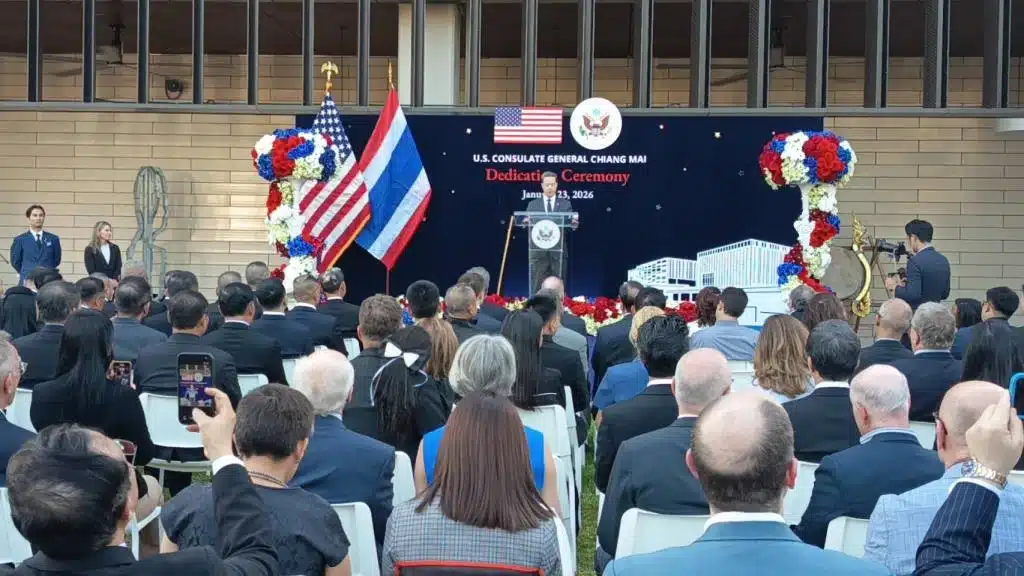
Ambassador Sean K. O’Neill said the United States has maintained a consular presence in Chiang Mai since 1950. He described the new building as a lasting sign of friendship between the United States and Thailand, supported by a proud shared history and a positive outlook ahead.
He added that the modern facility will improve service for US citizens and support US diplomatic work across northern Thailand. He also said the consulate will keep working with Thai partners to protect Americans, including efforts to counter transnational crime and support security through economic growth in both countries.
Location, budget, and design details
The new US Consulate General in Chiang Mai sits on a 16.5-rai site along the Chiang Mai to Lampang Superhighway, near the entrance to Payap University, in Nong Pa Khrang. Construction began in late 2020 with a budget of more than $273 million.
The design blends modern American building ideas with cultural elements inspired by Northern Thai heritage. The project drew from three Lanna-based concepts:
- Raised building form (Lanna style): The structure is lifted above ground level to create public space underneath and help natural airflow.
- Central terrace concept (Chan): Inspired by traditional Northern Thai homes, with rooms arranged around a shared terrace, reflected here through smaller buildings grouped around a shared central area.
- Separated activity zones (Kuti concept): Work areas are divided into four connected sections, based on a layout often seen in temple grounds where spaces are separated by function.
The United States has a strong official presence in Chiang Mai through the U.S. Consulate General. It’s the only U.S. consular office in northern Thailand and one of the city’s longest-running foreign consulates, in operation since about 1950. Based on the Chiang Mai-Lampang Superhighway, the consulate helps American citizens with services like passports and notarial work. It also processes non-immigrant visas and supports U.S.-Thailand ties across diplomacy, trade, and culture.
The new, modern consulate compound was built to support this work and improve daily operations. Outside of government services, Chiang Mai is also home to a visible American expat community. Retirees, digital nomads, and long-term residents often choose the city for its lower cost of living, comfortable weather, rich local culture, and established expat groups.