


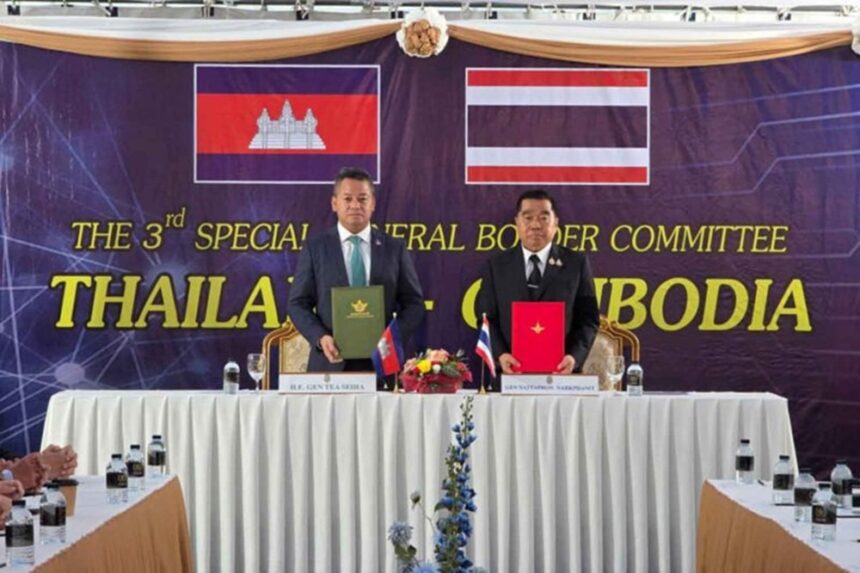
BANGKOK – Thailand and Cambodia have agreed to a new ceasefire after weeks of heavy fighting along their border. The violence has left more than 100 people dead and forced over half a million civilians from their homes.
The deal was signed on December 27 by the two defence ministers at a border crossing in Thailand’s Chanthaburi province. It ordered an immediate stop to combat from midday local time.
A key part of the agreement is a 72-hour condition. If there are no breaches during that period, Thailand says it will return 18 Cambodian soldiers captured during clashes earlier in July.
The ceasefire repeats earlier promises. Both sides say they will not move extra troops, will not use airspace for military operations, and will work together to help displaced families go home. ASEAN observers are expected to monitor compliance alongside joint teams from both countries. Many remain doubtful, since this is the second ceasefire in recent months.
The first one fell apart after both sides accused each other of breaking the terms.
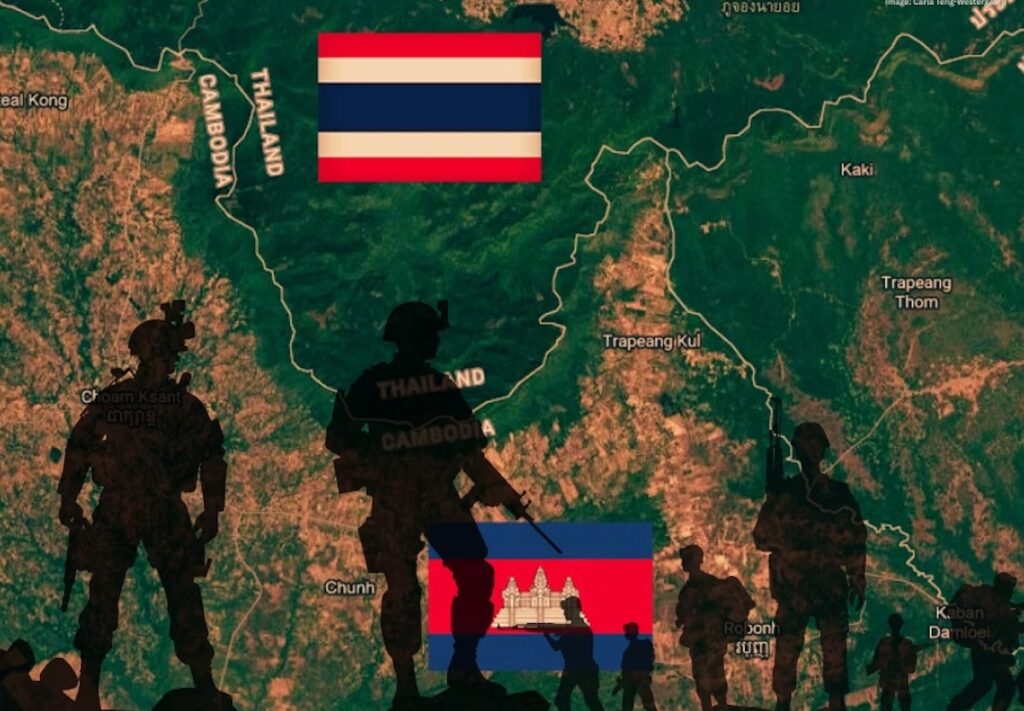
A Border Dispute That Goes Back Decades
The latest crisis sits on top of a much older dispute over territory along the 817-kilometre Thailand-Cambodia border. The arguments trace back to colonial-era agreements made between France and Siam (now Thailand). Several areas have become regular flashpoints, including historic Khmer temple sites.
Preah Vihear is the best known. The International Court of Justice awarded the temple to Cambodia in 1962, but the nearby land is still contested. Other disputed sites, such as Ta Moan Thom and Ta Krabei, have also triggered repeated stand-offs.
National pride has kept tensions high. In Thailand, internal politics often pushes border issues to the front of public debate. In Cambodia, leaders describe any shift on the border as a threat to sovereignty.
This year’s escalation began in July 2025, when five days of fighting killed dozens and drove hundreds of thousands from their homes.
That first round of violence stopped after talks led by Malaysia and firm pressure from the United States. President Donald Trump used trade benefits as a point of influence and urged both governments to negotiate. A ceasefire was later set down in October at a summit in Kuala Lumpur, where Trump attended the signing of what he called the “Kuala Lumpur Peace Accords”.
Cambodian officials praised Trump’s role and even nominated him for a Nobel Peace Prize. Thai officials used more careful language, calling the agreement a “pathway to peace”.
The October deal included border observers, steps to reduce military activity, and plans for the eventual release of the 18 detained Cambodian soldiers. Trump presented the accord as one of several conflicts he said he had helped settle, adding to his image as a dealmaker.
The agreement did not last. In November, Thailand paused its participation after Thai soldiers were killed or seriously injured by landmines in disputed zones. Bangkok accused Phnom Penh of laying new anti-personnel mines, which would breach the Ottawa Treaty that both countries have signed.
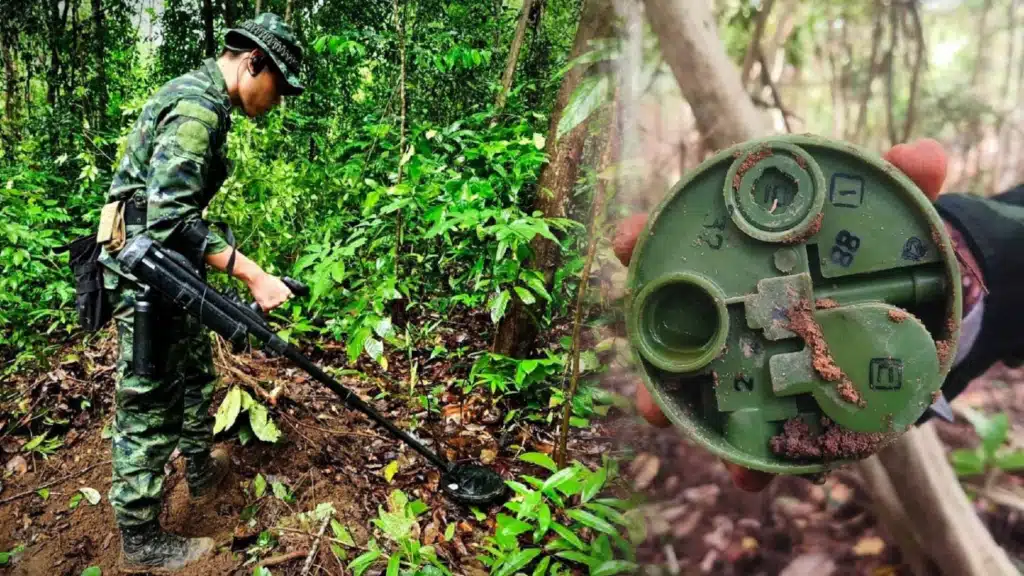
Landmine Claims Deepen Distrust
Thailand has shared what it says is proof, including recovered PMN-2 mines (Soviet-origin anti-personnel devices) and images that it claims show Cambodian troops placing them. ASEAN observers reported newly laid mines along parts of the border, but did not assign blame. Several mine blasts injured Thai troops, and Bangkok said the incidents were deliberate and designed to undermine the ceasefire.
Cambodia rejects the accusations. It says the explosives are leftovers from older conflicts, including the Khmer Rouge era and the K5 mine belt. Phnom Penh has accused Thailand of inventing claims to justify military action and has pointed to blasts in areas it says were under Thai control.
Specialists note that both countries destroyed stockpiles under the Ottawa Convention, yet illegal use can still happen in remote border disputes. The accusations fuelled mistrust, then came a surge in propaganda and smaller breaches. By early December, fighting returned at full scale.
The conflict flared again around December 7 and 8. Each side blamed the other for starting it. Thailand said it responded after a Cambodian fire wounded Thai soldiers. Cambodia said Thai forces opened attacks in Preah Vihear province.
The next 20 days brought the worst violence in years. Thailand used F-16 fighter jets for airstrikes on Cambodian positions. Reports said bombs fell even on the morning the ceasefire was signed. Artillery and rocket fire followed, along with ground attacks.
More than 500,000 people were displaced on both sides, with civilians caught in the middle. Homes were hit, and dozens of non-combatants were reported killed.
Thailand confirmed military and civilian deaths. Cambodia reported heavy civilian losses and described Thai strikes as indiscriminate. Attacks continued as talks went on in late December, showing how unstable the situation had become.
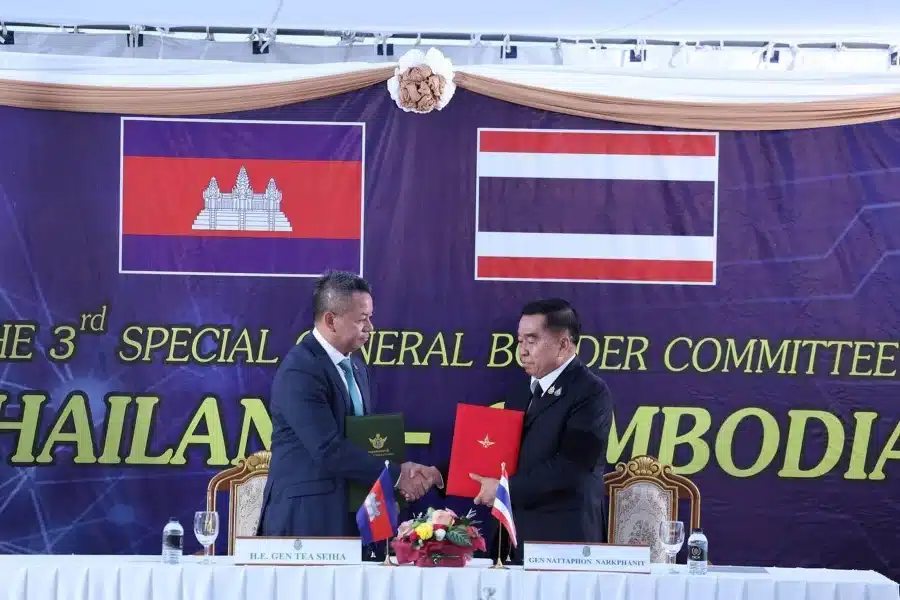
A Ceasefire With Conditions
The new agreement was signed by Thai Defence Minister Natthaphon Narkphanit and Cambodia’s Defence Minister Tea Seiha. It links the release of the 18 Cambodian soldiers to 72 hours without violations, which Thai officials described as a way to test good faith. The deal also commits both sides to joint humanitarian demining work and to ending disinformation efforts.
US Secretary of State Marco Rubio welcomed the ceasefire and called for full compliance with the Kuala Lumpur Accords. China also offered support for talks. Malaysia, as ASEAN chair, said stopping the violence must come first, with civilian safety as the priority.
Even so, serious problems remain. Many displaced families want to return but fear another sudden outbreak. Hardliners in both capitals may resist compromise. Large parts of the border are still not clearly marked, and disputes around temple areas have not been settled, leaving plenty of room for future clashes.
A Thai resident near the border summed up the mood: “Truces have happened before. This one feels conditional, like peace on probation.” For the moment, the firing has stopped, but the impact of the 2025 border clashes is still raw. The next few days will show whether this truce holds or only postpones the next crisis.