



CHIANG RAI – Prof Dr Sujitra Wongkasemjitt, Vice President for Research Administration at the Research and Innovation Institute, Mae Fah Luang University (MFU), said the university is preparing a 100 million baht budget proposal to strengthen its research infrastructure. The proposal will be submitted through the Governor of Chiang Rai to set up a laboratory for contaminant analysis.
She told Trans Border News that the new lab must apply for ISO/IEC 17025 accreditation, the international standard for the competence of testing and calibration laboratories. If MFU secures this accreditation, the university will be able to issue test certificates that are accepted internationally. The accreditation process is expected to take at least one year and no more than two.
Prof Dr Sujitra Wongkasemjitt added that MFU already has laboratories, but many lecturers and researchers use them. Contaminant testing needs dedicated instruments and a controlled setup to prevent cross-contamination with other research work.
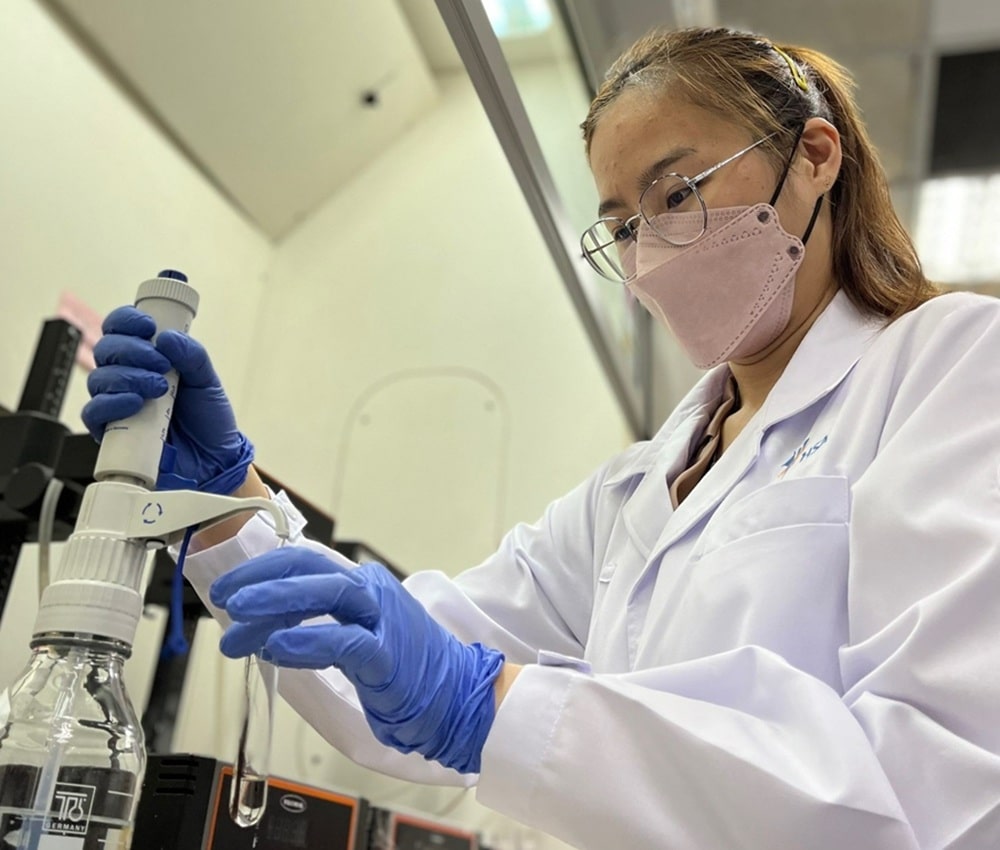
University Research on Heavy Metal Contamination
She also said MFU is currently funding research linked to heavy metal contamination in the area. The university has allocated 3 million baht in urgent research funding for 10 teams from different schools, with 300,000 baht per team. Each team will go into the field to collect data and study practical ways to respond to contamination risks faced by local communities.
All 10 projects will run for about six months. The focus is on assessing real conditions along the Kok River, so residents can get clear guidance on how to adapt and respond to contamination concerns.
On December 24th, MFU hosted a public talk titled “Urgent issues in managing contamination in the Mekong Basin and the Kok River”, as part of the MFU Research Expo 2025. Academics shared research progress from the past four months.
Assistant Professor Dr Nattaya Tawichai from MFU’s School of Science spoke about water treatment research that uses agricultural waste to create filter media. Early tests found it could capture arsenic at up to 99% and lead at more than 90%.
She said the main goal is to adapt this approach for agriculture. The team is now coordinating with the Land Development Department to transfer the technology to communities. This could help reduce contamination entering the food chain from upstream sources.
Assistant Professor Dr Kesamanee Moolpanan from MFU’s School of Nursing said the most worrying part of the work is the impact on people’s health. The research team expanded sampling beyond adults to include children at some schools in communities along the Kok River.
They are testing for arsenic using hair samples (at least 5 grams) and urine tests. So far, they have collected samples from around 30 people, with a target of 100.
She said lab testing is difficult and costly because hair samples must be sent to the Medical Sciences Centre or laboratories in Bangkok. Early results show signals that need close monitoring. The team is planning an alarm or alert system for cases where contaminant levels in the body exceed standards, so treatment and prevention can happen quickly.
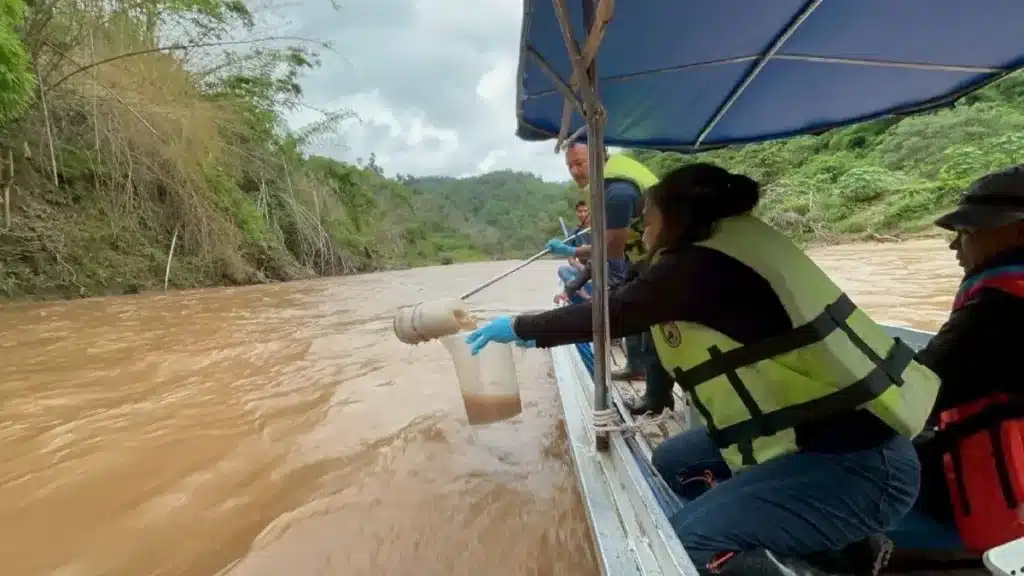
Building “Citizen Science” in Chiang Rai
Assistant Professor Pathompong Manohan from the School of Social Innovation said contamination in Chiang Rai links to global systems and international politics. He said it isn’t enough to look only at scientific results; the work also needs what he called “citizen science”.
He said scientists have often been the main voices, while villagers only listened. This project is bringing local people, such as village health volunteers and teachers, into the research process.
The aim is to help them spot issues themselves, such as water turbidity that may relate to arsenic levels, so they have more power to make decisions about their lives.
Ms Ormsin Boonlert, also from the School of Social Innovation, shared findings from fieldwork in Huai Luek, Wiang Kaen District. She said the local food scene has changed sharply. In the past, the community had many dishes that used Mekong fish, with more than 155 menu items recorded. Many of those dishes have now disappeared, and fish used in cooking has been replaced by cage-farmed fish brought in from other areas.
She said this raises concerns about food security, including whether communities can still trust food produced in their own area. It also creates a need to study how people can replace lost food sources and reduce risk.
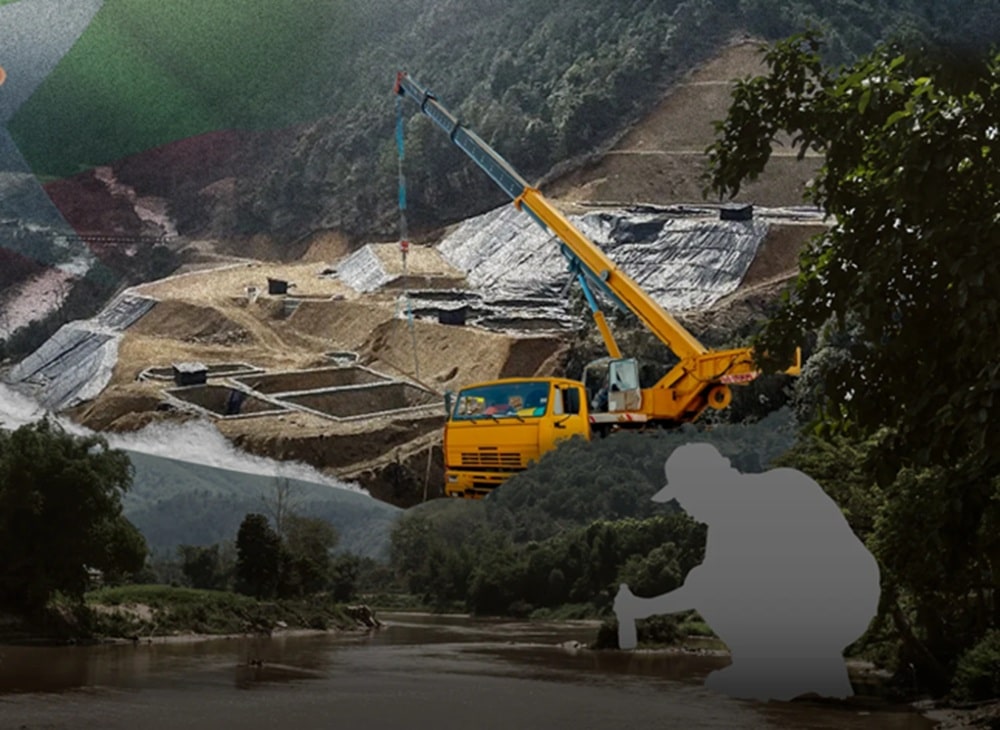
New Gold Mining Near the Len River in Tachileik
On Friday, ShanNews reported gold mining near the Len River in several villages in Phayak Township, Tachileik District (opposite Mae Sai District, Chiang Rai), in southern Shan State, Myanmar.
Villages mentioned include Hua Na, Nam Yum, and Nam Pang. Residents said they fear toxic contamination of water, with knock-on effects on farmland and local livelihoods. They said that if they cannot grow crops, income loss will follow.
Reports say some mines have been operating for several months. Others, such as the site near Nam Yum village, reportedly began about one month ago.
One resident told Shan News that people are already affected, but it feels like nobody is paying attention. They said toxins from mining can contaminate rivers and soil, which then harms farming. Farming is the main source of income, and without fields, there is no work.
Another resident said gold mining in Phayak has increased, with new sites opening. They cited a new mine near Hua Na, mining on a mountain near Nam Yum, and land purchases made to expand mining. They also claimed mining has reached into farmland used for growing crops.
Residents said that when companies find gold-bearing areas, they start digging quickly. They also said local people cannot effectively oppose mining in their area, and they do not see signs that mining will slow down.
SHAN also reported that Myanmar authorities ordered mining to stop in Phayak in 2562 and 2563. After the coup in Myanmar, mining reportedly expanded, with many companies entering the area. One resident said that during political disorder, anyone who wants to mine can approach those in power or pay to get permission, and the activity continues. They said locals have no power to challenge it.
On 28 October 2025, the Shan Human Rights Foundation (SHRF) published a report saying a Chinese state-owned enterprise has continued expanding rare earth and gold mining along the Kok River in eastern Shan State.
New satellite images reportedly show growing mine areas on both banks of the Kok River in Yon Township, south of Sad City, eastern Shan State, Myanmar. The report named China Investment Mining Company as the operator, describing it as a Chinese state-owned enterprise.
Related News:
Human Rights Commission Visits Mae Sai to Inspect Riverside Relocations