


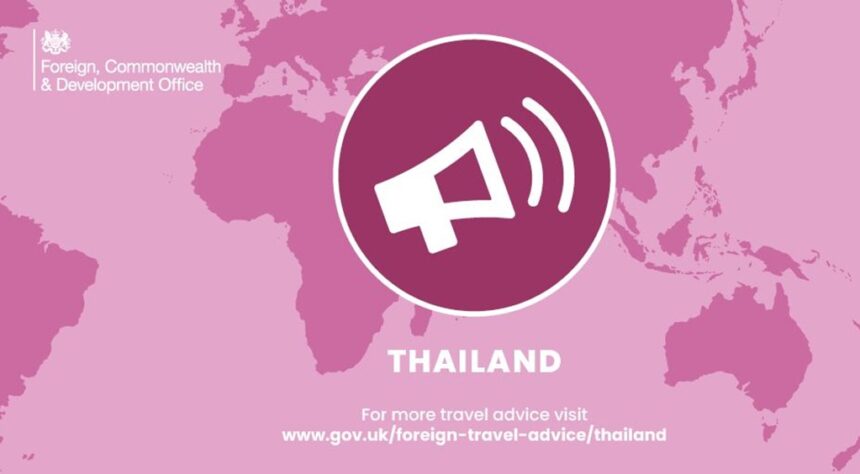
LONDON – The UK Foreign, Commonwealth and Development Office (FCDO) updated its travel guidance for 2026, placing Thailand on a list of 55 countries with restricted zones. While many parts of the country remain open, the government now warns against visiting specific areas due to safety concerns. These updates could affect holiday plans for thousands of British tourists heading to Southeast Asia next year.
Security problems near the Cambodian border and ongoing unrest in the deep south pushed these regions onto the “no-go” list. Travellers who ignore these warnings might find their holiday insurance is void. This leaves them facing massive bills for medical care or emergency flights home.
Friction Grows on the Cambodian Border
The latest advice from the FCDO points to rising dangers along the eastern border with Cambodia. Fighting broke out in July 2025, with artillery fire and rockets causing civilian deaths. These skirmishes have continued into December, making the area unstable.
The FCDO currently tells Brits to avoid all travel within 50km of the mainland border with Cambodia. Dangers include unexploded landmines, closed land crossings, and shuttered tourist sites. Islands such as Koh Chang and Koh Kood are not under a total ban, but the government suggests avoiding them unless the trip is essential.
While these clashes disrupt travel in eastern provinces, Bangkok and other major cities stay clear of the trouble.
Troubles in the Far South
Away from the eastern border, the FCDO still has long-term warnings for Thailand’s southern provinces near Malaysia. It advises against all but essential travel to Pattani, Yala, and Narathiwat. Parts of Songkhla, including the Hat Yai-Padang Besar railway line, are also on the list.
These districts see regular violence from separatist groups, including bombings and shootings in public places. The FCDO notes that while attacks can happen anywhere, they are much more frequent in these specific southern spots.
These restrictions will likely stay in place throughout 2026. This might change how people plan to cross from Thailand into Malaysia by land.
Your Insurance Risk: Why Advice Matters
The most important takeaway for holidaymakers is how this affects their insurance. The FCDO is clear that travelling against their advice usually cancels out your policy.
Most standard travel insurance won’t pay out if you go to a place the government has flagged as dangerous. This means if you get sick or lose your bags in a restricted zone, you might have to pay tens of thousands of pounds yourself.
Insurance experts tell travellers to read their policy’s small print. If you must go to these areas, you will need a specialist policy. One industry expert says that ignoring the official advice is a huge financial gamble that isn’t worth taking.
Why Thailand Features on the Restricted List
Thailand is now one of roughly 55 nations where the UK suggests avoiding certain regions. This list includes war zones like Ukraine, alongside specific parts of Mexico and Turkey.
Thailand’s spot on the list comes from two separate issues: the border fighting with Cambodia and the southern insurgency. It’s important to remember the whole country isn’t blacklisted. Unlike Afghanistan or Yemen, large parts of Thailand are still considered safe for tourists.
Thai tourism groups are worried about the news. Before the pandemic, over 700,000 Brits visited the country every year. Holiday favourites like Phuket, Chiang Mai, and the central plains remain safe to visit under current guidelines.
Tips for Planning Your 2026 Trip
If you’re heading to Thailand in 2026, keep a close eye on the FCDO website and sign up for email alerts. Popular spots like Bangkok and the southern islands (outside the restricted zones) are still open for business.
If you’ve already booked a trip to a region that’s now restricted, check if your tour operator offers a refund or a change of dates. Many airlines and travel agents are reviewing their terms to help customers.
Thailand still offers incredible beaches and culture, but some areas just aren’t safe right now. Follow the latest advice to make sure your 2026 holiday stays stress-free and fully insured.