


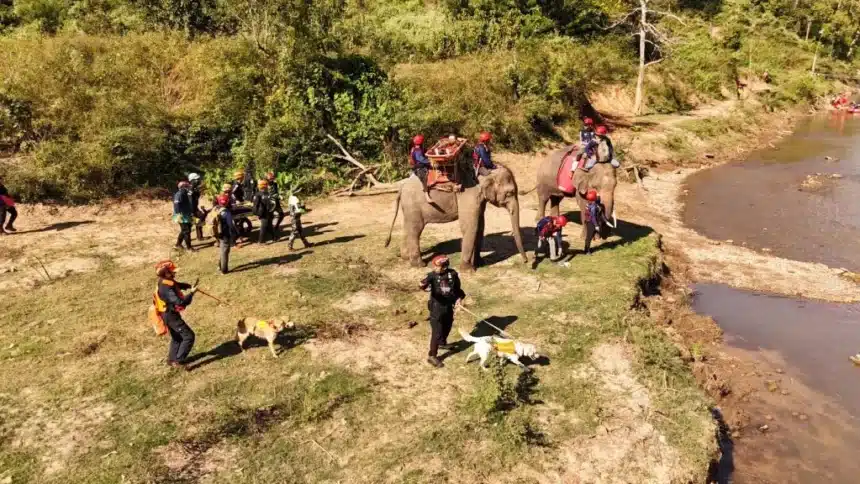
CHIANG MAI – The International Search and Rescue Federation teamed up with the Saentrakul Elephant Sanctuary in Chiang Mai province to hold TIMS 2025. This exercise was the world’s first joint rescue drill involving elephants, dogs, and humans, integrating the power of animals and people to tackle modern disaster scenarios.
Looking ahead to 2026, the organisers plan to expand this collaboration, inviting other countries with elephant populations, including Laos, Myanmar, Malaysia, and Taiwan.
News sources reported that the Thailand International Multi-Hazard SAR Exercise (TIMS 2025) took place on 16 December at the Saentrakul Elephant Sanctuary in Mae Taeng District, Chiang Mai.
This marked the very first time globally that elephants and K9 dogs systematically joined human responders in a formal rescue operation. The event attracted strong interest from both domestic and international security and disaster relief agencies.
Chaiyachet Padsri, Rescue and Training Director for the Asia region at the International Search and Rescue Federation, explained the necessity of the training. With disasters becoming more frequent and severe globally, including floods, landslides, and major accidents, readiness in search and rescue is essential. TIMS 2025 focused on combining the unique strengths of humans and animals to improve disaster response capabilities and reduce casualties in real-life crises.
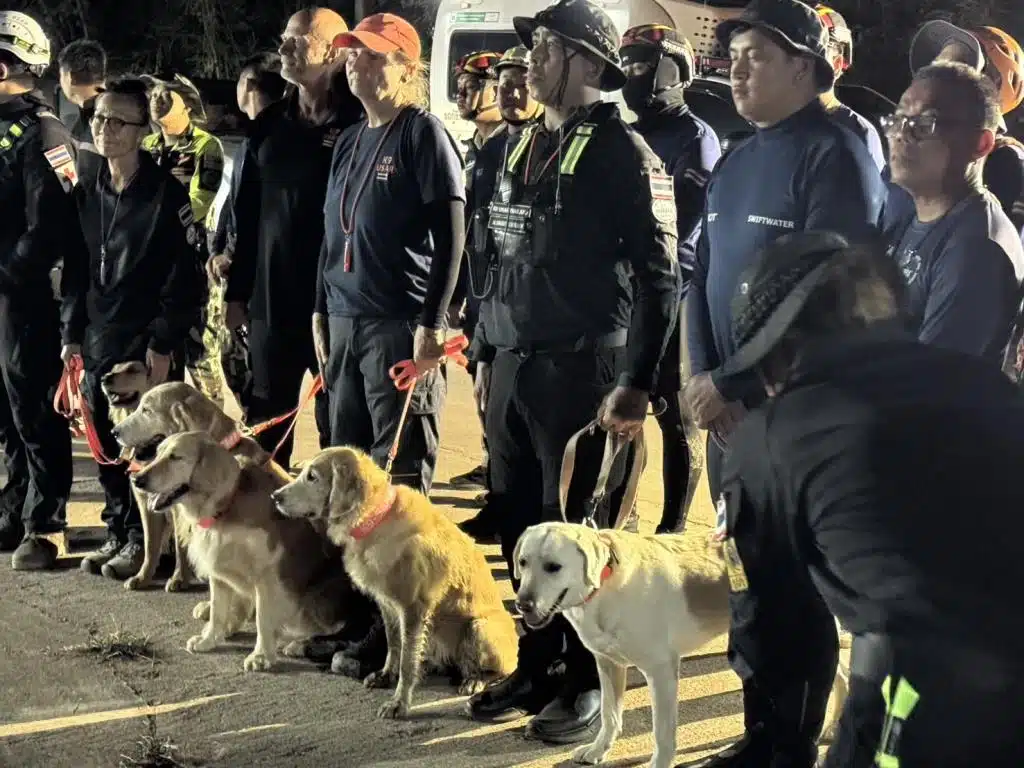
The drill involved four elephants from the Saentrakul Elephant Sanctuary: Plai Saensap, Plai Saentan, Plai Valentine, and Plai Ngam. They worked alongside six search and rescue dogs (K9s), including Labradors and Golden Retrievers.
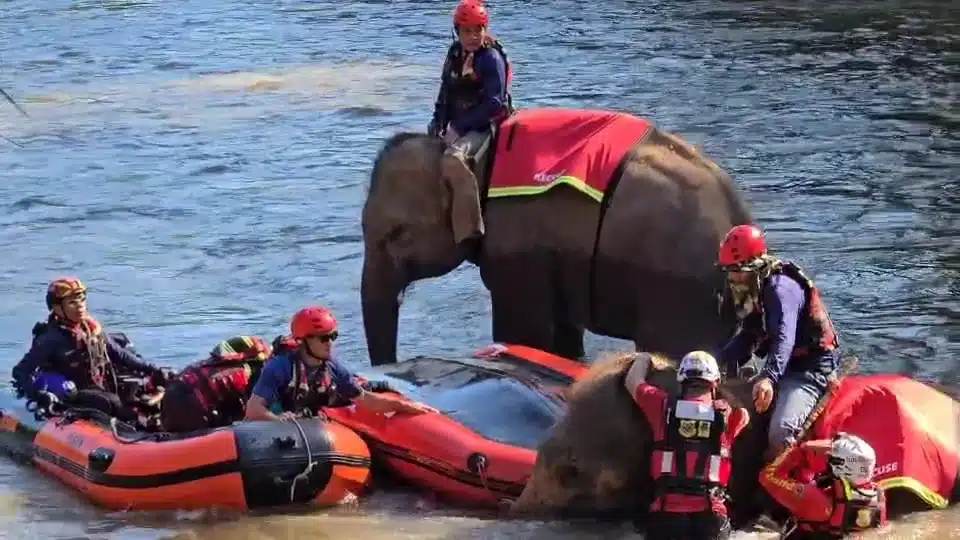
The training was divided into four main stations: establishing an incident command centre, a simulated helicopter crash, a landslide and capsized raft situation, and a vehicle accident where a car fell into a ravine. These scenarios mirrored genuine disaster conditions often found in remote areas.
Mr Padsri added that the key feature of the exercise was using the specific strengths of each animal appropriately. K9 dogs excel at scent detection and locating missing persons in complex terrains.
Elephants, however, offer sheer strength, are physically robust, and know how to navigate rugged landscapes. They can wade through water and mud, moving essential supplies or rescuing survivors in places where vehicles or heavy machinery cannot pass.

Suttikiat Sophonnik, Director of the K9 USAR Thailand (National Rescue Dog Organisation) and controller of TIMS 2025, stated this was the first tangible partnership between rescue dogs and elephants. Dogs provide speed and agility, while elephants offer power and endurance. When their efforts are combined, the efficiency of disaster response improves significantly.
He confirmed plans to internationalise the cooperation in 2026, inviting countries with elephants, such as Laos, Myanmar, Malaysia, and Taiwan, to join the exercise. This will allow for the exchange of knowledge and the joint development of regional rescue standards.
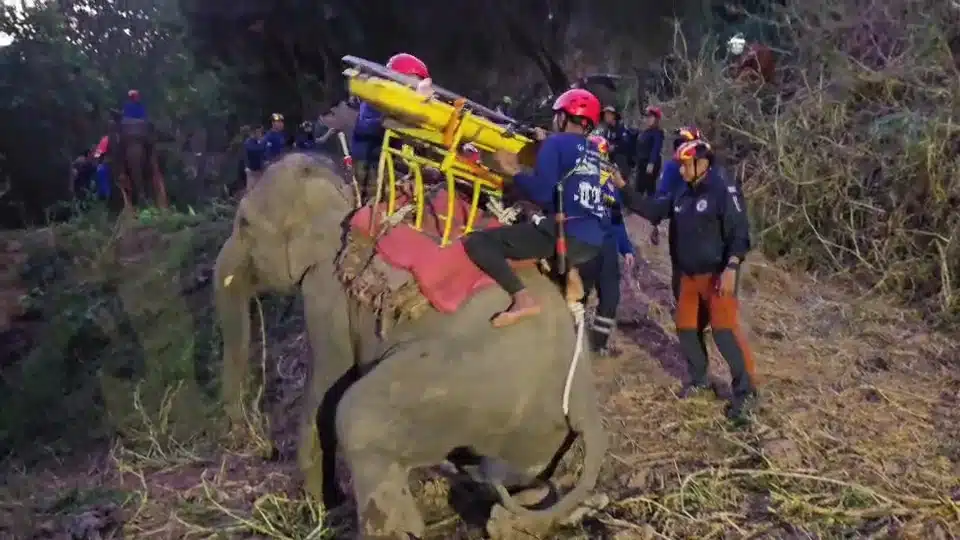
Phra Khru Sangkharak Virawatt Viravuddhano, or Phra Khru Aud, from Wat Chedi Luang and founder of the Saentrakul Elephant Sanctuary, shared how the idea for rescuing elephants came about. During a major flood in Chiang Mai in 2024, four elephants were used to transport food and goods to cut-off communities. This experience demonstrated the elephants’ potential for aiding survivors, leading to the development of their skills for formal rescue operations.
Phra Khru Aud of Wat Chedi Luang, Chiang Mai, further noted that the Saentrakul sanctuary currently has eight elephants trained in rescue techniques. These animals are ready for deployment immediately should disasters strike in various areas.
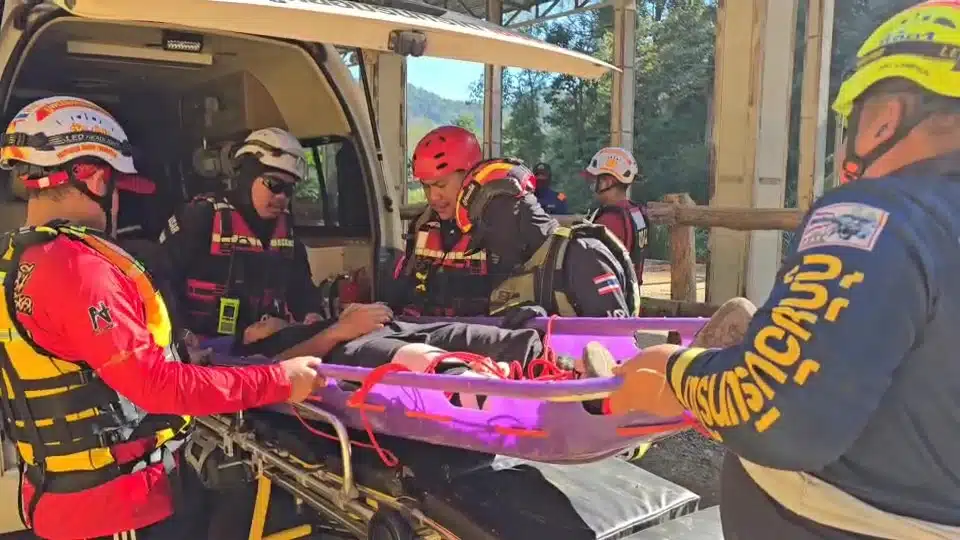
They support human efforts, help reduce loss, and increase the chances of survival for those affected. The sanctuary also stresses the integration of technology, such as aerial drones and thermal imaging drones, to support the joint operations of human, elephant, and dog rescue teams. These tools allow for route surveying and careful, safe planning before entering a disaster zone.
TIMS 2025 represents a significant stride for Thailand in developing integrated rescue systems. It may well become a new global model for using animal power alongside technology and humans to respond to future disasters in a sustainable way.