


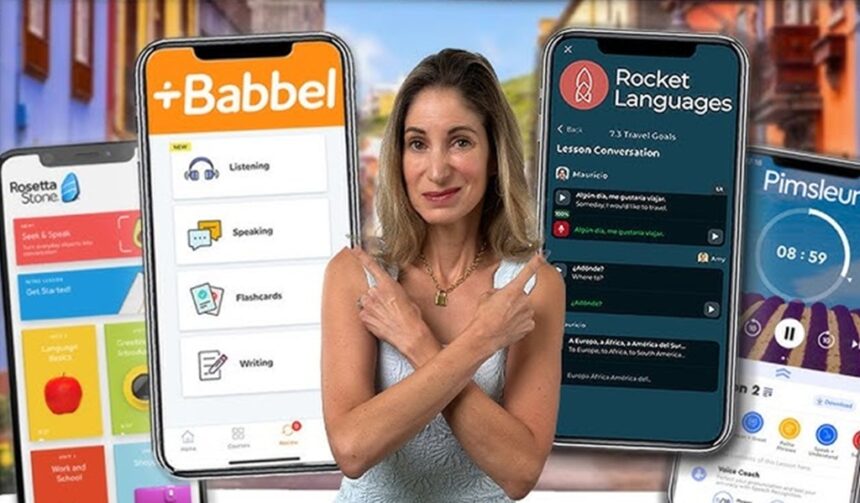
Trying to pick an app for your next language can feel like shopping in a crowded supermarket. So many bright colors, so many promises, and no time to test them all yourself.
In 2025, AI has quietly changed how people study. Smart review systems, speech recognition, and personalized lessons now sit in your pocket. The challenge is knowing which language learning apps actually help you speak, and which ones mainly help you collect streaks and points.
This guide ranks seven apps that experts tested in real life, not just on app store screenshots. The rankings focus on speaking practice, real‑world skills, price, ease of use, and whether the app still feels useful after a few months. It is simple, honest, and written for beginners and busy adults who want real progress, not just a new hobby.
How We Tested and Ranked the Top 7 Language Learning Apps
To keep things fair, each app was used for several weeks with short, daily study sessions, similar to what a busy learner can manage. Testers worked with Spanish, French, Japanese, and English at beginner and low‑intermediate levels.
Our group included office workers, college students, and casual learners who could spare 10 to 30 minutes a day. They rated how quickly they could start speaking useful phrases, how clear the lessons felt, and how much progress they saw over time.
We also compared our results with independent expert roundups, such as PCMag’s review of the best language learning apps for 2025, to check that our impressions stayed in line with broader testing. This list is not sponsored, and some well‑known apps ended up lower in the ranking because of weak speaking practice or slow progress.
Key criteria experts used to judge each app
- Speaking and listening strength
Does the app push you to say words out loud, listen carefully, and respond, or does it only focus on reading and tapping? - Clarity of grammar and vocabulary
Are grammar points and new words explained in simple language, with clear examples you can copy? - Smart review system
Does it use spaced repetition or AI to bring back words right before you forget them, so study time stays efficient? - Real‑world usefulness
Do the phrases help with travel, work, or daily talk, or are they random sentences you will never say? - Free vs paid value
How much can you learn on the free plan, and does the paid version feel worth the cost for long‑term use? - Ease of use on phone and desktop
Is the app simple, stable, and quick to use on both mobile and computer, or does it feel slow or confusing?
Who these language learning app rankings are best for
These rankings will help you most if:
- You are a beginner or low‑intermediate learner starting a new language.
- You have a busy schedule and need short, focused lessons that fit into a workday.
- You care more about real conversations than about colorful badges.
Parents and teachers can also use this list to pick tools that support kids or class study, especially for extra practice at home. Advanced learners can use it to choose a second app for review, listening, and keeping skills sharp between classes or trips.
The Top 7 Language Learning Apps of 2025 (Tested and Ranked)
1. Babbel: Best overall language learning app for busy adults
Babbel reached the top spot because it feels like a well‑planned course, not just an app. Lessons are short, structured, and focused on everyday conversations, like ordering food, setting meetings, or chatting with friends.
Grammar appears in small, clear steps, with examples you can reuse right away. Built‑in speech recognition and AI‑powered feedback help you fix your pronunciation as you go. Extras like podcasts and review tools keep you from forgetting what you learned.
Babbel works best for workers, travelers, and serious beginners who want steady, real progress. People who prefer game‑style learning may find it a bit serious. The price sits in the low monthly range, especially if you choose a longer plan, and the value is strong compared with most other language learning apps.
Pros: clear structure, great grammar help, real‑life dialogs, and strong review tools.
Cons: less playful, needs a paid plan for full value.
2. Mosalingua: Best for smart flashcards and AI‑powered review
Mosalingua is built for people who love efficient study sessions. Its strength is a powerful flashcard and spaced repetition system that uses AI to time your reviews and keep only what you really need on screen.
Instead of random words, Mosalingua focuses on useful phrases for travel, work, and daily life. This makes even short sessions feel productive. In 2025, updates improved the app’s look and made it easier to track progress, while keeping the lean, no‑nonsense style.
Mosalingua fits self‑motivated learners, exam prep, and travelers who need key phrases fast. The interface can feel plain at first, and there is a small learning curve as you set up decks and goals.
A smart combo is to use Mosalingua for vocab and phrases, then pair it with Babbel, Busuu, or another speaking‑focused app for full conversations.
Pros: very efficient review, practical phrases, strong AI scheduling.
Cons: plain design, weaker guided conversation practice.
3. Busuu: Best for real feedback from native speakers
Busuu stands out because you are not learning alone. Along with standard lessons on vocabulary and grammar, Busuu asks you to send short writing or speaking tasks to its community.
Native speakers can then correct your answers, add comments, or offer better phrases. This feedback feels close to having a teacher and helps you move beyond textbook sentences. AI‑driven study plans tell you what to study next and how long it may take to reach your level goal.
The free plan is decent, but the real strength is in the Premium version, which opens more lessons, grammar tools, and offline study. Busuu fits social learners, people who like community support, and anyone who wants teacher‑like feedback without a full course.
Pros: real corrections from natives, balanced skills, and good study plans.
Cons: best features sit behind Premium, feedback speed depends on the community.
4. Gymglish: Best for personalized, story‑based lessons
Gymglish takes a different path from most apps. Instead of simple drills, you get short, story‑based lessons sent by email or app notification. The characters and humor keep things fresh, and each lesson adjusts to your level.
The system tracks your mistakes, then brings back similar points until you fix them. It feels close to having a private teacher who remembers your weak spots and keeps working on them. This style is great for building reading, listening, and writing accuracy.
Gymglish is better for learners who already know some basics and want to sharpen their skills rather than start from zero. There is a free trial, so you can test the format. Long‑term use can be pricey, but it pays off if you enjoy the stories and stick with the daily emails.
Pros: fun stories, strong personalization, focused error correction.
Cons: less ideal for absolute beginners, higher long‑term cost.
5. Rocket Languages (and Pimsleur): Best for audio learners and commuters
Rocket Languages and Pimsleur often compete for the same type of learner. Both focus on guided audio lessons that train your ear and your mouth more than your thumbs.
Rocket Languages mixes audio tracks, interactive exercises, and culture notes. You listen, repeat, and practice short dialogs, then check yourself with reading and writing tasks. Pimsleur leans almost fully on audio and careful repetition, which is great while driving, walking, or doing chores.
These programs suit commuters, podcast lovers, and anyone who feels they learn better by listening and speaking. They are more complete courses than small apps and often cost more up front, but they can replace or support a class.
Rocket feels slightly more modern, with more extras and on‑screen work. Pimsleur is simpler, very structured, and ideal if you want a strict daily audio habit.
Pros: strong speaking and listening, great for hands‑free study.
Cons: higher cost, less playful, less focus on quick mini‑games.
6. Duolingo: Best free app for building a daily habit
Duolingo is the classic green owl that almost everyone has tried at least once. It is still the best free app for building a daily habit, especially for total beginners.
Short exercises, streaks, and bright graphics make it easy to open the app for a few minutes a day. You can cover many languages, and the bite‑sized lessons lower the fear of starting from zero. For many users, Duolingo is the first step that makes language learning feel reachable.
The main limits are weaker speaking practice, many translation‑heavy tasks, and less depth when you reach higher levels. Experts still like Duolingo as a starter or side tool, not as your only path to fluency.
A good plan is to use Duolingo for 5 to 10 minutes a day to keep your streak, then spend your serious study time in Babbel, Mosalingua, Busuu, or another course from this list.
Pros: free, fun, easy to start, huge language choice.
Cons: light on real conversation skills, lots of ads unless you pay.
7. Rosetta Stone: Best for visual learners who like full immersion
Rosetta Stone is one of the oldest names in language software, and it still attracts learners who enjoy full immersion. You learn with images, audio, and repeated patterns, with almost no translations.
This method slowly trains your brain to connect sounds, pictures, and meanings without using your native language. The app also includes speech recognition to clean up your accent. It works well for visual learners, patient users, and kids who have adult support.
The main downsides are slower progress for many adults, less clear grammar explanations, and a style that can feel repetitive or old‑fashioned compared with newer apps. It still makes sense if you want a calm, immersive path and dislike grammar rules on screen.
Pros: strong immersion, good for kids and visual learners, clear pronunciation base.
Cons: repetitive, light grammar explanations, can feel dated.
How to Choose the Right Language Learning App for Your Goals
There is no single perfect app. The right one depends on what you want, how you like to study, and how much time and money you can give.
Use the rankings as a map, then match your goals to each option instead of chasing every new tool.
Match your learning goal to the right app type
Travel in the next 3 months
Babbel and Mosalingua are great picks, since they focus on ready‑to‑use phrases and dialogs for real trips. For deeper comparisons, you can also look at this guide to the best language learning app for travel.
Passing a school exam
Babbel, Mosalingua, and Busuu help with grammar, vocab, and structured review. Pair one of them with Duolingo for quick daily drills.
Long‑term fluency for work
Babbel and Busuu are the top choices here, with Rocket Languages or Pimsleur as strong audio support for speaking and listening.
Casual learning for fun
Duolingo is perfect for light fun. Add Babbel or Rosetta Stone if you later want more depth or immersion.
Helping a child learn
Rosetta Stone fits patient kids who like pictures, while Duolingo can work for supervised, game‑style sessions. Gymglish is better for teens with some base in the language.
Consider your budget, free trials, and how often you will really study
Most apps offer monthly plans, yearly plans, or one‑time lifetime access. Free tiers help you test the style, but the best content usually sits behind a paywall.
Before you subscribe, ask yourself how many days per week you will truly study. If you can handle 20 minutes a day, a paid app like Babbel, Busuu, or Rocket Languages can be worth it. If you are unsure, start with one main app and one free side app, such as Duolingo or Mosalingua’s free content.
The best app is not the one with the longest feature list. It is the one you will actually open most days.
Avoid common language app mistakes that slow your progress
Mistake 1: Only tapping, never speaking out loud
Fix: Say every new word or phrase out loud, even if the app does not force you to. Use your phone’s voice recorder to repeat key lines.
Mistake 2: Never reviewing old material
Fix: Spend at least one third of your study time on built‑in review sessions or flashcards so knowledge sticks.
Mistake 3: Jumping between too many apps
Fix: Pick one main app for your core lessons, and at most one side app for extra fun or vocab.
Mistake 4: Ignoring listening practice
Fix: Add short audio, podcasts, or video clips a few times a week, even if you understand only a little at first.
Mistake 5: No clear weekly goals
Fix: Set tiny, clear targets like “5 Babbel lessons” or “3 Pimsleur sessions” per week and track them in a simple note.
Small, steady steps over months always beat one long weekend of cramming.
Smart Study Tips to Get the Most From Any Language Learning App
You do not need hours a day to make progress. A simple, focused routine can carry you a long way if you keep it going.
Build a simple 15‑minute daily routine that you can keep
Here is one easy plan:
- 5 minutes: review old material.
Open your app’s review section or flashcards and refresh words and phrases you learned earlier. - 7 minutes: new lesson content.
Complete one short lesson or part of a unit, staying focused on understanding, not speed. - 3 minutes: create your own output.
Say a few sentences out loud or write a tiny paragraph using today’s words.
You can change the times, but try to keep these three parts: review, new input, and your own output. Short, regular sessions beat long but rare study days.
Add real‑life input, so your app learning feels natural
Apps are great, but your brain also needs real‑life sounds and context.
Some simple ideas:
- Listen to easy songs with lyrics and follow along.
- Watch short YouTube videos or clips for learners in your target language.
- Label a few objects at home with sticky notes in the new language.
- Keep a tiny journal where you write two or three sentences a day.
- Record short voice notes talking about your day, even if they are full of mistakes.
Use sentences from your app as a base, then twist them to talk about your own life. That is when the language starts to feel real.
Conclusion Magic app does everything for everyone, but the seven tools in this guide are the most reliable
You do not need to try them all. Pick one that matches your goal and budget, commit to a few weeks of daily practice, and treat a second app as optional support, not a new distraction.
If you stay consistent with even 10 to 15 minutes a day, you can look back a year from now and be surprised by how much you can understand and say in your new language.