





CHIANG RAI – High in the cool, misty hills of northern Thailand, where arabica cherries ripen under soft morning fog and hill tribe villages cling to steep slopes, Chiang Rai has become a quiet force in ethical coffee. Over the past few decades, this once-troubled corner of the Golden Triangle has shifted from opium fields to coffee forests, trading danger for dignity and long-term livelihoods.
For local families, fair trade coffee is far more than a marketing tag. It is a safety net, a source of pride, and a path out of poverty. For buyers searching for the “benefits of fair trade coffee from Chiang Rai” or trying to find the “best fair trade coffee farms in Thailand”, this northern province offers a rich mix of quality, ethics, and story.
This feature looks at how fair trade coffee in Chiang Rai grew from royal projects, how it supports hill tribe communities, which farms and brands lead the movement, and why each cup has the power to change lives.
The Rise of Fair Trade Coffee in Chiang Rai: A Local Legacy
Chiang Rai’s coffee story stretches back to the 1960s, when the region was a key part of the Golden Triangle’s opium trade. Royal projects under King Bhumibol Adulyadej and Queen Sirikit encouraged hill tribe groups, such as the Akha and Lisu, to switch from opium to highland arabica. Over time, steep, risky fields turned into productive coffee terraces.
Today, Chiang Rai has more than 53,000 rai of coffee land, around 8,600 hectares, mostly planted with arabica at altitudes above 1,000 metres. Cool nights, rich mountain soil, and fresh water create beans with bright acidity, gentle sweetness, and chocolate-like notes. Fair trade certification, supported by bodies such as Fairtrade International and Ecocert, helps smallholders gain fair prices, reliable buyers, and better working conditions.
Chiang Rai’s reputation comes from more than meeting basic fair trade rules. Many local cooperatives work with a “beyond fair trade” mindset. In standard commodity markets, coffee prices often fall below farmers’ costs. Fair trade turns that pattern around by guaranteeing a minimum price for arabica, often around 1.40 US dollars per pound, plus an extra premium for community projects.
In 2025, with global coffee markets shaken by climate change, this steady price matters. Chiang Rai now produces roughly 4,355 tonnes of coffee each year, helping to place Thailand among the world’s top 25 exporting countries.
Yet the real success lies in the ethics behind the beans. On visits to hillside plots overlooking the Mekong and neighbouring valleys, it becomes clear that fair trade is not a slogan; it is the reason many children in these communities sit in classrooms instead of working full-time in the fields.
Economic Empowerment: Lifting Hill Tribes Out of Poverty
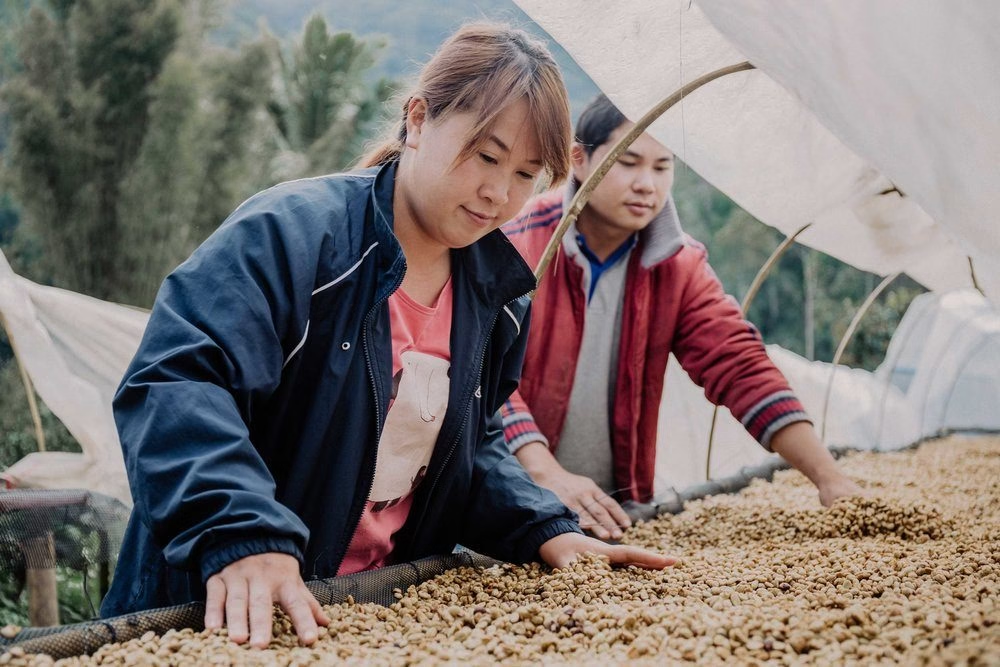
The key benefit of fair trade coffee from Chiang Rai is simple: fair pay for hard work. Many growers in the province are from ethnic minority groups such as the Akha, Lisu, and Mien. In the past, families sold cherries to middlemen for very low rates, often with no control over final prices or access to proper market information.
Fair trade changes that pattern. Farmers organise into cooperatives, then sell directly to buyers or roasters. In many cases, incomes have doubled, rising from about 35,000 baht per rai to roughly 70,000 baht. The Akha Ama collective in Maejantai village gives a clear example. Just 14 families there manage to sell high-quality arabica at proper market prices. They use fair trade premiums to fund scholarships, health support, and better processing equipment.
Royal projects have had a huge economic impact, too. In Pangkhon village, under a project initiated by Queen Sirikit, arabica farms now bring in an estimated 5.5 billion baht a year for farmers across northern Thailand. This income has reduced labour migration and helped prevent a return to opium cultivation.
Women benefit strongly from this change. They make up around 40% of the coffee workforce and play a growing role in processing, accounting, and management. Fair trade standards require equal pay and access to training, which helps shift traditional gender roles in many villages.
In Ban Huai Nam Khun, for example, farmers such as Khun Dao and Khun Ardong sell their cherries through FairNIST. The organisation pays above-market rates, about 22 baht per kilogram instead of 16 to 20 baht. With this extra income, families have installed solar panels, built simple irrigation systems, and invested in milling equipment. These steps turn small plots into stable, long-term businesses.
Worldwide, fair trade coffee has helped hundreds of thousands of producers reduce poverty. In Chiang Rai, the effect can be seen in fewer high-interest debts, more diverse crops such as macadamia and fruit trees, and young people choosing to stay and improve their parents’ farms. Local cafes, export roasters, and a proud new generation of baristas all trace their roots back to this shift in the hills.
Shade-Grown Sustainability in the Highlands
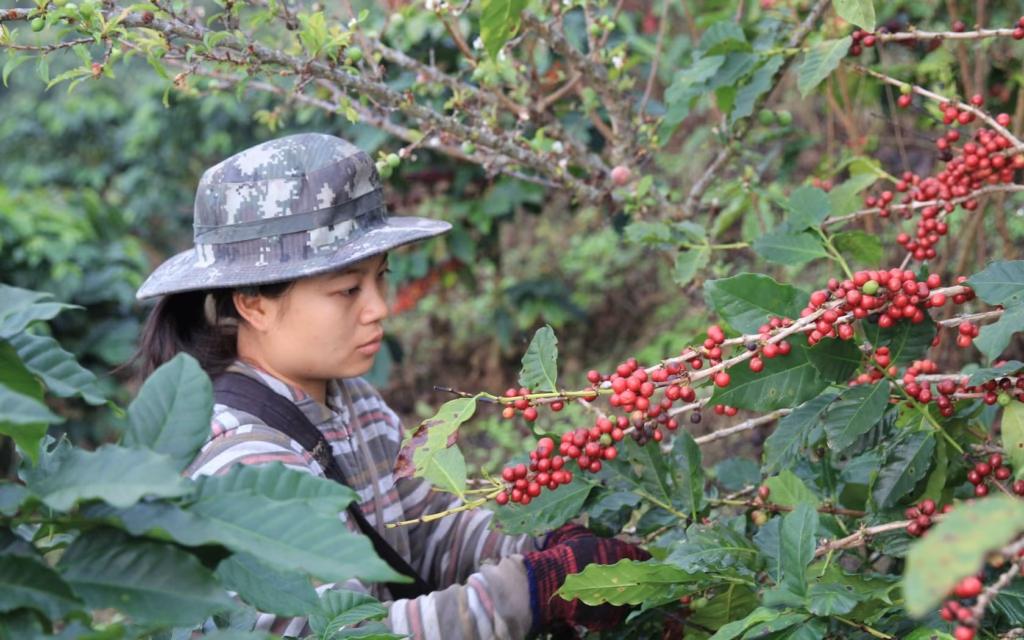
Chiang Rai’s mountains are not only scenic. They protect water sources that feed rivers across northern Thailand. Fair trade coffee rules often go hand in hand with organic and shade-grown methods, which help protect these fragile ecosystems.
Many fair trade farmers grow coffee under a canopy of native trees, fruit trees, and timber species. This style copies natural forest cover, keeps soil moist, and reduces erosion. In areas like Doi Chaang, where Akha growers plant arabica among fruit trees and tall shade species, soil erosion has fallen by around 30%. Birdlife has increased, which in turn improves natural pest control and pollination.
Organic and low-chemical methods are common among fair trade groups. These practices reduce pollution and help farmers adapt to climate shifts such as erratic rain and prolonged dry spells. Coffee leaf rust and other diseases have already cut yields by several percent in some seasons, so healthy, diverse farms matter even more.
MiVana is a strong example from Chiang Rai. Its shade-grown arabica comes from forested areas at about 1,000 metres and above. Farmers pick cherries by hand and protect tree cover, while community funds support replanting and forest care.
In Mae Kha Jan, fair trade-linked cooperatives have planted around 1,600 acres of mixed forest and alternative cash crops where opium once grew. Old fields that once held a single illegal crop now support varied tree species, wildlife, and income sources. The result is a landscape that supports both communities and climate resilience.
 Building Stronger Communities One Bean at a Time
 Building Stronger Communities One Bean at a Time
Fair trade in Chiang Rai is not only about farmers and buyers; it is about whole communities. The fair trade premium, the extra payment on top of the price for coffee, goes into shared funds. Villagers then vote on how to use this money.
Typical projects include school repairs, new classrooms, simple clinics, safe drinking water systems, or women’s savings groups. In many places, this shared decision-making has improved trust and reduced conflict.
In Doi Chaang, about half of the profits from Doi Chaang Coffee Co. return to farmers through a “Coffee Academy” and community projects. The academy trains hundreds of growers and young people each year in areas such as quality control, processing, roasting, and small business management. This model, developed with Canadian partners, has helped remove child labour from plantations and build safer, more respected jobs for adults.
Ban Huai Nam Khun offers another powerful story. FairNIST sets aside 10% of the value of its coffee for community use. The villagers chose to build a small library and a health station, which has supported maternal and child health and reduced infant deaths. These are quiet but big changes that start with a better price for a red cherry on a branch.
Across Chiang Rai, fair trade standards also support gender equality, youth participation, and cultural pride. Many cooperatives encourage young people to document traditional songs, costumes, and harvest rituals while learning modern agronomy and coffee science. This blend of heritage and innovation gives the area’s coffee its unique character, both in flavour and in story.

Key Fair Trade Coffee Farms in Chiang Rai
Chiang Rai’s fair trade coffee mostly comes from small, family-run farms linked through cooperatives. Below are some of the leading names for visitors and buyers who want to see fair trade in action.
- Doi Chaang Coffee Farm (Mae Suai District)
Located about an hour from Chiang Rai city, Doi Chaang is an 8,000-acre highland area farmed mainly by Akha and Lisu families. It helped shape the “Beyond Fair Trade” idea, with a 50:50 profit-sharing model between farmers and international partners. Its organic arabica grows at 1,200 to 1,500 metres and often tastes nutty with low acidity. Visitors can tour processing stations and former opium areas that now host forest coffee plots.
Doi Chaang Official Site - Akha Ama Coffee Collective (Maejantai Village)
Founded by Lee Ayu Dtipaya, Akha Ama is a small but influential group of 14 Akha families. They grow organic arabica at high altitude, known for bright, citrus-like flavours. Fair trade-style pricing supports scholarships, training, and community projects, with a strong role for women in processing. Visitors who make the long trip up to the village see both modern coffee techniques and daily hill tribe life.
Akha Ama Coffee - Pangkhon Royal Project Farm (Mueang Chiang Rai)
Part of a Royal Project area along the Kok River watershed, this farm cluster brings together Akha and Mien farmers who grow 100% arabica. Covering more than 300 rai, it focuses on sustainable soil and forest management, which helps prevent deforestation and landslides. The farm is often highlighted as a model for linking royal development ideas with fair trade and organic coffee.
Heinrich Böll Foundation Report - Ban Huai Nam Khun Village Farm (Partnered with FairNIST)
In this Akha village, small plots produce rich, full-bodied arabica that goes into FairNIST blends for northern Thai roasters. FairNIST commits to buying all cherries at premium prices, which gives farmers confidence to invest in quality. The project is student-driven, linking university knowledge with village experience.
FairNIST - Leehu Coffee Farm (Doi Chang District)
Leehu is a boutique farm run by Lisu and Akha families. It focuses on washed-process arabica, often intercropped with macadamia trees for both shade and extra income. The farm welcomes visitors for tours and tastings, and sells coffee through direct trade models that give clear traceability from plot to cup.
Olsen Tours Guide - Mae Kha Jan Community Lots (Highlands)
This area is known for its younger generation of farmers, many between 25 and 35 years old. They use raised beds and wet processing to dry and prepare arabica cherries, reducing defects and improving cup quality. Fair trade and direct trade buyers pay premiums for this careful work. Many of these farmers are children or grandchildren of former opium growers, keen to build new futures based on legal, ethical coffee.
Ally Coffee
Each of these farms shows a different side of Chiang Rai’s fair trade story. Together, they form a network where every cherry-pick supports families, forests, and future generations.

Spotlight on Brands: From Bean to Brew
Several Chiang Rai-linked brands now take these fair trade beans to shelves and cafes across Thailand and abroad. Here are some of the most recognised names.
- Doi Chaang Coffee Co.
Doi Chaang Coffee Co. is one of Thailand’s best-known specialty brands, with USDA Organic certification and a Beyond Fair Trade model. Its coffees are widely sold in Canada, the UK, and in many Thai cafes. The popular espresso blend, with strong chocolate notes, usually sells for around 650 to 700 baht per kilogram. Around half of the profits flow back to the farming communities in Doi Chaang through social and training projects.
Buy Doi Chaang - Akha Ama Coffee
Akha Ama has gained international attention for its quality and social mission. Its organic arabica often scores well in SCA Europe tastings, with clean, bright flavours. The brand runs cafes in Chiang Mai and Chiang Rai, where staff explain the story behind each lot. Profits support seedling programs, processing upgrades, and cooperative training in Maejantai village.
Akha Ama Shop - Bluekoff Thailand
Bluekoff works closely with growers in Doi Chang Mountain at around 4,900 feet. The company offers single-origin, 100% arabica roasted to a medium-dark profile, known for smooth, gourmet flavours. Bluekoff uses direct fair trade-style dealings with organic farmers and sells both in Thailand and through online platforms such as Amazon. A 250-gram bag often retails at about 499 baht.
Bluekoff on Amazon - MiVana Organic Coffee
MiVana focuses on forest-friendly, shade-grown arabica from Chiang Rai’s highland forests. Its beans are chemical-free and grown at elevations above 1,000 metres. The coffee tends to taste nutty and balanced, suitable for both filter and espresso. Buying MiVana supports about 325 families across several cooperatives, as well as forest conservation work. Visitors can find the coffee in selected hotels and shops, including Tamarind Village.
MiVana Info - FairNIST Coffee
FairNIST sources arabica from Ban Huai Nam Khun and other northern hills, paying fair trade-aligned premiums and building a 10% community fund. Students in Chiang Mai roast the beans, turning raw cherries from remote slopes into polished espresso and filter blends. The brand offers whole beans and ground options for home brewers.
FairNIST Store
These labels give buyers a direct way to support Chiang Rai’s coffee farmers. Many use online tools and QR codes so drinkers can trace each bag back to its origin village and farming group.

Why Choose Fair Trade Coffee from Chiang Rai?
By 2025, climate stress, unstable prices, and social pressure are all shaping how the world drinks coffee. Choosing fair trade coffee from Chiang Rai is more than a taste decision. It is a simple daily choice that backs fair incomes, forest protection, and stronger communities.
Each bag bought from farms such as Doi Chaang, Pangkhon, Mae Kha Jan, or villages like Ban Huai Nam Khun keeps money flowing into hill tribe economies. It reduces the lure of short-term, harmful crops and supports long-term care for the land. It also funds schools, clean water, and health centres that might not exist otherwise.
When someone searches “fair trade coffee benefits Chiang Rai” and decides to buy or visit, they link their morning brew to families on steep, green hillsides. A visit to a local cafe in Chiang Rai city, a tour to Doi Chaang or Maejantai, or a simple online order from a fair trade brand can all make a clear, human difference.
From mist-covered mountains to a warm mug on a kitchen table, Chiang Rai’s fair trade coffee carries a promise: good flavour, honest trade, and a future where farming communities stand on their own feet.


