




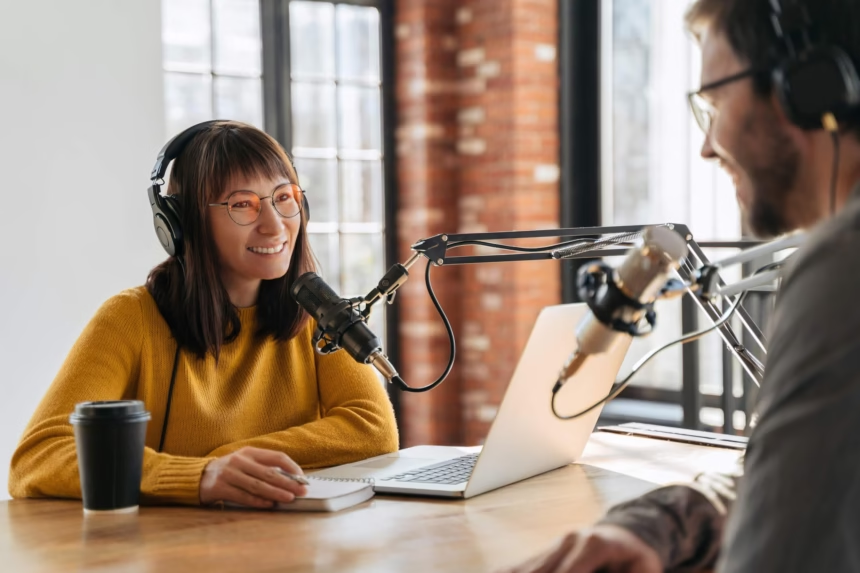
In a world where audio content reigns supreme, with over 500 million global listeners tuning in weekly, starting a podcast has never been more accessible—or essential. Whether you’re a passionate hobbyist, aspiring influencer, or business owner eyeing new revenue streams, 2025 marks the perfect year to hit a record.
Whether you are a hobbyist with a story, a creator building a personal brand, or a business owner looking for new leads, this year offers a rare chance to jump in. AI tools, low-cost gear, and simple podcast hosting platforms remove most of the old barriers. Spotify and Apple Podcasts report around a 20% rise in new shows this year, and industry experts say the window is wide open.
If you want to know how to start a podcast in 2026 without stress, this guide walks you through every step of starting a podcast for beginners.
Why Start a Podcast in 2026?
Podcasting is no longer a side hobby for a few tech fans. It has become part of daily life for millions. Nielsen reports that listeners in the US now spend about 17 hours a week on podcasts, up from 14 hours last year. That is a big jump in a short time.
AI tools now sit at the centre of this growth. Descript’s Overdub lets you edit your voice by editing text. Riverside.fm records guests remotely in high-quality audio that sounds like you are in the same room.
For anyone starting from scratch, the entry point is low.
“You do not need a studio with fancy lights,” says podcast coach Jamie Larson from The Podcast Host. “A simple USB mic, a quiet room, and free software are enough to release a professional show.”
Money is flowing into the space as well. Podcast ads passed $2 billion in revenue in 2024, and brands are still shifting budgets into audio. If you are exploring how to start a podcast in 2025, planning well and moving quickly gives you a real edge.
Step 1: Choose a Clear Niche and Audience
Before you record a single second, decide what your show stands for. Your niche is the focus that keeps your ideas sharp and your audience loyal.
Will you cover true crime, tech reviews, health, comedy, personal finance, or something more unusual? Research shows that niche podcasts grow up to 30% faster than broad, general shows. A clear angle attracts the right listeners and keeps them coming back.
Start simple:
- Write down 10 possible episode ideas.
- Use Google Trends to see if people search for those topics, such as “beginner investing tips” or “simple fitness routine”.
- Define who your show is for, like busy parents, students, remote workers, or Gen Z founders.
Tools like AnswerThePublic help you see what questions your audience already asks online. Those questions can turn into strong episode topics.
A quick social media poll is a smart way to test ideas.
“Get your audience involved from day one,” says Larson. “You build interest before launch and collect feedback for free.”
Step 2: Get Podcast Equipment for Beginners Without Overspending
You no longer need a studio full of expensive audio gear. In 2025, the best podcast equipment for beginners fits almost any budget. You can start strong for under $100.
Consider this simple set-up:
- Microphone: The Fifine K669B USB mic, about $40, offers clear sound and plugs straight into a laptop.
- Headphones: Sony MDR-7506, around $100, give accurate sound so you can hear small issues while editing.
- Software: Audacity is free and good for most beginners. Mac users can start with GarageBand. Reaper is another option with a one-time fee of about $60.
- Recording space: You do not need full studio soundproofing. A small room or wardrobe, soft furnishings, and a few blankets will reduce echo.
For remote interviews, platforms like Riverside and Zencastr, both with free tiers, record each person locally, then upload high-quality files.
Mia Chen, a reviewer at Gear Patrol, says, “Affordable mics plus AI noise reduction tools, like Adobe Podcast, help new creators sound like long-time pros.”
If you shop smart, your total starter kit can land under $150.
Step 3: Record and Edit With Simple Systems
Once your gear is ready, it is time to hit record. Do not aim for a rigid script. Use bullet points and loose notes instead. That keeps your tone natural and relaxed.
Most successful shows run between 20 and 45 minutes. Edison Research data suggests this length gives strong listener retention without feeling like a slog.
Set a simple recording system:
- Record in batches when you can, such as three episodes in one sitting.
- Use the same space, mic distance, and settings each time for consistent sound.
- Speak as if you are talking to one person, not a crowd.
When editing, cut long pauses, heavy filler words, and repeated sections. Add a short intro and outro with simple royalty-free music from libraries like Epidemic Sound.
AI tools now reduce editing time in a big way. Descript transcribes your audio, then lets you fix mistakes by editing the text on screen. Many beginners say it cuts their editing time by half.
Export your finished files as MP3, and you are ready for the next step.
Step 4: Pick the Right Podcast Hosting Platform
A podcast hosting platform is a service that stores your audio files and sends them out to listening apps like Spotify and Apple Podcasts. It is the backbone that keeps your show live and easy to find.
Popular podcast hosting platforms for 2025 include:
- Buzzsprout: Very beginner-friendly, with a clean dashboard, helpful guides, and pricing from about $12 per month with unlimited storage.
- Libsyn: A long-running platform trusted by many larger shows, with plans starting at around $5 per month.
- Anchor (by Spotify): Free to use, with built-in tools for basic monetisation and distribution.
Once you pick a host, you will:
- Upload your episode files.
- Create show artwork, which you can design in Canva without cost.
- Write a clear show description using phrases such as “starting a podcast for beginners” and “how to start a podcast in 2025”.
- Submit your RSS feed to major directories like Spotify, Apple Podcasts, Google Podcasts, and Amazon Music.
Approvals usually take between 1 and 5 days.
“Your host is your launchpad,” says Buzzsprout CEO Dave Jackson. “Choose one with strong analytics so you can track real growth, not guess.”
Step 5: Launch Smart and Promote Consistently
Your launch can make a big difference to early growth. Aim to publish at least three episodes on day one. New listeners can then binge a little and quickly decide if your show suits them.
Set a clear release schedule, for example, one episode every Tuesday. Around 70% of listeners say they stick with shows that release on a predictable pattern. Consistency builds trust.
When it comes to promotion, you cannot afford to stay quiet. Use these podcast promotion tips to grow your audience:
- Social media clips: Share short highlights on TikTok, Instagram Reels, and YouTube Shorts. Use tags like #PodcastBeginners and topic-related hashtags.
- Cross-promotion: Offer to appear on other podcasts with a similar audience. Join Reddit communities such as r/podcasts to connect with creators and listeners.
- SEO: Use clear, keyword-rich titles, like “How to Start a Podcast in 2025 for Complete Beginners”. Add keywords to your show notes in a natural way.
- Email list: Build a simple newsletter on Substack and send episode updates, behind-the-scenes notes, and links.
- Paid ads: A small Facebook or Instagram ad budget, even £40 or £50, can bring in the first 1,000 downloads if you target podcast listeners or people interested in your topic.
AI tools like Headliner turn your audio into eye-catching audiograms with captions. These clips perform well on social feeds and help new listeners sample your style quickly.
For guests, LinkedIn is a strong place to start. Many founders, authors, and experts are happy to appear on podcasts for added exposure.
Common Mistakes New Podcasters Can Avoid
Most beginners run into the same problems. You can skip many of them if you know what to watch for.
Perfectionism is one of the biggest traps. New hosts often delay launch for months while they chase the “perfect” intro or logo.
“Your first episode will not be flawless and that is fine,” says Larson. “It is more important to publish and improve over time than to sit on ideas.”
Technical issues can also be painful. Do short test recordings to check sound levels, background noise, and mic position before each session.
If listener engagement feels low at first, ask your audience for help. Invite reviews on Apple Podcasts and ratings on Spotify. These signals tell platforms that your show deserves a push in the rankings.
On the legal side, play it safe:
- Use royalty-free or properly licensed music.
- Get written permission from guests, even if it is a simple email confirming their consent to publish.
Taking care of these basics saves you from headaches later.
Monetise Early and Grow Over Time
You do not need millions of downloads to start earning. In 2025, small shows can monetise in several ways.
- Sponsorships: Marketplaces like Podcorn connect hosts with brands. Many pay around $20 to $50 per 1,000 downloads.
- Affiliate marketing: Promote products you use, such as books, software, or gear, through programmes like Amazon’s affiliate scheme. You earn a small fee when listeners buy through your links.
- Listener support: Platforms like Patreon let you offer bonus episodes, ad-free feeds, Q&A calls, or early access for a monthly fee.
Large shows such as “The Joe Rogan Experience” show how big the ceiling can be, with deals worth around $100 million a year. Most beginners will not reach that level, of course, but 1,000 downloads per episode is a realistic first target. That level often attracts small sponsors and helps you test what works for your audience.
Monetisation is easier when your niche is clear,r and your listeners trust you.
The Next Wave of Podcasting: Why Starting Now Matters
Podcasting keeps moving forward. VR listening spaces, interactive episodes, and smarter AI tools are already in testing. Starting a podcast for beginners in 2025 puts you in a strong place before these features become standard.
If you follow the steps in this guide, you can go from idea to live show in a matter of weeks. The path is simple: choose a niche, get basic gear, learn light editing, pick a hosting platform, and promote every episode with intention.
Your voice can reach listeners across the world faster than at any time in media history.
Ready to get going? Grab a mic, record your first test episode, and take the next step with more how to start a podcast in 2025 resources. Your podcast will not be perfect on day one, but it will exist, and that is what counts.


