




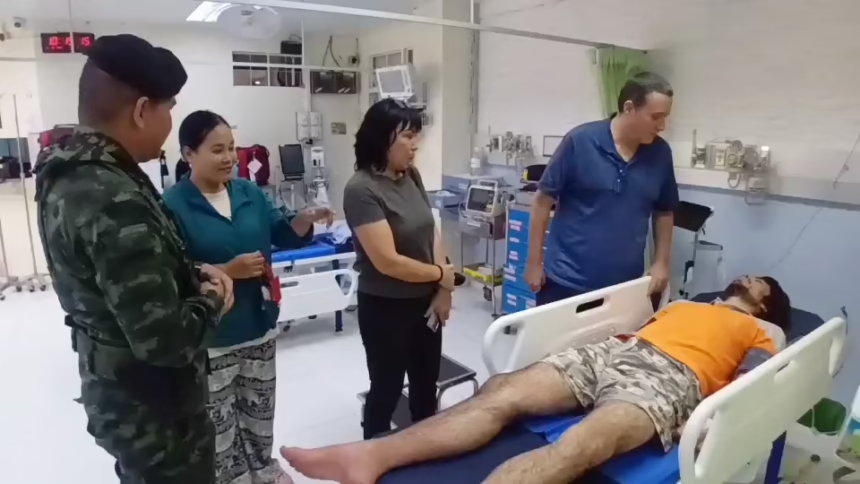
KANCHANABURI – A 19-year-old Briton missing from the resort town of Pattaya has been found alive after two weeks lost in the jungle near the Thai-Myanmar border. He survived by eating ants and tree bark.
Lawrence was located on 11 October at 7:30 p.m. at Tham Kaew Sawan Bundan Temple in Moo 9, Phra Chedi Sam Ong village, Nong Lu subdistrict, Sangkhla Buri district. Residents and the One Sky Foundation coordinated with military units to secure his rescue.
The search began on 27 September after Thai-Myanmar border forces received a notification from Sangkhla Buri Police Station. His mother, Kulnara, had filed a missing person report with Pattaya City Police Station on 26 September. She feared he may have been lured to Myanmar by scammers. Troops from the Lad Ya Task Force led wide-ranging searches.
They posted missing person notices at the Khiri Nakhorn checkpoint and other crossings. They also liaised with neighbouring authorities, including Myanmar military liaison teams, the Karen National Liberation Army (KNLA), and the Democratic Karen Buddhist Army (DKBA)
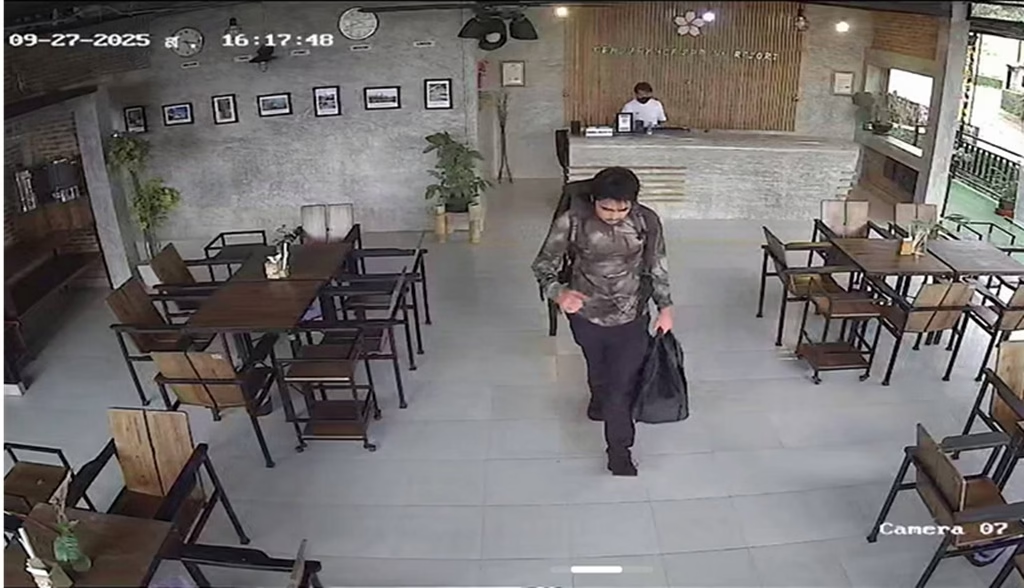
On 2 October, then Kanchanaburi governor Athisan Intara expanded the operation. He instructed local officials, Sangkhla Buri police, and immigration officers to review CCTV from roads, hotels, and resorts across the district.
This included footage from town areas and the border at Ban Phra Chedi Sam Ong in Nong Lu subdistrict, after a sighting was reported in Tha Makham subdistrict.
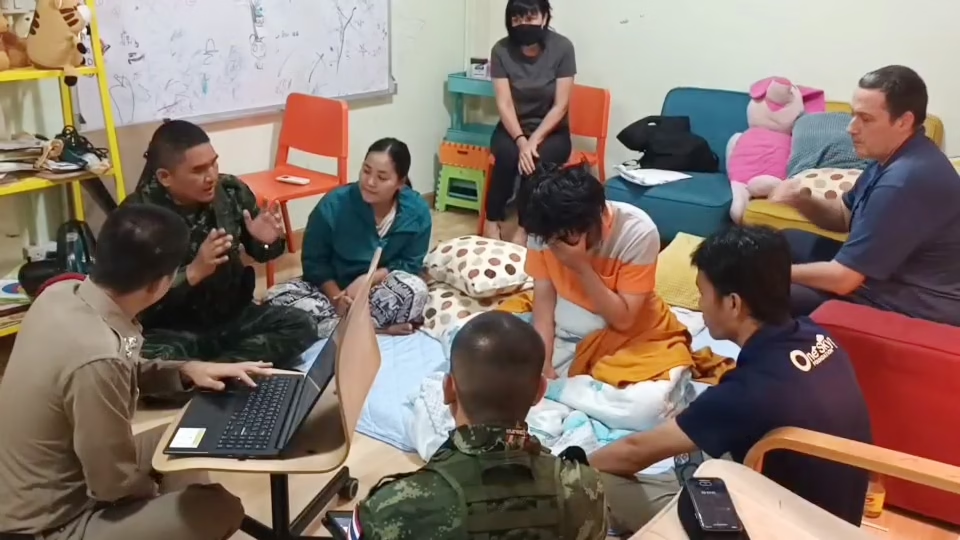
The joint effort paid off when residents spotted the missing Briton and contacted authorities. After the rescue, the Lad Ya Task Force worked with Kanchanaburi Immigration and Sangkhla Buri Police to take him into custody. He was transferred to the One Sky Foundation to recover while police carried out interviews.
Briton Was Heading for Myanmar
Lawrence told investigators he travelled from Bangkok by private car to Sangkhla Buri on 27 September. He planned to continue to Payathonzu in Karen State, on the Thai-Myanmar border, after researching the area online.
At the Phra Chedi Sam Ong checkpoint, immigration officers told him the crossing was closed to travellers. They escorted him to the van terminal in Phra Chedi Sam Ong village to arrange transport back to Bangkok. He did not want to return and chose to explore nearby nature on his own.
While walking along a roadside in Moo 9, Phra Chedi Sam Ong, he met three unidentified men. They assumed he needed a room and took him to Century Hot Spring Resort. He did not have enough money for a stay. He left the resort and continued on foot into what proved to be a rubber plantation.
It grew dark, and he lost his bearings. He said he could not find a way out for 14 days, surviving on ants and tree bark. He wandered through dense plantation forest and failed to reach any settlement during that time.
On 11 October, residents eventually found him and took him to Tham Kaew Sawan Bundan Temple. He ate proper food and rested there before receiving further help from authorities. His mother, Kulnara, expressed great relief that her son was safe and said she would reunite with him as soon as possible.
This incident highlights the dangers of Thailand’s border jungles, home to wildlife like tigers, leopards, bears, and elephants, though rescuers noted this area wasn’t deemed highly hazardous. The UK Foreign Office strongly advises against all travel to Myanmar due to conflict and scam-related risks.
In 2021, Barry Leonard Weller, 72, a retired Briton living in Thailand for 15 years, got lost for three days in Khon Kaen province’s northeastern jungle while riding a motorbike to visit friends.
He survived by drinking rainwater from puddles (sipped through a grass straw) and sleeping on a rock formation after climbing a tree for a better view. A hunter discovered him; he emerged with cuts and lost shoes but no serious injuries.
These cases underscore the importance of sticking to marked trails, informing others of plans, and heeding travel warnings in Thailand’s vast, unpredictable forests. If you’re planning a trip, apps like Maps.me for offline navigation or joining guided tours can help avoid such mishaps.