




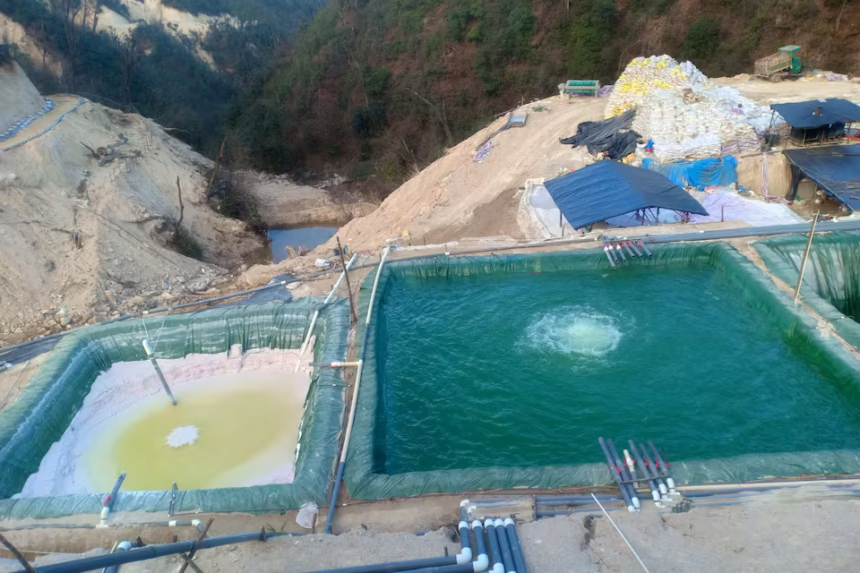
CHIANG RAI – Illegal rare earth mines in Myanmar’s Shan and Kachin states, near the sources of the Kok and Mekong rivers, are causing widespread cross-border pollution. Toxic metals and dangerous chemicals from these operations have contaminated water and soil, putting farming areas and communities in Chiang Rai and Chiang Mai at risk.
The illegal rare earth mining operations near the Kok and Mekong headwaters are spreading pollution far beyond Myanmar. Toxic substances from these mines escape into rivers and land, damaging farmlands and villages in northern Thailand.
The mining process is highly dangerous, with Chinese companies and armed groups playing major roles. These sites often lack oversight or any plans for rehabilitation, leaving permanent scars on the environment.
Rare earth elements power much of today’s technology, from smartphones and electric cars to green energy equipment. Yet the demand for these materials comes with a price. Many mines in the upper reaches of the Kok, Sai, and Ruak rivers, as well as the upper Mekong, are unregulated and use unsafe methods.
Their toxic dust and wastewater drift downstream, harming not only the local area but also threatening crops, water, and health in Thai border provinces.
This crisis is more than a local pollution issue. It highlights the complex connections between mining, foreign investment, and weak law enforcement. As a result, Thailand and its neighbours now face serious environmental threats.

Unchecked Mining Along the Kok and Mekong
Piarnporn Dethaisong from International Rivers raised concerns about unchecked illegal mining in Myanmar’s Shan and Kachin states. These mines have caused major pollution problems along rivers that flow into Thailand.
More than 100,000 rai of farmland in Chiang Mai and Chiang Rai are already affected.
Authorities have found unsafe levels of arsenic and lead in local water and soil. Without action, this contamination will continue to spread from its source, making matters worse in the long term.
Recent satellite images show over 60 mining sites in northern Shan state alone. Some large-scale operations have appeared within the last two years, causing damage across the border in a short time.
In Kachin, there are now over 300 such mines. NASA images show hills riddled with holes from these activities. Workers inject strong chemicals through pipes directly into the earth to dissolve minerals, which they then collect in bright blue ponds. Ore is burned and packed for export to China.
The aftermath is severe. Toxic metals remain in the ground, water, and air. Local people face health problems, especially respiratory illness, cancer, and heavy metal buildup, which can cause lifelong harm for children and pregnant women.
These mining outfits often stay just two or three years before moving on, leaving destroyed landscapes behind. Communities must deal with pollution for decades after the miners leave.

Pollution Creeping Closer to Thailand
Besides the Kok and Sai rivers, illegal mining is now spreading to areas near the Salween River, close to Chiang Mai. Reports tell of truck convoys carrying machinery and chemicals, guarded by armed groups, entering towns like Mong Ton opposite Thailand’s Chiang Dao and Wiang Haeng districts.
Shan Human Rights Foundation reports at least two new Chinese-run rare earth mines near Mong Sat as of May 2025. These mines provide income for armed groups in the region since Myanmar’s military coup.
Rare earth metals are vital to manufacturing high-tech products, from smartphones to advanced weapons. Growing global demand has turned these minerals into a powerful bargaining chip in international politics.
Piarnporn points out that areas controlled by armed groups have no real law enforcement. Mining is carried out only to feed global markets, with no regard for the environment or local communities.
Piarnporn challenges the Thai government to step up. Illegal mines may be protected by armed guards for foreign companies, but who protects Thailand’s rivers and farmland? Without strong policies to address the root cause, heavy metal pollution in the Kok, Sai, Ruak, and Mekong will persist for years.
She urges the government to engage with regional partners and use all available channels to stop upstream illegal mining. She also calls for better monitoring of water and soil quality, and for strong protection for people affected by this pollution.


