




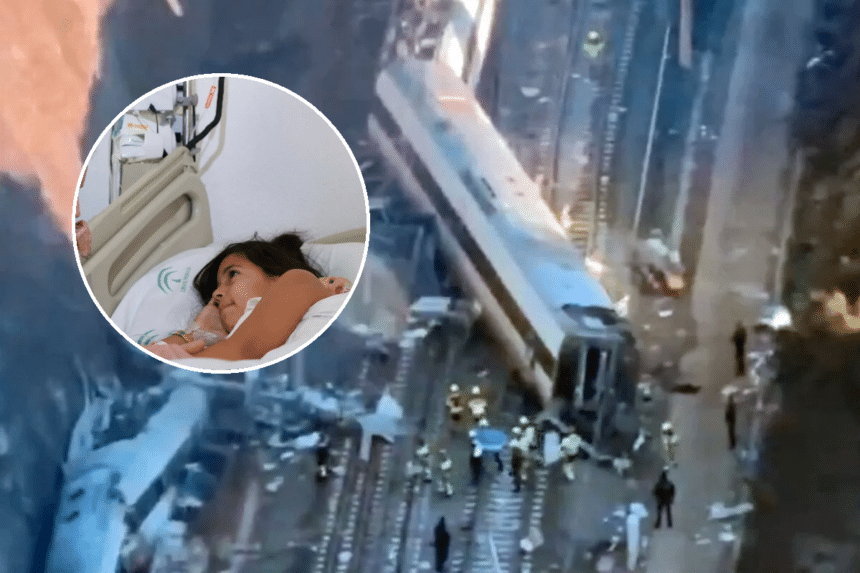
CORDOBA, Spain -A terrible train crash in southern Spain has left the country grieving. Yet one story has stood out for its mix of heartbreak and sheer chance. A 6-year-old girl survived a violent high-speed train crash on Sunday night, while her parents, brother, and cousin were killed.
Spanish media identified the child as Cristina (her surname has not been shared for privacy). She was found walking barefoot along the railway line near Adamuz, in Córdoba province. A Civil Guard officer spotted her soon after the crash, which happened at about 7.45 pm local time on 18 January 2026.
Cristina had escaped through a shattered window in one of the derailed carriages. She came away with minor cuts and a head injury that needed three stitches at a local hospital.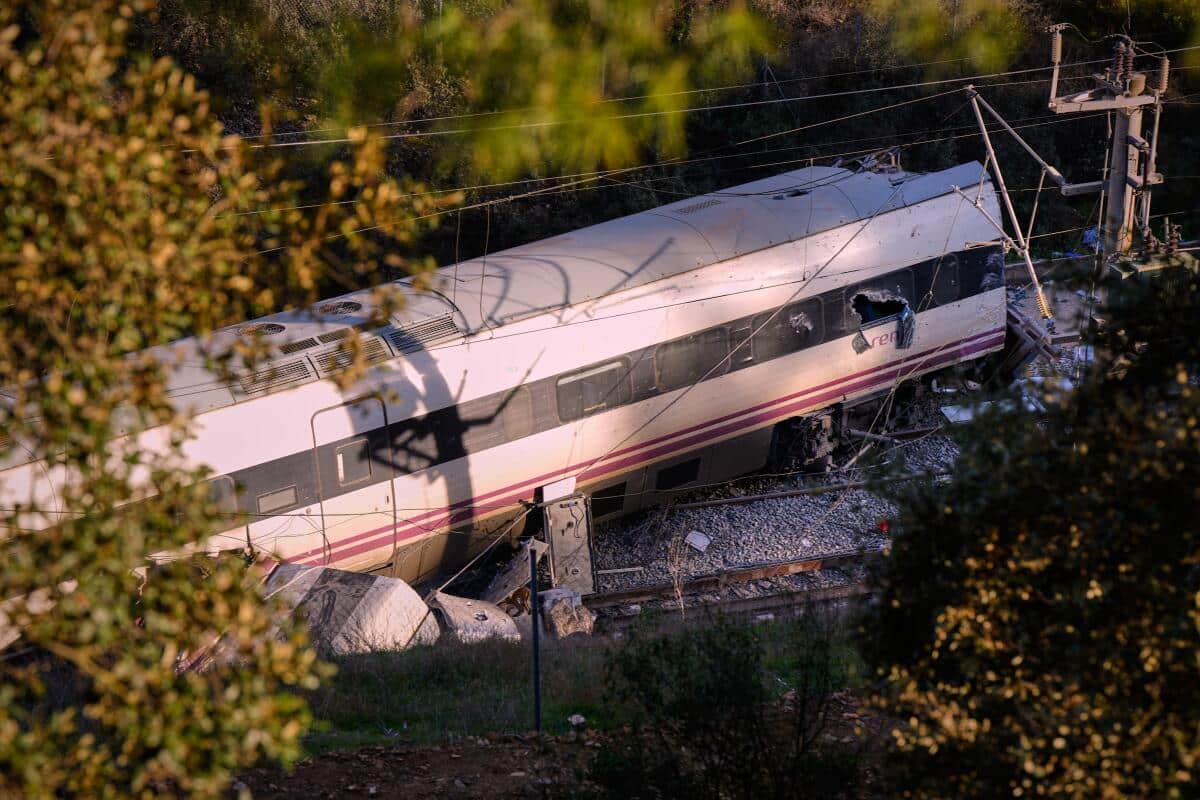

High-Speed Train Crash Kills 40
Accounts from relatives and officials, shared by La Vanguardia, said Cristina was travelling in the front section of an Alvia high-speed service with 184 passengers. It reportedly struck a derailed Iryo train on the same route at more than 200 km/h.
The train crash tore through carriages, buckled metal, and threw debris across the tracks. At least 40 people died, with some reports putting the figure at 42. More than 150 passengers were injured. Dozens remained in the hospital, including 12 in intensive care.
Cristina’s family had been travelling back to Aljaraque, near Huelva on Spain’s Atlantic coast, after a weekend in Madrid. Relatives said it was meant to be a special break. The family attended a Real Madrid match and reportedly watched The Lion King musical.
Her parents, José Zamorano and shop owner Cristina Álvarez, her 12-year-old brother Pepe Zamorano, and a cousin, Félix Zamorano, were in the same carriage. None of them survived. The family went from five to one in moments.

Rescuers Stayed With the Child Through the Chaos
Family members described Cristina’s survival as “a miracle within so much misfortune”. Juan Barroso, a friend of the family, told reporters she got out “by her own means” and was found “practically unharmed”.
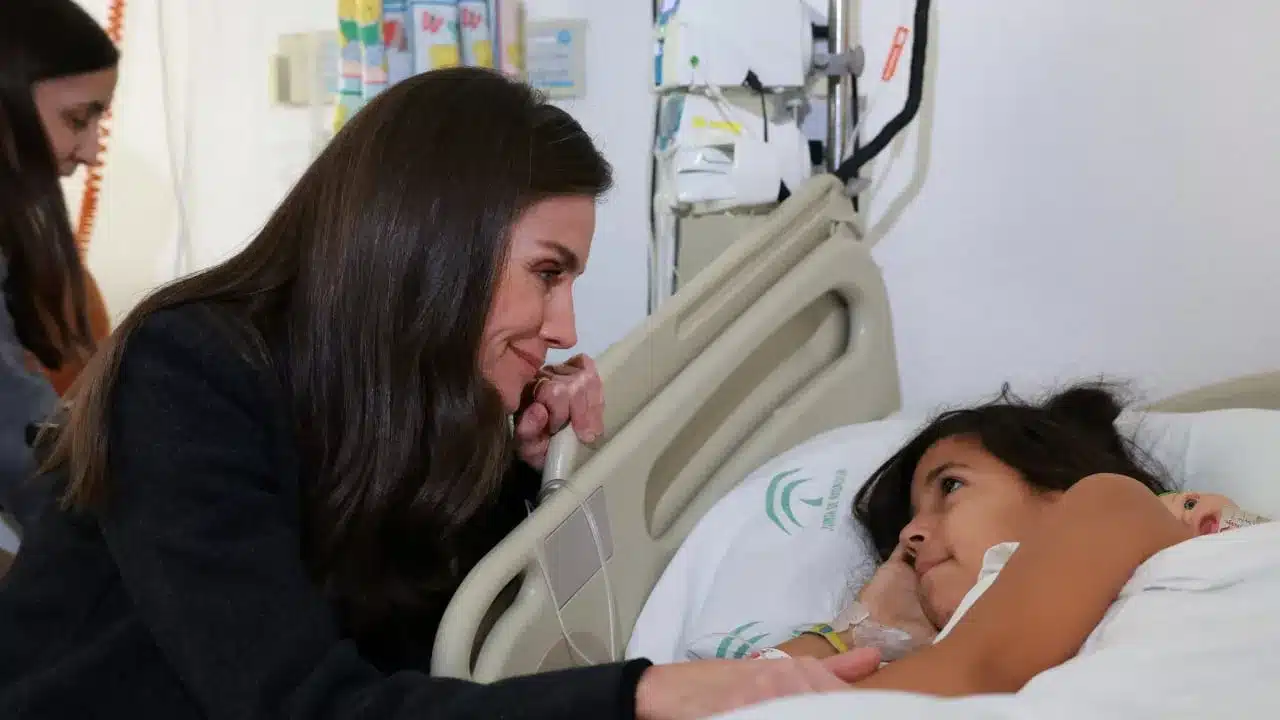
In the first hours after the train crash rescue, a Guardia Civil officer stayed with her and would not leave her alone at the scene. Cristina has since been reunited with her grandparents. She is resting in a hotel in Córdoba, surrounded by extended family and support from the local community.
The disaster has triggered national mourning. Prime Minister Pedro Sánchez announced three days of official mourning starting Tuesday, 20 January. Flags were lowered to half-mast on public buildings.
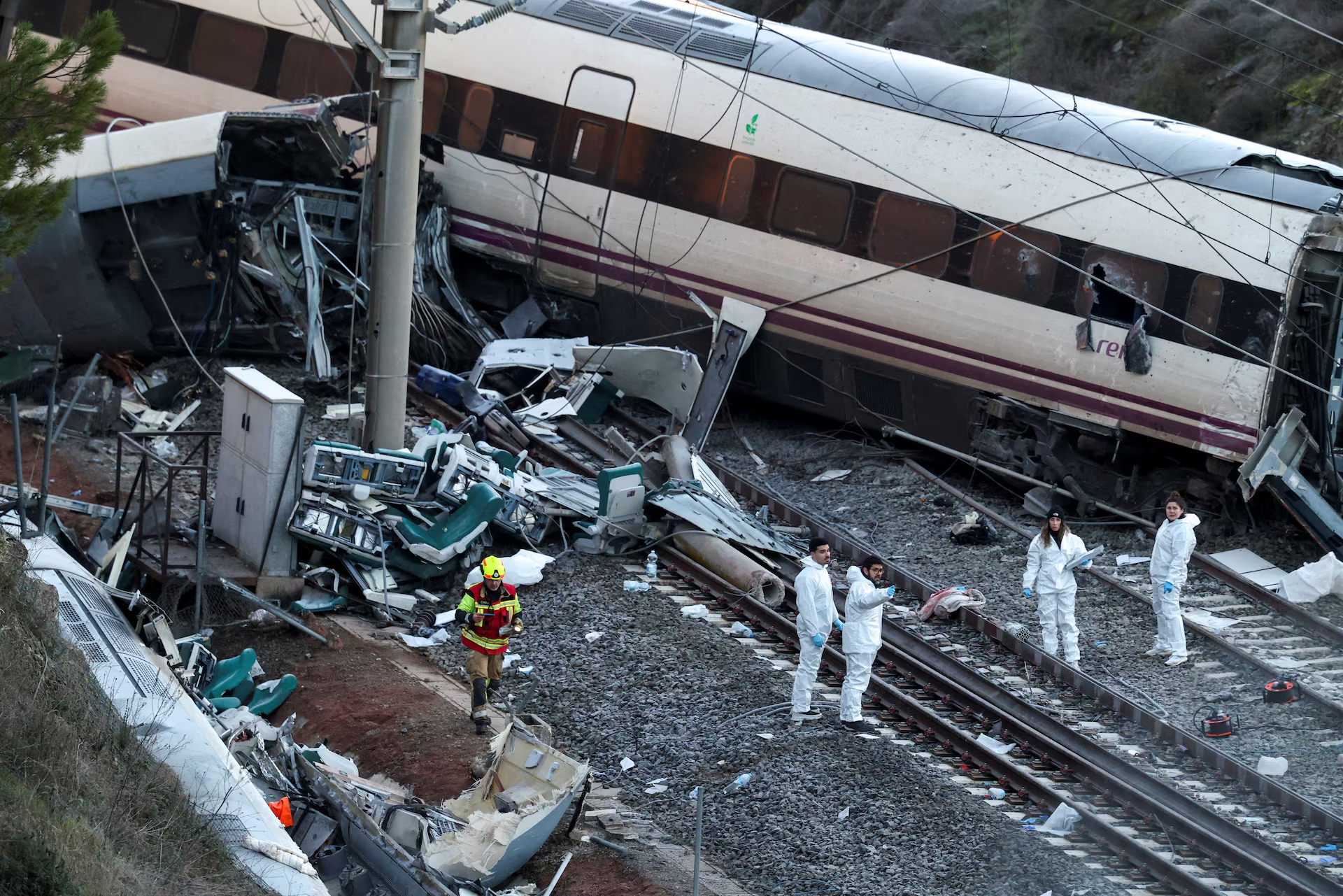
Emergency teams continued to work through the wreckage, using heavy machinery to reach crushed and tangled carriages. Authorities said some bodies were found hundreds of metres from the point of impact, showing the force of the collision.
Investigators are looking at whether a broken track or other infrastructure failure played a part. The full cause remains under urgent review, including the possibility of human error, mechanical failure, or a signalling problem. Spain’s rail safety agency and the National Court are involved.

The Investigation and Safety Questions
Both trains were described as modern high-speed models. The scale of the crash has raised fresh concerns about safety rules on one of Europe’s busiest rail routes, linking Andalucía with Madrid.
Passengers who lived through the crash described a terrifying sequence. One recalled a roar as carriages left the rails and slid down an embankment. Others spoke of cries for help followed by a heavy silence.
One survivor of the train crash told national television, “You could see them dying,” while describing the confusion inside the train.
In Aljaraque and Punta Umbría, local leaders declared periods of mourning for the Zamorano Álvarez family. Aljaraque’s mayor, Adrián Cano, called Cristina’s survival “a miracle” while recognising the depth of the loss.
Community figures encouraged neighbours to support the grandparents and the child. Their message was simple and direct: people should hold loved ones close and say “I love you” more often, because life can change without warning.
Cristina’s story has spread far beyond Spain, standing for both unbearable grief and survival against the odds. Psychologists and child welfare specialists have stressed that her visible injuries are small, but the emotional shock of losing her immediate family will need long-term care.
Authorities have promised support for children left without parents in disasters like this, including counselling and financial help.
As Spain faces the full weight of the deadliest rail crash in recent memory, one image remains hard to forget: a small girl walking alone along the tracks. In a country united by loss, her survival offers a thin thread of hope inside overwhelming sorrow.