





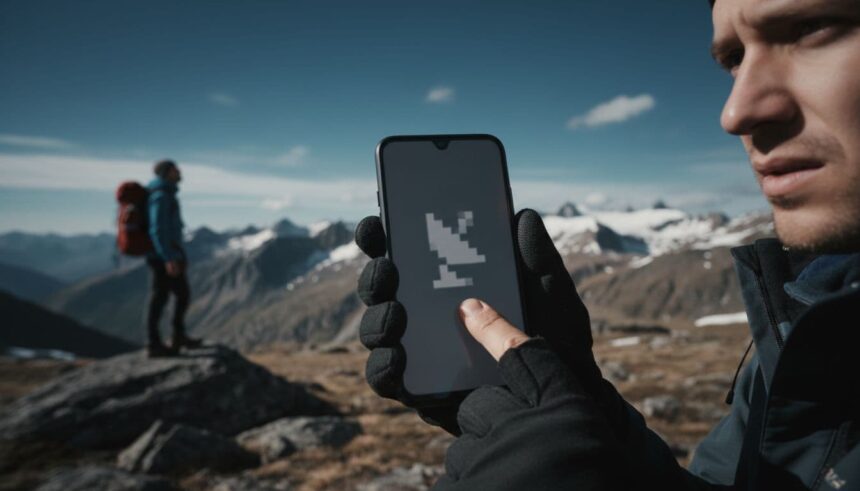
Getting stuck with zero bars is still normal in 2026, even on expensive phones. New FCC certifications, identified in January 2026 reporting, indicate that the Galaxy S26, S26+, and S26 Ultra support satellite standards for texting, SOS, and possibly calling when there’s no cellular service.
If you hike, road-trip, boat, or drive through rural dead zones, this matters because it could turn “no signal” into “at least one message can get out”, with the usual limits and fine print still to come.
What the FCC certification tells us about Galaxy S26 satellite texting
An FCC certification is basically a US check-in for radio hardware. If a phone will transmit on specific radios or support specific connectivity standards, it often appears in FCC paperwork before launch. That makes FCC listings useful, but also incomplete.
Here’s what an FCC filing can do well: it can signal hardware and protocol support. It can strongly suggest that a phone is designed to communicate in specific ways, including non-cellular ones. It can also reveal model variants and radio features that marketing pages might gloss over.
Here’s what it can’t do: it doesn’t tell you the final user experience. It won’t confirm whether the feature is free, which countries receive it, which carrier plan you need (if any), which app you’ll use, or how fast it’ll connect in real-world conditions.
With that in mind, the key takeaway from the January 2026 reporting is simple: all three Galaxy S26 models appear in FCC filings with compatibility for satellite communication standards. That is the strongest early signal yet that Galaxy S26 satellite texting is on the roadmap, at least for some regions. It also aligns with Android phones’ direction, with satellite SOS shifting from a niche feature to a standard safety option.
Samsung has not yet publicly confirmed the full feature set for the S26 line. So the safest way to read the filings is this: the phones look technically prepared, while the rollout details remain unknown.

The standards mentioned, SCS and NTN
Two terms keep coming up in the reporting: SCS and NTN.
NTN (Non-Terrestrial Networks) is the umbrella idea. It means your phone can connect to networks that aren’t on the ground, mainly satellites. If you’re used to thinking “cell tower or nothing,” NTN is the third path.
SCS (Supplemental Coverage from Space) is about filling coverage gaps. Think of it like a safety bridge when towers are out of reach. It’s not meant to replace your normal cellular plan or make satellite the default for everyday texting. It’s meant for those moments when you’re outside coverage and need a basic connection.
If you think of cellular as highways, SCS and NTN are more like gravel roads you take only when the highway disappears. It’s slower, narrower, and not always available, but it can still get you home.
Skylo is the reported partner, and that matters for coverage and rollout
Several reports indicate that Samsung may use Skylo as the NTN provider. That’s important because the provider often shapes what the feature can do, where it works, and how it’s sold (built-in, carrier add-on, free trial, and so on).
Skylo is already part of the satellite story on Android. You can see the company’s own ecosystem signals on its site, including a public list of Skylo certified devices.
Skylo has also spoken openly about certifying Samsung devices for carrier availability, including its announcement that It Has certified the Samsung Galaxy S25 series on Verizon.
That doesn’t confirm the S26 details on its own. It does suggest a pattern: Samsung and Skylo have worked together before, and a similar approach could carry over. Until Samsung confirms the provider and supported markets, treat Skylo involvement as reported, not guaranteed.
What can satellite texting and SOS realistically do when you have no service?
Satellite features sound magical until you picture the real constraint: your phone has to reach a moving object in space, using low-power hardware, often while you’re standing in a valley with trees overhead. So expectations matter.
In practical terms, satellite texting on Android usually focuses on a few outcomes:
You may be able to send an SOS-style emergency message when you have no cellular service. That can include sharing your location and basic context, like what happened and whether anyone is injured. In some systems, the phone guides you through prompts, allowing you to send a more useful message than “help.”
You may also receive short check-ins with trusted contacts, such as “I’m okay” or “Running late, no service.” Depending on the final implementation, you may be able to type a short custom message, but it may not feel like standard messaging. It may require waiting for a connection window, retrying, or keeping your phone oriented correctly.
Performance can also change by region. Regulations, local emergency routing, and carrier partnerships can all affect what works where. That’s why even a strong FCC signal doesn’t automatically mean global support on day one.
If Samsung positions this mainly as Galaxy S26 emergency SOS via satellite, it’ll likely be tuned for reliability and safety, not chatting. That’s a good thing. When you need it, you want simple steps and clear feedback, not a dozen options.
When it works best, and what can block it
Satellite messaging works best when conditions are simple; it struggles when they aren’t.
- Open sky helps most: Beaches, fields, and open roads usually beat dense forests or canyons.
- Obstacles reduce signal reliability: tall buildings, mountains, and dense tree cover can block the signal.
- It can take time: You may wait longer than a normal text, sometimes minutes, not seconds.
- Weather can affect consistency: heavy clouds or storms can reduce it.
One safety note is worth stating explicitly: satellite SOS is a backup tool, not a guarantee. Don’t use it as an excuse to skip planning, carrying water, using maps, or telling someone your route.
Could it include satellite calling, or just texts and SOS?
Some reporting uses wording that hints at “calls,” and at least one rumor cycle has focused on satellite voice. It’s possible the underlying protocols in certifications could support more than just text.
Still, certifications tend to demonstrate capability rather than the final consumer feature. A phone can support a protocol and still ship with that option turned off, limited to certain carriers, or reserved for a future update. For most buyers, the near-term focus should remain on satellite SOS and emergency texting, with any form of calling treated as a “wait and see.”
If you’re tracking the rumor side, one example is this report that the Galaxy S26 series could get satellite voice calls. Read it as a possibility, not a promise.
Galaxy S26 vs Pixel vs iPhone, the simple comparison people want
Most people don’t care about acronyms. They care about one question: “If I’m in a dead zone, will my phone help me reach someone?”
Apple proved the idea with iPhone Emergency SOS via satellite. Google followed with Pixel Satellite SOS. Samsung appears to be lining up the Galaxy S26 family to compete, based on FCC signals and January 2026 reports.
Here’s the quick comparison, with confirmations separated from unknowns:
| Phone | What it’s for | Satellite approach/provider | What’s confirmed vs unknown |
|---|---|---|---|
| Galaxy S26 / S26+ / S26 Ultra | Reported focus on emergency messaging, SOS, possibly limited texting | Skylo reported, SCS/NTN standards shown in FCC-related info | Confirmed: standards compatibility reported via FCC context. Unknown: pricing, regions, exact UI, carrier requirements |
| Pixel 9 series | Emergency SOS and satellite texting support on Android | Skylo used for Pixel satellite features (reported widely) | Confirmed: consumer satellite SOS features exist. Unknown: availability details vary by country and model |
| iPhone 14 and newer | Emergency SOS via satellite and location sharing in supported regions | Apple’s satellite partner network (varies by region) | Confirmed: established emergency satellite feature. Unknown: exact terms differ by country and carrier |
Samsung “catching up” doesn’t mean copying. The details that shape daily reality are usually small: supported countries, which emergency centers receive messages, and how the phone behaves when you’re stressed and cold.
The biggest difference is not the satellite; it is the fine print
When satellite features go mainstream, the separator becomes policy, not hardware.
Start with supported countries. A feature may exist but still be blocked by local rules or by missing emergency routing. Next is carrier involvement. Some setups feel phone-level (built into the OS), while others are tied to a carrier plan or to a specific model sold through a single network.
Then there’s cost. Some brands include an initial period at no extra cost, then leave future pricing unclear until later. As of now, the FCC context doesn’t indicate what Samsung will charge or whether it’ll be bundled with certain plans.
Finally, there’s activation flow. On one phone, it might appear inside the system SOS screen. On another, it may be a guided “point your phone at the sky” experience with a dedicated interface. These design choices matter as much as the satellite itself.
What we still do not know, plus who should care most
Even with strong signals for Galaxy S26 satellite texting, the unanswered questions are the ones that change buying decisions. Here’s what remains unclear in January 2026 reporting:
- Which regions get satellite features at launch (a US-first rollout is rumored in some coverage, but not confirmed)
- Whether it’s free, included for a limited time, or paid from day one
- Whether you need a specific carrier plan or an add-on
- Which apps it works with (system SOS only, or also contact messaging)
- Whether it supports only emergency messaging or also non-emergency texts
- Whether “calling” is real consumer functionality or just protocol capability
So who should care most? People who spend time in areas with no coverage. That includes hikers, trail runners, campers, skiers, and climbers. It also includes a very normal life: rural residents, long-distance drivers, field workers, and anyone whose commute includes dead zones. If your job or family life puts you on back roads after dark, satellite SOS isn’t a luxury feature. It’s peace of mind.
If you want context on how Samsung has approached satellite connectivity in recent generations, this older but relevant report on FCC approval is useful: Samsung Galaxy S25 approved by FCC with satellite connectivity.
If you rely on this feature, do these things now
- Update emergency contacts in your phone and health profile.
- Learn the SOS steps on your current device so it’s familiar.
- Keep location services on for emergency features you plan to use.
- Carry a power bank, satellite attempts can take time and battery.
- Download offline maps before you lose coverage.
- Check settings before travel, and test what you can in a safe place (once the feature is available).
Questions to ask your carrier or retailer before you upgrade
- Which countries and regions support satellite SOS on this model?
- Is the feature included or paid?
- Is it emergency-only, or can I also message contacts?
- Does it require a specific plan or add-on?
- Does it work while roaming?
- What happens after any free period ends?
- How does it handle local emergency numbers where I travel?
FAQ: Galaxy S26 satellite texting and emergency SOS
Is Galaxy S26 satellite texting confirmed?
Not fully by Samsung yet. January 2026 reporting says FCC-related listings suggest compatibility with satellite standards across S26 models. That’s a strong signal, but the final feature list is still pending.
Will it work without a SIM?
Unknown. Some satellite SOS systems can work with minimal carrier involvement, but others may require an active plan or certain carrier settings. The FCC context doesn’t answer this.
Is it free?
Pricing has not been confirmed. Certifications don’t include consumer pricing, and Samsung hasn’t published terms yet.
Will it work outside the US?
Unknown. Region support depends on regulations, partner coverage, and emergency routing. Some reports expect a limited rollout initially, but Samsung has not confirmed which countries.
Can I text friends, or only emergency services?
The most likely early use is emergency messaging and SOS. Non-emergency texting may exist, but it hasn’t been confirmed. Expect short messages, not full chat app behavior.
Do I need a clear view of the sky?
Usually, yes. Satellite connections perform best in open skies. Trees, buildings, and mountains can slow or block messages.
Is it the same as Starlink?
Not necessarily. “Satellite messaging” is a broad category. The reported Galaxy S26 approach references the NTN and SCS standards, with Skylo listed as a provider. That’s different from assuming a direct Starlink phone service.
Conclusion
FCC filings strongly suggest that Galaxy S26 satellite texting and satellite SOS support will be available on the Galaxy S26, S26+, and S26 Ultra, using SCS and NTN standards, with Skylo reported as a likely partner. The key missing pieces are pricing, supported countries, and whether the features extend beyond emergency messaging.
Before upgrading, watch for Samsung’s launch announcements, carrier support notes, and a clear list of supported countries. That fine print will decide whether satellite SOS is a nice extra or a feature you can count on when you truly have no service.