





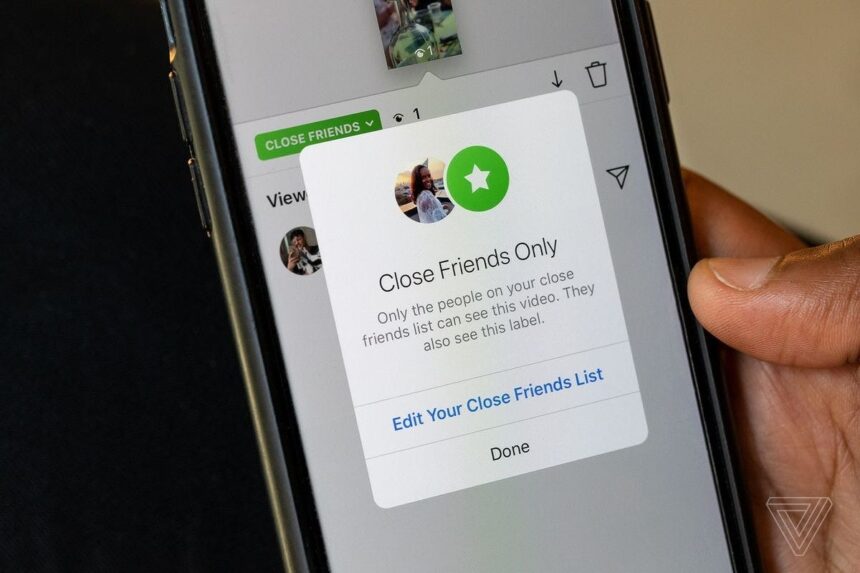
Instagram Close Friends is supposed to feel like a private room inside a crowded house. It’s where people post the casual stuff they don’t want to share with everyone.
But there’s a weird catch: someone can add an account to their Close Friends list without asking, and the person added can’t simply leave. That can turn a “you’re in my inner circle” moment into social pressure.
Instagram is reportedly working on a fix to remove yourself from someone else’s Close Friends list. The key caveat is simple: this appears to be early-stage work, and there’s no public rollout timeline yet.
This explainer covers how Close Friends works today, why the change matters, what the new option might look like, and what can be done now to maintain Instagram’s privacy and user comfort.
What Instagram may change (a simple summary of the update)


The reported update is straightforward: Instagram may add an option that lets a user opt out of being on another person’s Close Friends list. In practice, that would mean an account could choose to stop receiving that person’s Close Friends Stories (and other Close Friends-only content).
According to reports, Meta has confirmed the feature is in development but described it as early-stage. It hasn’t been widely tested, and there’s no release date.
The feature was spotted in a prototype by reverse engineer Alessandro Paluzzi, who often finds upcoming social features before they ship. The prototype included a warning that leaving would remove access to the person’s Close Friends content until they re-added the account.
It’s also important to be clear about what this would not change. This isn’t a tool to edit someone else’s Close Friends list. It’s closer to declining an invite. The list owner still controls who they add, but the viewer could control whether they participate.
What we know so far, and what we do not
- Known: Meta confirmed development in an early stage, with no public timeline yet.
- Known: The concept is an opt-out, letting a user remove themselves from someone else’s Close Friends list.
- Known: The prototype warning suggests leaving would stop access to Close Friends Stories and posts until re-added.
- Unknown: The exact steps and where the button would appear in the app.
- Unknown: Whether the other person is notified when someone leaves.
- Unknown: When it launches, if it launches, and whether it rolls out globally at once.
For background on the report, see TechCrunch’s Jan. 30, 2026 coverage.
How Instagram Close Friends works today
Close Friends is a sharing setting. It allows someone to post a Story (and, in some cases, other content) to a smaller audience rather than to all followers. It’s like whispering to a few people rather than speaking to the whole room.
Right now, control sits with the list owner. They build the list, they add accounts, and they remove accounts. The people on the list don’t receive an approval prompt, nor do they have a built-in “leave” button.
For the person who gets added, the experience is mostly passive. They may notice a green ring around the person’s profile photo when Close Friends content is available. They may also start seeing more personal updates in Stories, and depending on how the feature is used, Close Friends posts or Reels.
That’s where the awkwardness starts. Close Friends is framed as private and selective, so being added can feel like a signal. Staying on the list can feel like another signal, even if there was never consent. Until now, the only way to stop seeing that content is to use other tools (mute, unfollow, restrict, block), not a true opt-out.
Why the feature exists in the first place
Close Friends is not only for drama or gossip. It’s a privacy tool, even if it’s sometimes used as a social ranking system.
It gives people a way to share:
- Personal updates that don’t fit their public vibe
- Inside jokes and small-group moments
- Family news or health updates
- Early thoughts, not polished posts
Creators also use Close Friends for “extras,” like behind-the-scenes clips, soft launches, or limited content for a smaller crowd. Instagram has even expanded Close Friends beyond Stories over time, including content in the main feed in some cases, as described in TechCrunch’s earlier report on Close Friends in the feed.
The problem this feature solves: pressure, privacy, and awkward social moments
The core issue is consent. Being added to Close Friends can happen without notice, and there’s no clean way to say “no thanks” inside the product.
Even when it’s meant as a compliment, it can feel intrusive. Close Friends content can be more personal, more emotional, or more revealing. If someone overshares, the viewer is drawn into a level of intimacy they didn’t ask for.
There’s also a safety angle. Some people keep their circles wide online because it’s simpler, not because it’s comfortable. A forced “closer tie” can create stress, especially in situations involving harassment, unwanted attention, or messy breakups.
Then there’s the basic attention problem. Stories already add up fast. If a person posts frequently to Close Friends, it can take up space, even if the viewer doesn’t want that level of access. Close Friends is supposed to reduce the audience. For the viewer, it can increase the emotional workload.
Close Friends also send signals. If someone sees an account watching those private Stories, they may assume a level of closeness. If that closeness isn’t real, the feature can create expectations that don’t match the relationship.
Why it can feel hard to ask to be removed
In real life, many people stay quiet because the social cost feels higher than the annoyance.
That’s common in:
- Workplace ties where boundaries are tricky and gossip spreads
- Friend groups where one person controls the vibe
- Dating situations where moving too fast feels risky
- Family relationships where saying “no” becomes a fight
Asking to be removed can sound like rejection, even when it’s just a boundary. An opt-out button would let people set that boundary without turning it into a conversation.
How the “remove yourself” option may work, and what changes after you leave
Based on reporting about the prototype, the flow may look like this: a user chooses an option to leave a person’s Close Friends list, sees a confirmation prompt, then loses access to that person’s Close Friends content.
The prompt matters because it explains the tradeoff in plain terms. Leaving isn’t a punishment. It’s just a visibility change.
If Instagram ships this feature, the main changes would likely be:
- The viewer stops seeing the person’s Close Friends Stories (and possibly Close Friends posts).
- The viewer doesn’t have to mute or block to achieve that result.
- The list owner can still manage their own list, but they can’t force participation.
There’s also an open question about what happens next week, next month, or next year. Could the list owner re-add the account? Possibly. Could Instagram add controls to prevent re-adding? Unknown. That’s why it’s best to treat this as “in development,” not as a finished policy change.
For users who track privacy settings closely, it helps to remember that Instagram has been adding and adjusting protections in other areas too. For example, TechCrunch has covered Instagram privacy topics, such as location features, in a guide to Instagram Map privacy. Close Friends opt-out fits the same theme, giving people more control over what they see.
The biggest question: will they know you left?
Current reporting does not confirm whether the other person receives a notification when someone leaves their Close Friends list.
Many apps avoid sending alerts for “soft exits” because it can create conflict. Still, it’s risky to assume invisibility. People may notice over time if someone stops viewing Close Friends Stories, especially if they track viewers closely.
Until Instagram confirms notification behavior (or release notes spell it out), the safest assumption is simple: leaving might not trigger an alert, but it might be noticed.
Why this matters in real life (examples you will recognize)
A feature like this sounds small, but it touches daily social friction, the kind that drains attention and makes people dread opening the app.
The coworker add after a work night out. After a team event, a coworker adds people to Close Friends and starts posting party photos and personal complaints about the office. An opt-out means an employee can step back without making it a workplace issue.
The ex who tries to pull the relationship back. An ex adds an account to Close Friends, then posts “only you would get this” style Stories. Leaving is a clean boundary. It avoids the cycle of reaction and guilt.
The friend group “inner circle” that turns into gossip. A group uses Close Friends as a private chat wall and starts talking about people in the wider circle. Someone who doesn’t want to be part of that can remove themselves instead of silently watching.
The creator perk that becomes too personal. A creator adds followers to Close Friends for “special content,” then starts posting family drama, mental health rants, or location details. With opt-out, followers can back out without unfollowing or blocking.
The new dating situation moving too fast. Someone adds a new date to Close Friends after one good weekend. The other person wants slower boundaries. Leaving signals “not yet” without a long talk.
In each case, the benefit is the same: less pressure, more control, and fewer forced signals.
What you can do right now for Instagram privacy and comfort
These steps don’t remove an account from Close Friends directly (since the reported opt-out isn’t public yet). They do help reduce friction and protect personal space inside Instagram.
For users: quick steps to reduce awkwardness without starting a fight
- Mute their Stories and posts: This reduces what shows up without unfollowing, and Instagram generally doesn’t alert people that they’ve been muted.
- Restrict the account: This is useful when interactions feel tense. It limits how comments and messages surface, and it adds distance without a public breakup.
- Unfollow: This stops most content in feed and Stories, but it doesn’t block the person. If the account is public, they can still see and interact with posts unless other settings change.
- Remove follower (private accounts): For private accounts, removing a follower cuts off access to posts and Stories until they request again.
- Block: This is the strongest option. It cuts off profile access, messaging, and most forms of contact.
A simple decision guide helps when emotions run hot: if it’s annoying, mute; if it’s uncomfortable, restrict; if it’s unsafe, block.
Privacy choices also connect to broader Meta settings, which can feel hard to track. If questions about data access and permissions come up, a general reference point is Mashable’s guide on checking Meta camera roll access, which walks through where some controls live.
For creators: how to use Close Friends without breaking trust
- Keep the list small and intentional: Close Friends works best when it stays close.
- Ask before adding when possible: A quick DM can prevent weeks of awkward silence.
- Review and clean the list: Old followers and old relationships change. The list should too.
- Don’t add people “to be nice”: A polite add can feel like pressure on the other side.
- Set expectations for exclusive content: If Close Friends is used for perks, say what it is and what it isn’t.
- Respect that people may want to leave: If Instagram adds an opt-out, audiences may treat it as a consent signal, not a snub.
FAQ: Instagram Close Friends opt-out feature
Can people see you left their Close Friends list?
Reporting so far hasn’t confirmed notification behavior. The other person may not receive an alert, but they could notice over time if they monitor viewers. It’s best not to assume it’s invisible until Instagram confirms.
Will it remove you from their followers list too?
Close Friends is separate from following. If Instagram adds a “leave Close Friends” option, it would likely only change Close Friends visibility, not whether accounts follow each other, unless Instagram says otherwise.
Does it affect DMs?
Direct messages are separate from Close Friends. There’s no reporting that leaving Close Friends would change DM access. Final behavior is unknown until Instagram releases the feature.
Is it available now?
No. It’s reported as early-stage development, not widely available, and there’s no rollout timeline yet.
Can they add you again after you leave?
The prototype warning suggests leaving removes access until the person adds the account back, which implies re-adding may be possible. Instagram hasn’t confirmed whether users will get controls to prevent being re-added.
Sources
- TechCrunch (Jan 30, 2026): Instagram might soon let you remove yourself from someone’s Close Friends list
- TechCrunch (Nov 14, 2023): Instagram brings Close Friends feature to the main feed
- TechCrunch (Aug 8, 2025): How to use Instagram Map and protect your privacy
- Mashable: Meta might have access to your camera roll. How to check
Conclusion
If Instagram Close Friends included an opt-out, it would address a small but real problem: being added to someone’s “inner circle” without consent. The value is less social pressure, clearer boundaries, and better Instagram privacy without going straight to blocking or confrontation.
The limits are also clear. This is still reported as early-stage, and the exact flow, notifications, and rollout timing remain unknown.
Until anything ships, the practical approach remains the same: mute when it’s noisy, restrict when it’s uncomfortable, and block when it’s unsafe. Close Friends works best when it’s chosen, not forced, and that’s the point of giving people a way to leave.