



CHIANG RAI – Thailand is set to hold a general election on Sunday, February 8, 2026. Many watchers say it could be one of the most unpredictable and high-stakes votes in years. More than 50 political parties have registered to compete for seats in the House of Representatives and a chance to form the next government, so the race is wide open and highly competitive.
The vote comes after the House of Representatives was dissolved on December 12, 2025, following a period of political turmoil. That included the breakdown of the previous Pheu Thai-led coalition and the installation of a caretaker government led by Bhumjaithai’s Anutin Charnvirakul. Voters nationwide, from Bangkok to rural provinces like Chiang Rai, will choose 500 MPs.
The election also takes place alongside a constitutional referendum on whether Thailand should draft a new constitution, a decision that could reshape the rules of politics for years to come.
A lot is on the line. The economy remains a top worry, as do border tensions with Cambodia, concerns about cross-border scams and “grey capital,” and growing calls for reform. No party is expected to win a clear majority, which means coalition talks after election day look unavoidable and could get complicated fast.
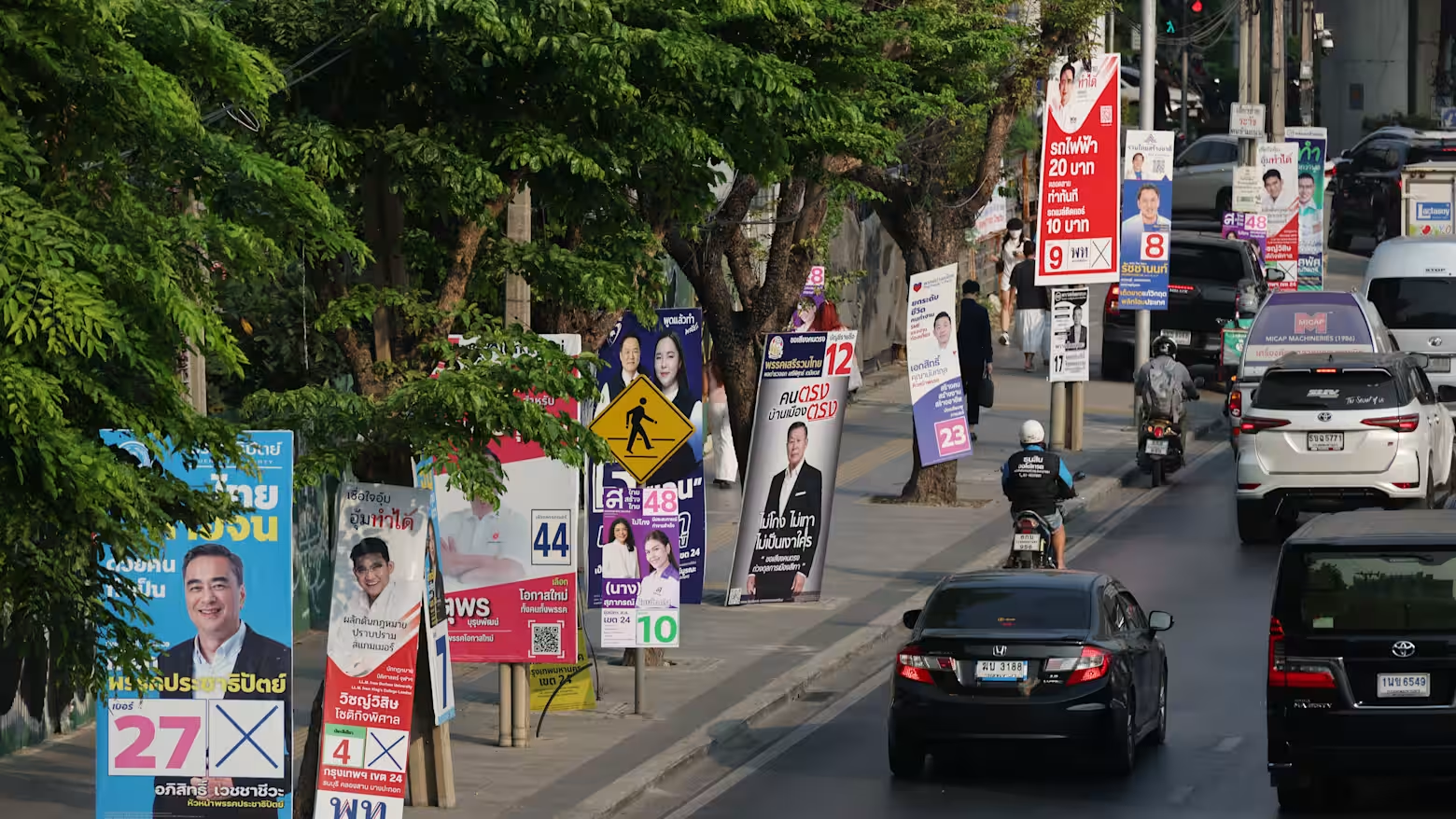

Key political parties to watch
Thailand’s party system includes progressive, populist, conservative, and military-aligned groups. The main players include:
- People’s Party (successor to the dissolved Move Forward Party): Reform-focused and progressive, it pushes structural change, decentralization, and stronger youth participation. It held 151 seats in the prior line-up.
- Pheu Thai Party: A major populist force tied to the Shinawatra network, known for welfare policies and rural support. It has 141 seats, though it has taken hits after coalition compromises.
- Bhumjaithai Party: A pragmatic party with strong regional networks, running the caretaker government. It prioritizes continuity and targeted subsidies. It holds 71 seats.
- Palang Pracharath Party: A military-backed conservative bloc with 40 seats, running on stability and traditional values.
- United Thai Nation Party: Another pro-establishment party with 36 seats.
- Kla Tham Party: A newer conservative force with 26 seats.
- Democrat Party: A long-running conservative-liberal party with 25 seats, led by former Prime Minister Abhisit Vejjajiva.
- Smaller parties such as Prachachart, Thai Sang Thai, and others hold fewer seats, but they may still matter in coalition math.
Other groups, including Thai Sang Thai and several minor parties, are also active, but most attention remains on the top three: People’s Party, Pheu Thai, and Bhumjaithai.
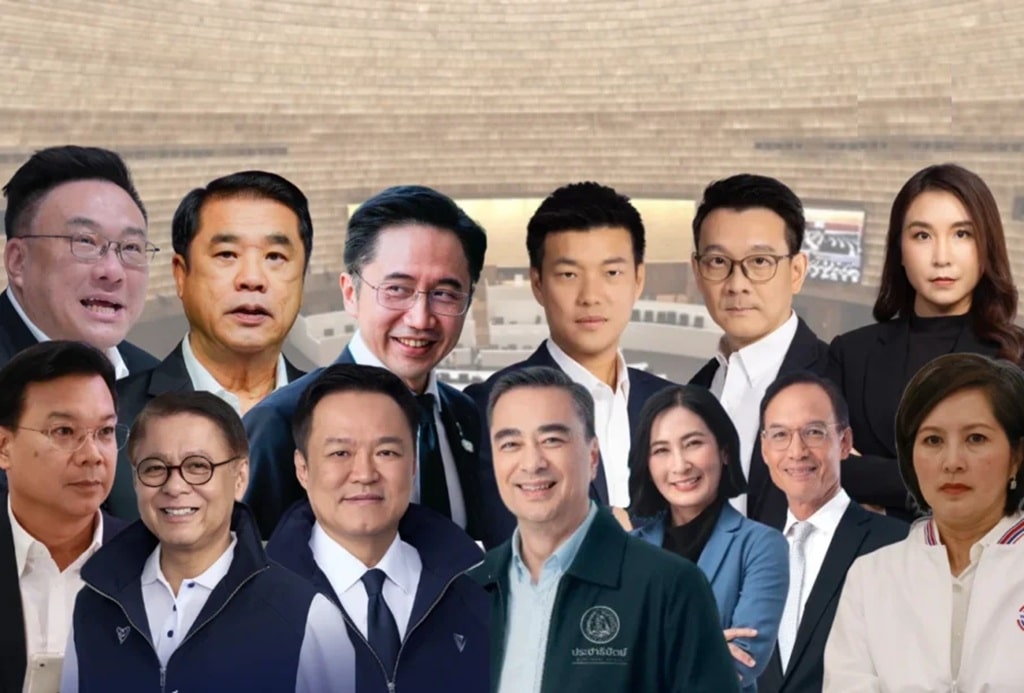

Leading contenders for prime minister
Polling often points to three main front-runners for the prime minister role:
- Natthaphong Ruengpanyawut (People’s Party): A younger leader who has led recent surveys at about 24 to 25% support (including NIDA and KPI polls). He draws strong backing from reform-minded voters, especially in urban areas and among younger people.
- Anutin Charnvirakul (Bhumjaithai Party): The caretaker prime minister, polling around 20 to 21%. He benefits from incumbency and a practical image, and his party has gained strength in parts of the north and east.
- Yodchanan Wongsawat (Pheu Thai Party): Carrying the party’s populist brand, he sits at roughly 9 to 10%, weighed down by the recent coalition collapse and criticism that Pheu Thai compromised too much with conservative partners.
Other figures, including Abhisit Vejjajiva of the Democrats, appear in surveys but trail the top names. Since no party is likely to govern alone, coalition negotiations are expected to decide who becomes prime minister.

Voter trends and party support
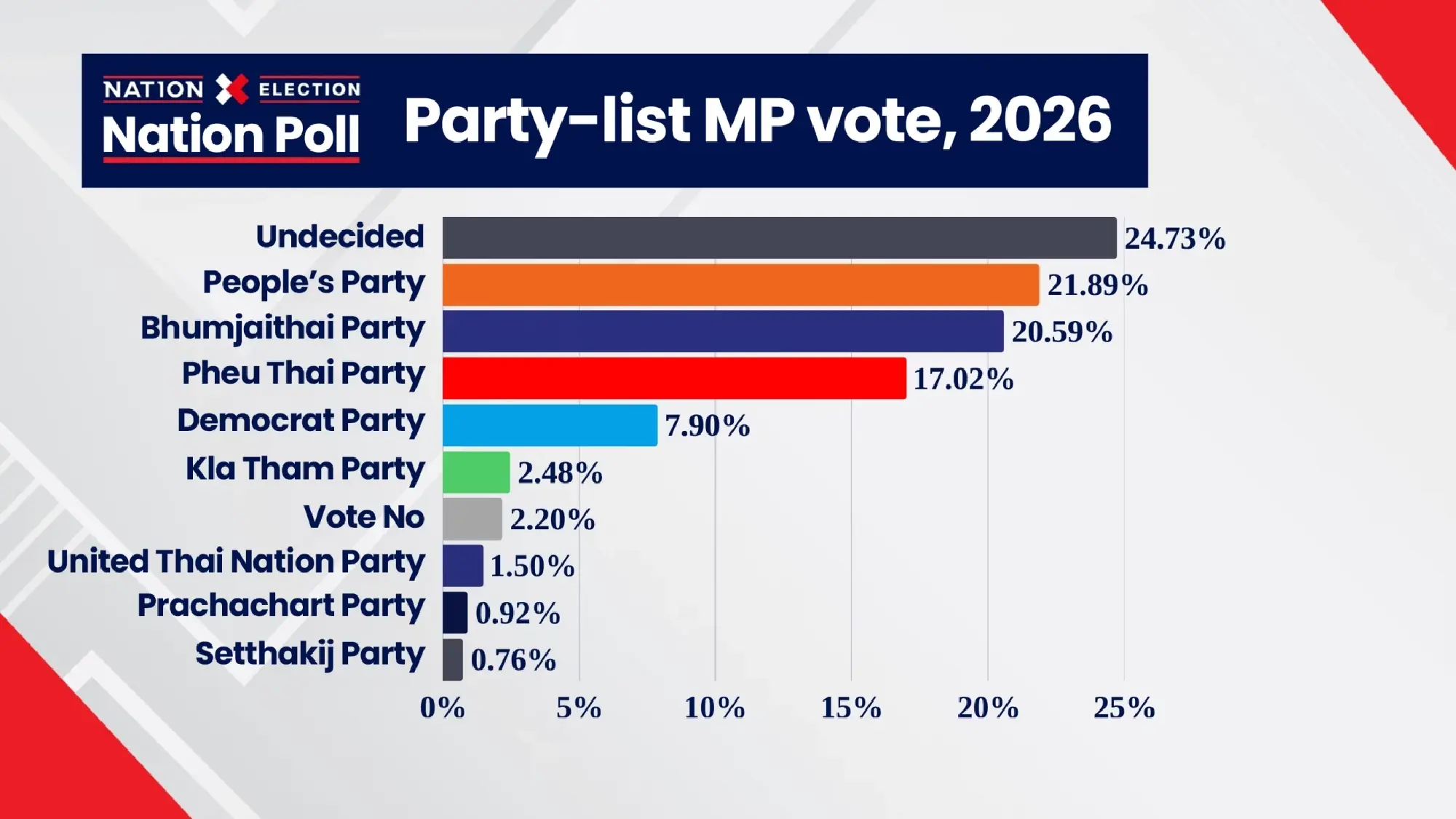
Recent opinion polls suggest a split electorate, with a slight tilt toward progressive politics. The People’s Party leads many surveys, often around 25 to 30% in party support in NIDA polling, helped by its reform message and the lingering “orange wave” energy from 2023.
Bhumjaithai has moved up, commonly near 20 to 22%, using its local networks and a stability message, especially in the northeast and east. Pheu Thai has slipped to about 15 to 16%, reflecting voter frustration after its 2023 shift toward conservative partners.
Undecided voters remain a big factor, often 25 to 40% in surveys. Regional patterns also matter. The north and northeast tend to favor progressive or populist options, while the south often leans more conservative.
Some analysts describe the race as a tight three-way contest, with hypothetical projections placing the People’s Party at 140 to 150 seats, Bhumjaithai at 120 to 130, and Pheu Thai at 90 to 100. Many also see parts of the establishment viewing Bhumjaithai as the most predictable partner within conservative limits.

What parties say they’ll do if they win
Most campaign promises focus on the cost of living, welfare, reform, and growth. Many proposals are expensive and aimed at broad voter appeal.
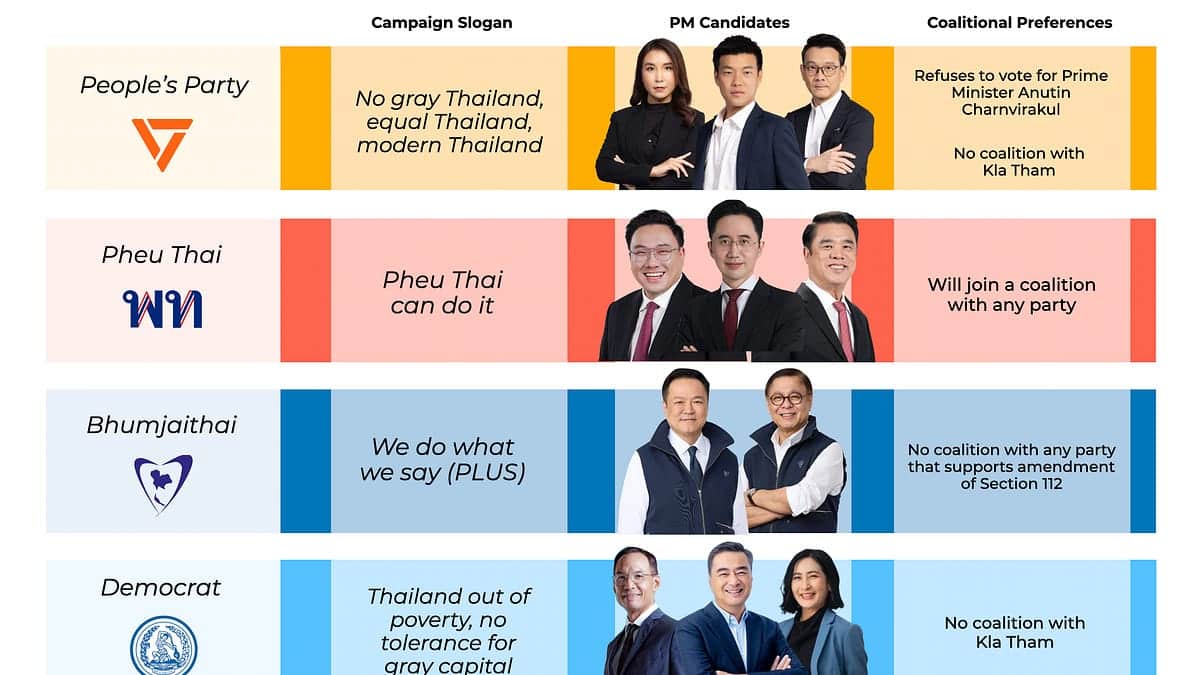
- People’s Party: Puts structural reform first. Key ideas include shifting military conscription to a voluntary system, reducing the number of senior military posts, decentralizing power, and backing constitutional changes (including support for the referendum). The party also talks about breaking up monopolies, expanding welfare (child support, elderly care, disability payments), strengthening protections and public services, improving schools and job skills, upgrading healthcare, and narrowing inequality. It also promotes a large nationwide quality-of-life push and skills voucher programs.
- Pheu Thai Party: Stays focused on big welfare and income support under slogans like “No Thai Left Poor” and “Hope 2026.” Promises include income top-ups for low earners, farm price guarantees targeting a 30% profit margin, debt pauses and relief for farmers, fertilizer and seed coupons, land reform, and stronger 30-baht universal healthcare (including mental health and AI use). It also backs flat transit fares, startup support, wellness tourism, digital government plans, soft power programs, and household debt relief.
- Bhumjaithai Party: Runs on continuity and a goal of growth above 3% through a “10-Plus Plan.” Pledges include a second phase of co-payment subsidies for food and consumer goods, more support for low-income workers and seniors, backing for community products, free education tied to jobs, help for small businesses, steady policy direction, and more local and sector-based development.
- Democrat Party: Promotes broad welfare for different age groups, education and job skills programs, household debt relief (including student loans), farm income guarantees, irrigation upgrades, tourism projects, cheaper transport (including a 30-baht fare cap), and connectivity upgrades.
- Palang Pracharath and allies: Emphasize stability, job training, workforce readiness, social support programs, and conservative values.
Smaller parties bring their own niche pledges, from anti-corruption plans to very local promises, but the big three still set the tone of the campaign.
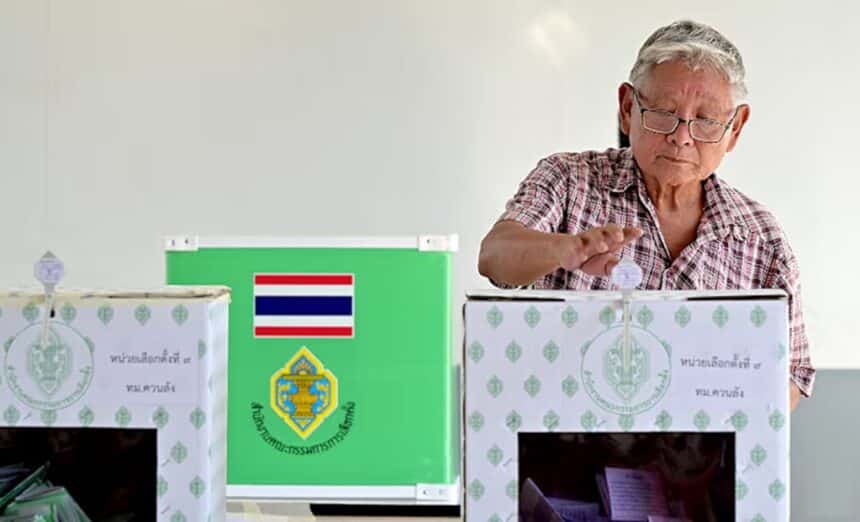
With advance voting already underway in places like Chiang Rai, the country is heading toward a vote that could reshape Thailand’s direction. The referendum adds even more weight to the day’s results, since it could open the door to a full constitutional rewrite. Turnout, seat counts, and coalition deals will decide what comes next.
In the north, where rural voters often help decide national outcomes, many people remain focused on practical benefits, even as parties argue over bigger political change. Whatever happens on February 8, Thailand’s political story keeps moving.