




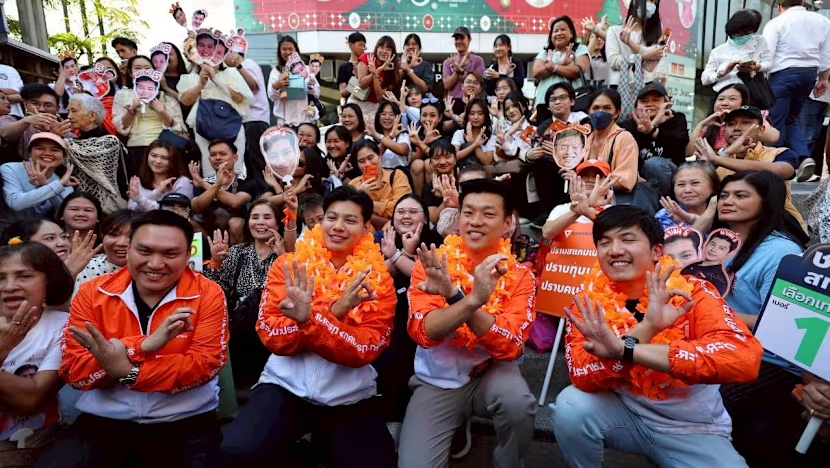
On Feb 5, 2026, in Udon Thani, People’s Party leader Natthaphong Ruengpanyawut presented what he called a People’s Party policy blueprint to transform Thailand. The message was simple: a “government of the people,” less division, and policies that don’t mainly reward a small, well-connected group.
Big political promises can sound like a lottery ticket. The odds feel unclear, but the hope is real. This post breaks down what was said, what’s confirmed, what’s still missing, and which questions matter most before any vote.
The goal here isn’t to cheer or to dismiss. It’s to translate political language into plain Thai life: jobs, bills, public services, fairness, and whether plans can actually be delivered.
What Natthaphong said the People’s Party is ready to do
The speech centered on “readiness,” a word voters hear often and trust rarely. In plain terms, readiness is about three things: what a party believes, whether it can run a government, and whether it can be held responsible when things go wrong.
From the report of the Udon Thani speech, the People’s Party framed readiness in three ways:
- Ready in principles and ideology: the party says it has clear beliefs and won’t shift to please powerful backers.
- Ready with a governing team: it says it has a full line-up (described as more than 40 people) and can work across ministries.
- Ready to deliver as one government: it argues it can coordinate better than the usual “each ministry for itself” style.
These claims matter in daily life because they connect to trust, delivery, and accountability. If principles are unclear, policies can change overnight. If a team is weak, agencies stall. If accountability is missing, citizens pay the price through taxes, delays, and broken systems.
Principles first, no hidden interests: what that claim means in practice
“Firm in principles” can sound abstract. Voters can treat it like a set of visible signals, not a slogan. The People’s Party also claimed it was founded by citizens and is free of vested interests. That’s a strong claim, and it’s fair for the public to ask, “How would anyone know?”
A practical way to read this promise is to look for:
- Clear stances that don’t keep changing when public pressure rises.
- Disclosed funding and donors (or at least a consistent effort to disclose).
- Conflict-of-interest rules for MPs and senior appointees, including what happens when someone breaks them.
- Voting behavior under pressure, not just campaign speeches.
- Transparent ties to business (who benefits if a policy passes).
Verification doesn’t require accusations. It can be as basic as comparing what leaders say over time, checking whether financial disclosures are easy to find, and watching how the party reacts when criticism comes in. A party that welcomes checks usually leaves a paper trail.
A full governing team and cross-ministry work: how it could change day-to-day government
The People’s Party pitch includes a named governing structure and cross-ministry coordination. Related reporting in January described the party unveiling a “people’s government” team and missions, which helps explain what it means by a prepared line-up (see People’s Party “people’s government” team and missions).
If cross-ministry work is real, it can reduce the turf wars that slow down results. Think of common problems that cut across agencies:
Flood response needs the interior, transport, health, and local government to move together. Cost-of-living relief touches finance, commerce, energy, and social welfare. Small business support can include tax assistance, loans, permits, and digital services.
But coordination also has risks. When many ministries share a single target, accountability can become blurry. If a project fails, officials can point fingers in a circle.
Simple tests for voters to watch include:
- Is there one named person responsible for each major goal?
- Are targets public, with dates and numbers, or just broad promises?
- Does coordination produce faster decisions, or just more meetings?
Inside the “Blueprint to Transform Thailand,” what we know and what is still unclear
The Udon Thani speech presented the blueprint as a large package, described as 200-plus policies designed to deliver broad benefit, not special privileges. That scale is part of the story. It signals ambition, but it also raises a basic question: can a government push hundreds of policies without losing focus?
Because the full list was not provided in the speech report used for this topic, it’s important to separate two buckets.
Confirmed from the speech report:
- The party presented a blueprint to transform Thailand.”
- It framed the plan as serving the public broadly rather than a privileged few.
- It linked the blueprint to a “government of the people” message.
Details not yet public in the speech report:
- Which policies come first, and which wait?
- Cost estimates and funding sources.
- Which laws must change, and how long will it take?
- How success will be measured, policy by policy.
There has been earlier reporting on People’s Party Thailand policies tied to the 2026 election cycle, including a policy “blueprint” release and welfare and cost measures (see Thairath’s report on the policy blueprint). That reporting can add context, but it shouldn’t be treated as a complete substitute for the specific Feb 5 blueprint presentation.
The headline promise: policies for everyone, not just the connected
The emotional center of the blueprint message is fairness. Many Thais describe the system as one where connections open doors faster than merit. That shows up in contracts, permits, public services, and even how quickly problems get fixed.
When a party says policies will “benefit everyone,” it can mean several practical outcomes, without naming any single program:
- Fair access to services: the same rules in every province, not different rules for different people.
- Equal chance to compete: transparent bidding and fewer backroom deals.
- Budgets that can be tracked: spending that can be checked by journalists and the public.
- Clear rules for officials: less room for “special help” and informal fees.
This is also where public skepticism is healthy. “For everyone” can be true in spirit while still failing in design. A policy can look universal but end up easier to claim for those with time, documents, and connections.
What voters should wait to see in the full policy list
A serious blueprint should read like a plan, not a wish list. When the full details are available, the most useful parts will be the boring parts: budgets, timelines, and legal steps.
A simple checklist to look for:
- Costs: total price and yearly cost.
- Funding: where money comes from (tax changes, borrowing, savings, re-prioritized budgets).
- Timeline: what happens in 100 days, one year, and four years.
- Legal changes: which acts or regulations must be amended?
- Responsible agencies: who runs it, and who signs off.
- Targets: numbers that can be measured, not just intentions.
- Winners and payers: who gains, who may pay more, and why.
Red flags versus green flags can help separate strong plans from weak ones:
- Green flag: clear funding source, named agency, measurable target.
- Red flag: “no impact” claims with no numbers, or benefits promised without saying who pays.
- Green flag: a phased rollout with pilots and evaluation.
- Red flag: everything promised “immediately,” with no capacity plan.
Ending the patronage system and corruption, the pitch and the real-world obstacles
Natthaphong’s speech also addressed quota politics, patronage, corruption, and vote-buying. The phrase “end patronage system Thailand” is now common in reform debates, but the problem is older than any party.
Patronage systems are hard to remove because they aren’t just illegal acts. They can be informal networks that decide who gets hired, who gets promoted, and which projects move first.
Anti-corruption reform in Thailand also tends to face resistance in two places: within institutions that benefit from discretion and within local networks that depend on access. Reform is possible, but it’s rarely quick.
How quota politics and patronage show up in real life
People often experience patronage not as a headline scandal, but as daily friction:
A small business waits months for permits unless it “knows someone.” Local road repairs are completed faster near politically important areas. A procurement process looks open, but the outcome feels pre-decided. A capable official gets moved aside after refusing an informal request.
Even when citizens can’t prove wrongdoing, these patterns shape trust. Once trust drops, good policies struggle to land because the public assumes someone is taking a cut.
What anti-corruption reform could Thailand require to work
If a future government wants to reduce corruption in a lasting way, its tools must be more than slogans. Common mechanisms include:
- Open procurement data so bids, winners, and prices can be checked.
- Clear conflict-of-interest rules and real penalties.
- Asset declarations that are easy to access and verify.
- Independent audits with power to act, not just report.
- Whistleblower protection so insiders can report safely.
- Digital licensing systems to reduce face-to-face gatekeeping.
There’s also a tradeoff that politicians rarely say out loud. Stricter rules can slow spending in the short term because officials fear mistakes. Over time, strict rules can reduce waste and raise confidence, but the early phase can feel frustrating.
New constitution push, what the People’s Party asked voters to do and what it could change
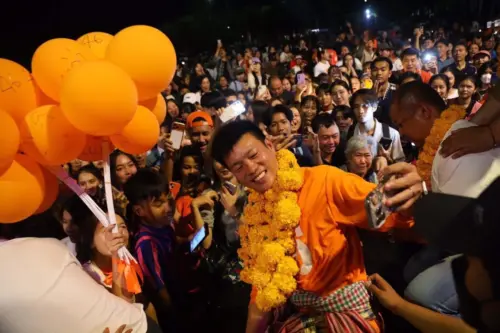

The speech also included a call for a new constitutional process, often discussed as a constitutional amendment in Thailand. In basic terms, the constitution sets the rules for power: how leaders are chosen, what rights people have, and which institutions can block or review decisions.
Talk of the Constitution can sound distant from daily life, but it shapes stability. It affects how long policies last, how courts and agencies behave, and how predictable rules are for business and investment. For background on Thailand’s broader political and constitutional context in the region, readers can compare coverage in a regional update such as the Southeast Asia Quarterly Update (Q1 2025).
Why a constitution rewrite can affect jobs, prices, and fairness (not just politics)
A constitution doesn’t set food prices. It can shape the conditions that influence them.
If rules are stable, investors plan longer, and jobs can follow. If checks and balances are trusted, courts are seen as fairer, and business disputes don’t drag on. If regulations are predictable, companies don’t need “special access” just to operate.
These effects are indirect, and they take time. A new constitution is not a quick fix for wages or household debt. But it can influence whether reforms stick or collapse after the next political shock.
Key questions to ask about the drafting process
A constitution process succeeds or fails based on design. Before supporting any drafting push, citizens can ask:
- Who writes it, and how are drafters chosen?
- What is the timeline, and what happens during delays?
- How can the public submit views, and will there be public hearings?
- What safeguards protect minority views and prevent one group from locking in power?
- How are disputes resolved if the drafting body splits?
Risks are real: long delays, political conflict, and uncertainty during transition periods. Clear rules reduce those risks.
How to judge feasibility: questions every household should ask before believing any blueprint
A Thailand political reform plan can sound right and still fail on delivery. The most useful skill for voters is not predicting the future. It’s judging whether a plan has enough money, people, and time to work.
Money, manpower, and deadlines: the simple feasibility test
These questions work for any party, including the People’s Party:
- How much will each major promise cost per year?
- Where does the funding come from, and is it stable?
- Will taxes change, and for whom?
- Which ministry is in charge of delivery?
- What will happen in the first 100 days?
- What will change in the first year that people can feel?
- Which laws must be amended, and are votes likely to pass?
- What happens if growth slows or revenue drops?
- How will success be measured, and who reports it?
- What is the backup plan if the first approach fails?
A blueprint that answers these points in plain language is easier to trust, even for people who disagree with it.
Benefits and risks to watch for if the People’s Party leads a government
Based on the claims in the speech, the likely benefits and risks cluster around coordination and resistance.
Potential benefits:
- Clearer cross-ministry work if the “one government” model is enforced.
- Less room for patronage incentives if conflict-of-interest rules are strict.
- Broader policy framing that aims beyond narrow groups.
Potential risks:
- Pushback from entrenched interests, which can slow laws and budgets.
- Coalition constraints if partners don’t accept the same governing structure (a model discussed in related coverage of an “orange government” coalition approach, see Natthaphong’s coalition model outline).
- Legal and institutional hurdles that stall constitutional or anti-corruption changes.
- Overpromising when a platform includes 200-plus policies, which can dilute focus.
None of these outcomes are guaranteed. They are the pressure points where plans usually break.
FAQs about the People’s Party blueprint to transform Thailand
What is the People’s Party blueprint to transform Thailand?
It’s the named platform Natthaphong Ruengpanyawut presented as a plan to change governance and public outcomes. It was described as containing 200-plus policies aimed at broad public benefit, not special perks for a few.
People’s Party policies explained in simple terms, what is the main idea?
The main idea is a government for the people Thailand message: reduce division, apply rules fairly, and focus on policies that help most households. The party also frames the plan as breaking old systems that reward connections.
How the People’s Party plans to fight corruption, what did they promise?
In the speech framing, the promise is to dismantle quota politics, patronage networks, corruption, and vote buying. The key thing to watch next is the enforcement detail: what laws change, what agencies act, and how results are measured.
What does “government for the people Thailand” mean in this campaign message?
It means governing without treating citizens as rival camps, and without special treatment for the well-connected. In real terms, people would expect transparent decisions, equal access to services, and rules that apply equally across provinces.
How would a new constitution process work, and what should voters look for?
A new constitution effort usually involves a vote to start the process, then a drafting body writes a text, and the public may vote again to approve it. Voters should watch who selects drafters, how public input works, the timeline, and the rules that apply during any transition.
Are 200-plus policies realistic for one term?
Some changes can happen quickly through cabinet orders or budget shifts. Others need new laws, new staff, and large funding. A realistic platform should show priorities, a short urgent list, and clear timelines.
Where can people follow more reporting on the People’s Party’s plans?
Additional coverage has described the party’s proposed governing team and missions (see People’s government team and 12 missions) and ongoing campaign statements (see Natthaphong’s call to voters ahead of Feb 8). These reports can help readers compare messaging across events.
Conclusion
Natthaphong’s Feb 5 Udon Thani speech positioned the People’s Party policy blueprint as a plan built on principles, a prepared governing team, and a large policy package marketed as benefiting everyone. The core test now is detail: costs, timelines, legal steps, and who is responsible for delivery.
Informed voting doesn’t require cynicism, but it does require discipline. Read the full policy details when available, look for numbers, and use the feasibility questions before trusting any blueprint. Real reform takes good plans and follow-through when the pressure starts.