




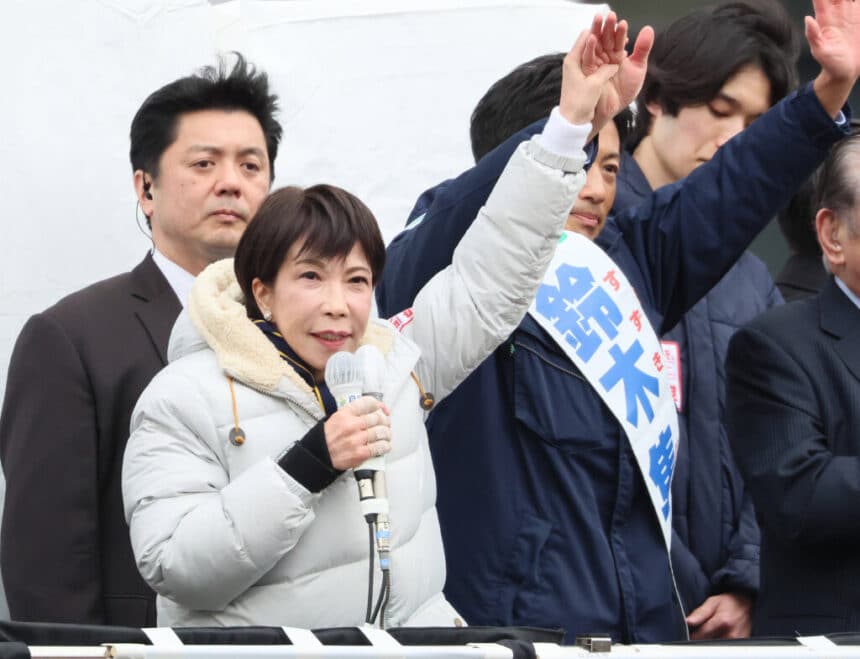
TOKYO, Japan – Prime Minister Sanae Takaichi has led Japan’s Liberal Democratic Party (LDP) to a sweeping victory in Sunday’s snap general election, winning a full two-thirds supermajority in the House of Representatives.
Projections from public broadcaster NHK, backed up by early counts, point to the biggest lower house win by a single party in Japan’s postwar era. It gives Takaichi, Japan’s first female prime minister, the numbers to push a strong conservative programme with far fewer obstacles.
The LDP on its own won 316 seats out of 465 in the lower house. That is well above the 233 needed for a simple majority, and it clears the 310-seat line needed to override the upper house. The result also marks a jump of more than 100 seats from the party’s pre-election position of 198.
Alongside its coalition partner, the Japan Innovation Party (JIP), which took 36 seats, the governing bloc now holds 352 seats. With that level of control, the group can shape law-making and political debate for years.
The vote took place on 8 February, as heavy snow hit large parts of the country. Takaichi called the election only months after taking office in October 2025, after her predecessor, Shigeru Ishiba, stepped down.
Ishiba had struggled through a series of setbacks, including the LDP losing its grip on majorities amid anger over unreported political funds and pressure from rising living costs.
Takaichi, a long-time conservative voice often likened to Margaret Thatcher for her firm views on defence and reform, went for a quick election to use her early popularity. It was a bold move, and it paid off.
Results and exit polls showed the LDP gaining ground in both single-member seats and proportional blocks. The party won 249 constituency seats and 67 proportional seats. Opposition groups, including the Constitutional Democratic Party and figures linked to the former Komeito partnership, took a battering. Some projections put the combined opposition total at under 120 seats.
The swing looks like a clear endorsement of Takaichi’s message. She campaigned on tax cuts aimed at growth, higher defence spending in response to China and North Korea, and tighter immigration rules.
A risky call that delivered a huge reward
Calling a snap election so soon after becoming prime minister looked like a high-stakes bet. After the LDP’s rough patch under Ishiba, and the damage from the slush fund scandal, plenty of commentators doubted voters would tolerate another fast trip to the polls.
Takaichi’s campaign focused on turning “anxieties into hope”, with promises of stimulus, deregulation, and a tougher line on national security. Some media nicknamed the surge of interest in her “Sanamania”, pointing to strong support among younger voters.
The weather was harsh. Snow disrupted travel in northern areas, with cancellations on flights and trains. Even so, turnout held up as many voters pushed through the conditions. The final result restores the LDP’s dominance after a short period where it looked exposed.
What it means for policy and the region
With a supermajority in the lower house, Takaichi can push bills through even if the House of Councillors resists, where her coalition still lacks full control. That opens the door to long-standing LDP aims such as constitutional change to update Japan’s pacifist charter, along with more defence funding and shifts in immigration and tourism policy.
Financial markets are already watching closely. Talk of tax cuts paired with spending plans has brought fresh attention to Japan’s fiscal position and how the government will pay for its promises.
Abroad, the outcome strengthens Takaichi’s position as she reinforces the US-Japan alliance and takes a firmer stance towards Beijing, including on Taiwan and ongoing territorial tensions.
Opposition leaders conceded early on Monday. Several called for a rethink after failing to turn public frustration over inflation and inequality into a convincing alternative. The Constitutional Democratic Party and its partners lost ground, and their campaign often looked split and unclear.
Takaichi’s next steps in Japan
In her Sunday night victory speech, Takaichi thanked supporters and said she would follow through on what she promised. “This is not a victory for one person or one party, but for the Japanese people who chose hope over stagnation,” she said at LDP headquarters, where red paper roses marked winning candidates in celebration.
She is expected to be confirmed again as prime minister during an extraordinary Diet session starting 18 February. A Cabinet reshuffle is not expected right away, which suggests she wants a steady footing as she starts to act on her plans.
For Japan, the 2026 election is a turning point. Voters have pushed back against recent instability and handed Takaichi a powerful mandate rooted in nationalist-leaning conservatism. Whether this supermajority brings lasting change or creates fresh pressure, one thing is clear: Japan’s new “Iron Lady” has made history.