





All over Thailand tonight, people are refreshing results on their phones, comparing screenshots in family chats, and asking the same question: will the next government finally bring prices down? With food, rent, and transport costs still biting, every new update feels personal.
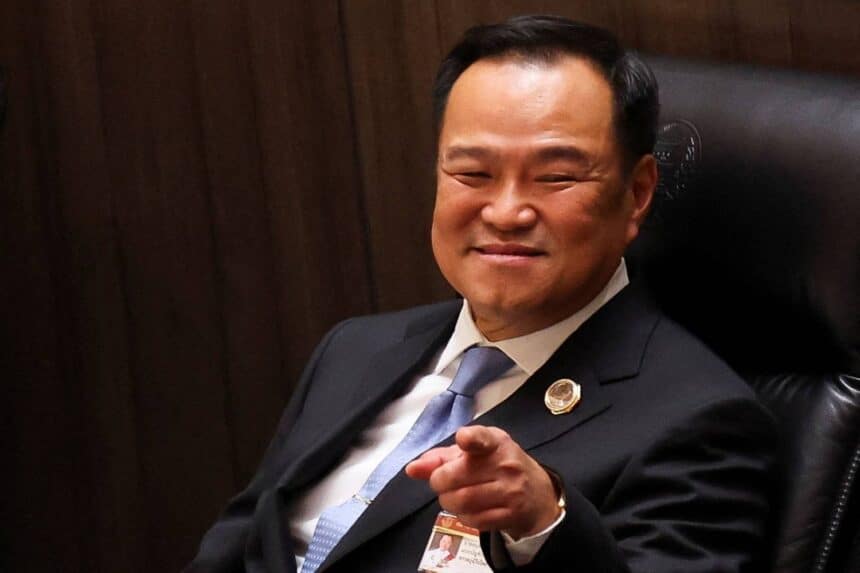
Prime Minister Anutin Charnvirakul claims victory in Thailand’s general election based on early counts. But the numbers being shared right now are unofficial and preliminary until Thailand’s Election Commission certifies the results. Until then, seat totals can shift, and coalition talks can change the story quickly.
TL;DR and a clear confirmed vs unconfirmed snapshot
- Who claimed victory: Prime Minister Anutin Charnvirakul said his side is ahead and expects to lead the next government.
- What early counts suggest (unofficial): Early tallies show Bhumjaithai Party leading in seats, based on preliminary reporting.
- Who is behind: The People’s Party and Pheu Thai are trailing in early counts (unofficial).
- What happens next: Counting continues, then Election Commission certification and coalition talks decide government formation.
- Why it matters: Policy choices on the cost of living, electricity prices, jobs, and stability affect daily life.
Confirmed (as of Feb 8, Bangkok time):
- Polling day happened nationwide.
- Anutin claimed victory based on early results.
- Multiple reports show Bhumjaithai leading, with People’s Party and Pheu Thai behind (early, unofficial).
Unconfirmed (wait for official updates):
- Final seat totals for all 500 seats.
- Any coalition deal details, including cabinet roles and policy packages.
- The exact timeline for certified results and final announcements.
Unofficial seat picture so far (figures may change)
Unofficial projections / preliminary counts (Feb 8, 2026)
| Source type (unofficial) | Bhumjaithai Party | People’s Party | Pheu Thai |
|---|---|---|---|
| Earlier media projections cited widely | 194 | 116 | 86 |
| Later tallies noted in reporting (constituency seats, out of 400) | 177 | 81 | 62 |
Different numbers can appear because some updates combine different counting stages, and others focus on constituency seats rather than broader projections. Figures may change.
What happened on election day, and why this result surprised so many people
Thailand’s general election came after another stretch of political churn. Parliament was dissolved in late 2025, and the campaign that followed was shaped by arguments over stability, the economy, and how to move past repeated stand-offs between parties and institutions.
Here’s the simple timeline most voters experienced:
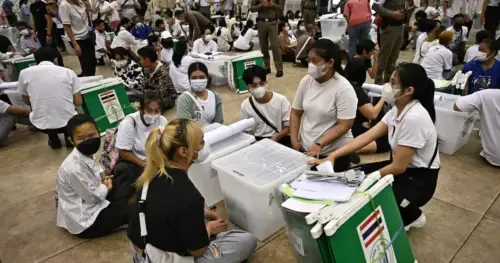
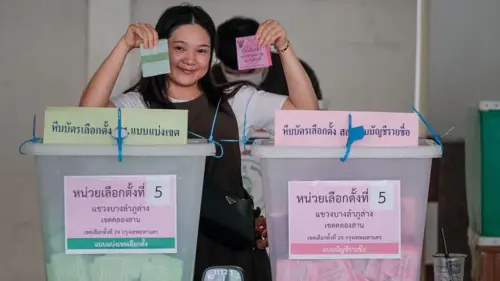
Polling opened Sunday morning and closed in the late afternoon. Not long after, unofficial results started to roll in, seat by seat. As the night went on, early counts pointed to a clear lead for Bhumjaithai Party, especially in many constituency races. Later in the evening, Anutin publicly framed the early lead as a win and said his party had received a strong mandate to run the country (based on preliminary results reported by major outlets).
The People’s Party and Pheu Thai watched the same numbers with a different lens. Even if early totals hold, Thailand’s political system often means a single party still needs partners. That’s why the conversation quickly moved from “who won” to “who can form a government.”
In other words, “Thailand election results latest” searches are not only about a seat count. They are about what coalition talks could produce, and whether the next few weeks bring calm or another round of uncertainty.

Why opinion polls and the “orange wave” expectation did not match the early count
Many people expected a strong “orange wave” style showing for the People’s Party, based on the mood seen online and in some surveys. Early unofficial results have varied in several areas, and many analysts will likely examine the mechanics of the vote to explain why.
One key reason is that Thailand’s election isn’t only about national vote share. A big part of the fight happens in constituency seats, where local candidates compete district by district. If a party runs strong local campaigns, has well-known candidates, or benefits from local networks, it can win more seats even if the national mood feels split.
It also matters that constituency races are often decided by first-past-the-post rules. That means the candidate with the most votes wins, even without a majority. In crowded races, a candidate can win with less than half the vote if the rest is divided.
Polls can miss those local dynamics. They may also struggle to measure late swings, turnout differences, and how people vote when they are alone behind the screen. That’s why different districts can tell very different stories on election night, even when national conversations seem loud and clear.
The economy and security were on voters’ minds
Beyond party brands, many voters focused on everyday pressure. The cost of living has been a steady theme. People talk about grocery bills rising in small steps, then jumping. They talk about rent renewals, fuel costs, and how far a salary stretches after debt payments.
Business owners and workers also watch signs of economic confidence. When people feel unsure, they spend less. When spending slows, small shops feel it first. Larger worries sit in the background too, including headlines about factories shifting to neighboring countries, and what that could mean for jobs over time.
Security and stability also stayed in the conversation. Border issues can quickly turn into economic issues, especially in provinces tied to cross-border trade. Reporting over the past year has also noted border tensions in the region, including concerns linked to Cambodia. For many households, the details matter less than the feeling that politics should be predictable enough for daily life.
Parties campaigned on these themes in different ways, but the common thread was clear: voters want a government that can last, keep the economy steady, and avoid sudden price shocks.
How Thailand forms a government after the vote, and what to watch in the next month
A victory claim on election night is not the same as a final result. In Thailand, it’s a political statement based on what parties and media are seeing from early counts. The step that gives results legal force is Election Commission certification.
After certification, the focus moves to government formation. If no party has an outright majority, parties negotiate to build a coalition. That’s why a leading party can still face weeks of bargaining, even if it finishes first in the unofficial seat count.
These negotiations are not just about who gets which ministry. They are also about whether partners can agree on priorities like subsidies, wage policy, energy costs, and plans to restore confidence among investors and businesses. When coalitions are fragile, markets and households both feel it, sometimes through currency moves, delayed spending, or policy uncertainty.
One more thread is also being watched: the BBC reported that Thailand’s election day included a constitution referendum, with early “yes” tallies mentioned. In the real-time reporting reviewed here, the updated referendum results have not yet been officially confirmed, so it’s best to wait for official confirmation before treating any referendum outcome as final.
For readers who want a plain-language guide to election timing and expected official announcements, the IFES Election Guide listing for Thailand’s 2026 House election provides general reference information (always defer to Thai authorities for final dates and certified results).

The next 7 to 30 days, a simple checklist
- Continued counting and consolidation of results.
- Review of complaints, plus recounts if ordered.
- Election Commission announcement and certification of official results.
- Party negotiations and coalition talks.
- A coalition agreement, if parties reach one.
- Prime minister selection, then cabinet talks and ministry assignments.
A few “what to watch” signals can help cut through noise:
- Which parties publicly signal support, and which set firm red lines.
- The first policy messages on prices, jobs, and household support.
- Signals that affect investors and tourists, including the tone on stability and safety.
Nothing is “done” until it’s publicly agreed and backed by certified numbers.
What this could mean for everyday life in Thailand (with 3 simple examples)
1) A household trying to plan next month’s budget
A family looking at electricity bills and grocery costs doesn’t need political drama. If the next government is stable, agencies can set clear rules, and households can plan. If coalition talks drag on, uncertainty can linger, and people may stay cautious with spending. Either way, electricity prices and targeted relief programs will be closely watched.
2) A small shop owner depending on tourism
In tourist areas, confidence can feel like the weather. If visitors sense calm and safety, bookings tend to hold up. If headlines suggest instability, some travelers hesitate. A clear government formation process can support tourism and local spending, even before new policies take effect.
3) A student or first-time voter thinking about jobs
For younger Thais, election night isn’t only about parties, it’s about opportunity. Job creation, training, and the tone toward new industries matter. If political stability improves, hiring plans may look less risky. If uncertainty grows, new graduates may face a tougher market and slower wage growth.
These are not promises, just the real ways politics meets daily life.
Stay safe from rumor posts: a quick misinformation checklist, plus FAQs
Election nights create a perfect storm for fast rumors. Graphics spread faster than explanations, and old charts get recycled with new dates. A few small checks can prevent big misunderstandings.
Misinformation checklist
- Check timestamps on screenshots and videos.
- Look for Election Commission posts and official statements.
- Compare multiple trusted outlets, not one viral post.
- Beware cropped charts that hide labels or dates.
- Don’t trust forwarded messages with no source.
- Separate unofficial seat projections from certified results.
- Watch for edits or old graphics reused.
FAQ: the questions people are asking right now
When will results be official?
When Thailand’s Election Commission certifies them. Timing can vary, especially if there are complaints or recounts.
Can seat numbers change?
Yes. Unofficial results can shift as counting continues, data is corrected, and official totals are finalized.
What does it mean when a PM claims victory?
It’s a public statement based on early counting trends. It does not replace official certification.
Why do different outlets show different seat totals?
Some count only constituency seats, some include projections, and some update at different times. Small differences can look big on charts.
What are coalition talks?
They are negotiations between parties to reach a majority and agree on a government plan, including cabinet roles and policy priorities.
Why is Thailand’s election system confusing?
Because results come in through multiple channels and seat types. Early numbers often mix partial district results with projections.
What should I watch for if I care about prices and jobs?
Watch for the first clear policy messages on the cost of living, energy bills, wages, and jobs, and whether the coalition looks stable enough to pass budgets.
Did Thailand also vote on a constitution change?
Some reporting said a referendum was held alongside the election. Any result should be treated as unconfirmed until officially announced.
Conclusion
Anutin Charnvirakul claims victory based on unofficial results, and early counts suggest Bhumjaithai is leading the seat race. The next steps are what matter now: Election Commission certification and coalition talks that determine government formation. Until then, seat totals can move and rumor posts can mislead. Following official updates and refusing to share unverified graphics will keep the public conversation clearer, and calmer.
Sources used