



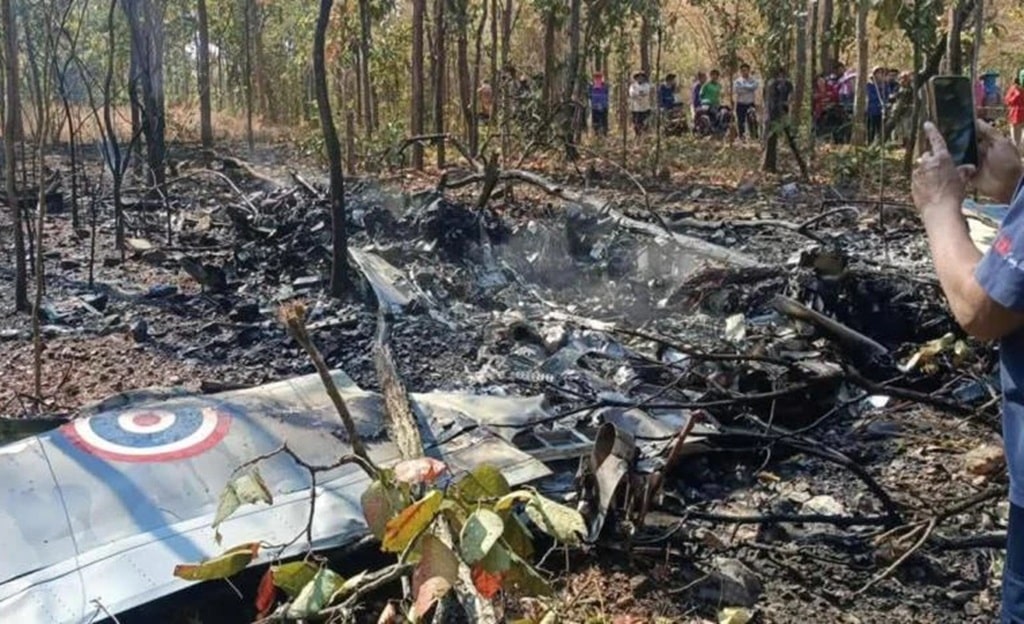
CHIANG MAI – A Royal Thai Air Force AT-6 light-attack aircraft crashed in the Chom Thong area of Chiang Mai. Early reports say the aircraft was heavily damaged, and officials rushed to the scene to check details.
The incident was reported on Jan. 29, 2569. The crash happened in Mae Soi Subdistrict, Chom Thong District, Chiang Mai Province. Initial information suggests there were two people on board. Authorities later reported both personnel on the aircraft had died.

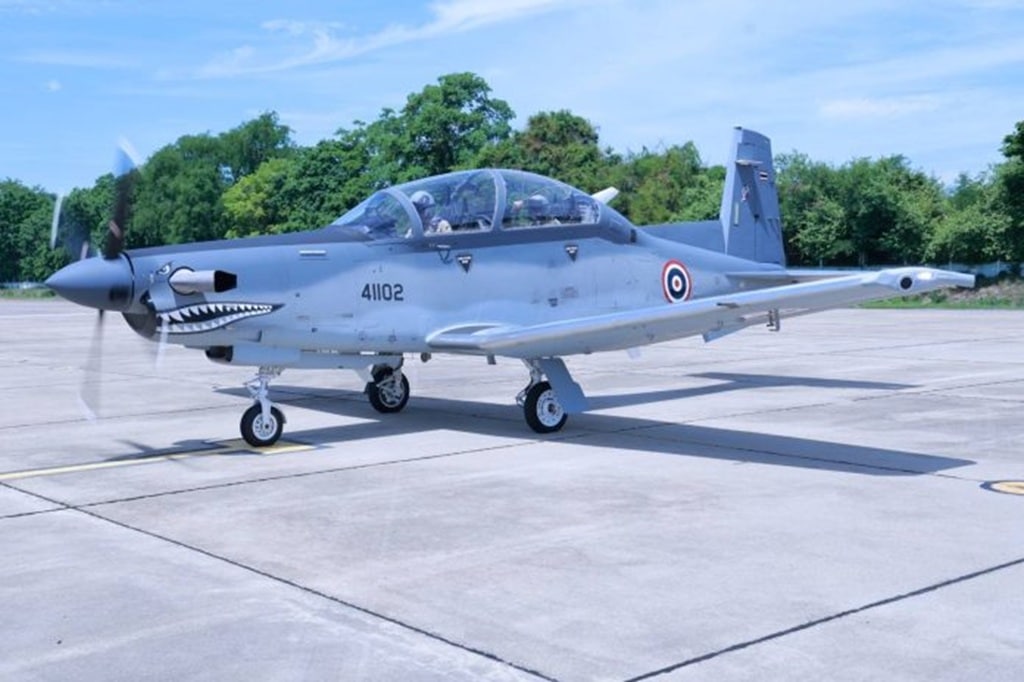
The AT-6 is part of a newer fleet brought into service by the Royal Thai Air Force. Thailand acquired eight aircraft to replace the L-39ZA/ART, and the model has only recently begun operational missions. The aircraft is assigned to Squadron 411 at Wing 41.
Royal Thai Air Force (RTAF) operated the T-6 Texan
The North American Aviation T-6 Texan is a well-known name in aviation history. It was one of the most widely used advanced trainer aircraft of the mid-1900s. The T-6 was a single-engine, low-wing monoplane with a Pratt & Whitney R-1340 Wasp radial engine.
First developed in the 1930s, it went on to train Allied pilots through World War II and well after. Depending on the service, it also carried other names, including “Harvard” in Commonwealth air forces and “SNJ” with the U.S. Navy.

In Thailand, the Royal Thai Air Force (RTAF) flew the T-6 Texan under the local designation B.F8 (บ.ฝ.๘) from 1948 to about 1974. Thailand brought in around 220 aircraft, which made it one of the largest post-war T-6 operators in Southeast Asia.
Most were used as advanced trainers, helping pilots move from basic flight skills to fighter and combat training. The aircraft also took on extra work, including light attack and liaison flights during regional conflicts and internal security missions.
In the early 1960s, Thai crews also used attack-configured T-6 Texans to support operations tied to the conflict in Laos. This included delivering aircraft and flying missions during the Laotian Civil War.
The T-6 earned its reputation in Thailand because it was tough, steady, and easy to handle. The cockpit offered strong visibility, which helped during training across the country’s varied terrain.
For many Thai pilots, it also served as a bridge between piston-engine flying and the jet era before the type was retired.
Today, the RTAF keeps the Texan name alive with newer trainers, including the Beechcraft T-6TH Texan II (12 in service) and the AT-6TH Wolverine light attack version (8 commissioned), continuing the same focus on building capable pilots.