





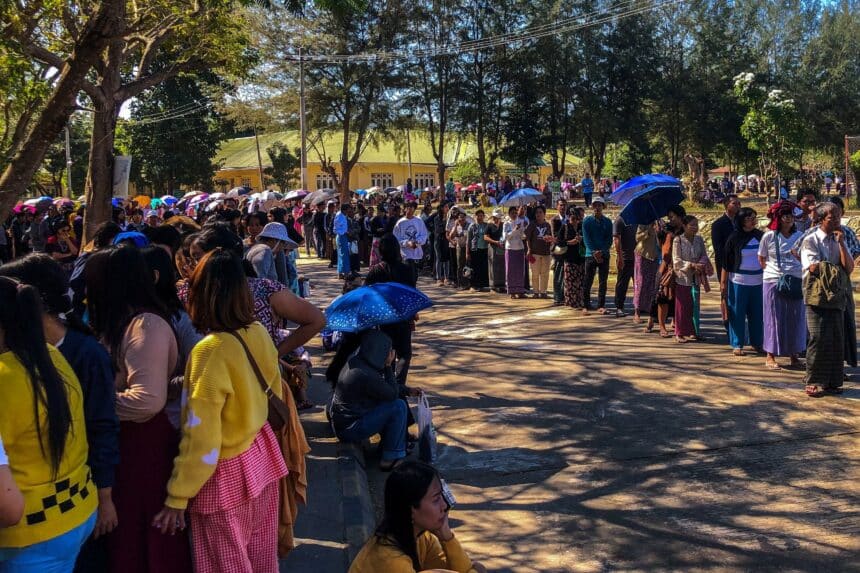
On Feb 8, 2026, Thailand will hold a nationwide Thailand new constitution vote on the same day as the general election. Voters will decide whether to begin drafting a new constitution to replace the 2017 charter.
This vote won’t produce a new constitution right away. If “Yes” wins, it provides a public mandate to pursue a longer path that may include drafting rules, selecting drafters, and later referendums.
Thailand-based readers will see this referendum as part of a political cycle that affects everyday governance. Expats and international readers can follow it as well, because the question is simple, but the subsequent steps are not.
The ballot question is explained
The referendum asks a direct question: should Thailand have a new constitution?
On the referendum portion of the ballot, voters will choose one of these options:
- Yes
- No
- No opinion
In plain terms, “Yes” is a green light to begin the rewrite process. “No” is a choice to keep the current constitution in place. “No opinion” means the voter doesn’t take a side on the referendum question (for example, by selecting a “No opinion” option if shown, or by not marking a choice for that question).
This is why the referendum matters, even though it’s a single question. It’s less like approving a finished building, and more like deciding whether construction should start at all. For background on the basic setup and date, see the summary on the 2026 Thai constitutional referendum.
What “Yes” means, and what it does not mean
A “Yes” vote signals that voters want the country to begin the formal process of writing a new constitution. It gives elected leaders a public mandate to move from political debate to official steps.
What it does not mean is just as important:
- It does not approve any draft text, because no new draft exists yet.
- It does not determine what will change, as that depends on the drafting rules and subsequent political decisions.
- It does not guarantee that a new constitution will take effect, as subsequent steps can still block, revise, or reject a final draft.
Analysts also say the process can take time. Monitoring groups have noted that legal and political steps after a “Yes” vote could stretch across years, not weeks, especially if multiple referendums are required. A detailed election and referendum explainer is included in ANFREL’s briefing on Thailand’s snap House election and constitutional referendum.
What “No” and “No opinion” mean on election day
A “No” vote means Thailand will continue to use the 2017 constitution as the national framework for government. It indicates that the voter does not support launching the rewrite process at this time.
A “No opinion” choice is different from “No.” It means the voter isn’t taking a side on the referendum question. In simple terms, it doesn’t add support to either camp when the result is calculated. It is closer to abstaining from the referendum, even while voting in the general election.
For many voters, this will come down to comfort level. Some people feel strongly either way. Others may support reform in general but are unsure about the process, timing, or risks of political conflict.
Why is Thailand holding this referendum now?
Timing is not random. Thailand is holding this referendum alongside a general election after parliament was dissolved in December 2025, triggering the election within the legal timeframe.
Officials and analysts have also pointed to practical reasons. Holding the referendum and election on the same day can reduce costs and increase turnout, as voters need to travel only once.
But the deeper reason is political legitimacy. Thailand has long faced tension between establishment forces (often linked to the military) and popular democratic movements. Constitutional rules sit right at the center of that conflict, because they shape who holds power, how leaders are chosen, and how institutions can check elected governments.
Thailand has had 20 constitutions since 1932, and many were drafted or revised following coups. Reports often cite 13 successful coups over roughly nine decades. That history makes constitutional change feel normal to some people, and destabilizing to others. The key difference in 2026 is the push to anchor the next steps in a public mandate, rather than a closed process.
For an international policy view of the election and referendum context, the European Parliament’s research service provides a briefing titled Thailand ahead of the February 2026 general election (and constitutional referendum).
Why the 2017 constitution is controversial
The thailand constitution 2017 took effect after the 2014 coup and was drafted under a military-appointed process. Supporters argue it was designed to prevent instability and curb corruption. Critics say it bakes unelected influence into the political system.
Common criticisms reported in public debate include:
- The charter’s origin in a post-coup environment, which some see as limiting public participation.
- Concerns that checks and balances don’t fall evenly on all power centers.
- Limits on decentralization affect the extent of authority local governments can exercise.
- Rights and freedoms that critics say can be constrained by broad concepts such as state security and public morality.
These points explain why the referendum is framed as more than a legal question. For many voters, it’s about whether political rules should be reset through a process that starts with a national vote.
How the Senate and oversight bodies shape politics under the current system
One core issue in the Thai constitutional reform debate is the role of the Senate and the broader oversight framework.
Under the current system, the Senate has 200 members elected indirectly, often described as having lower public participation than a direct election. The Senate also plays a role in oversight and in key appointment processes.
Another concern raised in political debate is the influence of independent bodies and courts. The Constitutional Court and other oversight agencies can significantly affect political outcomes, including decisions to dissolve parties or impose political bans, depending on the case and the law.
To supporters of reform, these features can weaken the power of elected institutions. To defenders of the current framework, these bodies act as safeguards. Either way, they help explain why a referendum on initiating a rewrite can carry high stakes.
Who supports a rewrite, who opposes it, and what they argue about
The camps are not perfectly neat, but broad patterns are clear.
Most mainstream parties have backed changes to or a replacement of the constitution and urged a “Yes” vote. Their general message is that Thailand needs clearer democratic checks, stronger accountability, and a political system that better reflects voter choice.
Opposition often comes from conservative or pro-military groups who argue that the current framework supports stability and continuity. Some also express skepticism about whether a rewrite process will reduce conflict or create new uncertainty.
Public agencies have also framed the combined election and referendum as a major civic moment. Thailand’s government PR channel, for example, highlighted the significance of the twin votes in Thailand at a Crossroads: How the 2026 Election Can Revitalize the Economy and Boost Investor Confidence.
Support for a “Yes” vote, and the limits some parties set
Among parties reported as supporting a “Yes” vote are Bhumjaithai, Pheu Thai, and the People’s Party. While their politics differ, their reform arguments often overlap: changing the rules can reshape Senate powers, clarify the role of independent bodies, and create a system they say is more accountable to voters.
At the same time, some supporters have publicly stated limits. A common refrain in Thai politics is that constitutional change should not affect provisions related to the monarchy. This point is often raised to reassure voters who fear that a full rewrite could touch sensitive areas.
This mix of support and limits is part of what makes the Feb 8 vote only a starting gate. “Yes” doesn’t answer what the new rules will be, it only answers whether the country should start the formal path toward new rules.
Why do some groups prefer keeping the 2017 charter
Groups that prefer to retain the 2017 constitution often emphasize stability and predictability. They may argue that frequent rule changes have harmed Thailand in the past and that rewriting the entire charter could lead to prolonged disputes.
This opposition is often linked to ultra-conservative or pro-military figures and parties, including the United Thai Nation. Their public-facing argument is usually less about loving every detail of the current charter and more about avoiding a rewrite process that could create new confrontations.
Some business and risk analysts also point to uncertainty as a concern. One example is the private-sector explainer Thailand 2026: Election and Constitutional Referendum Explained, which focuses on political legitimacy and risk signals rather than campaign slogans.
What happens after the vote: the step-by-step path and likely timeline
This is the part many voters miss. Even if “Yes” wins, Thailand still needs several formal steps before any new constitution could take effect. Analysts say the process could take at least two years after the first referendum, depending on legal requirements, political bargaining, and how drafting is organized.
A 2025 court ruling is widely cited as establishing a three-referendum path to a full replacement charter. That makes the Feb 8, 2026 vote a gateway, not a finish line.
Timeline box (key moments and what they mean)
- Late 2025: House dissolution triggers an election under constitutional timelines.
- January 2026: Campaigning runs on two tracks, election choices and the referendum question.
- Feb 8, 2026: Election-day referendum; voters decide whether to begin the process.
- After Feb 2026 (months to a year, could vary): Next referendum(s) on the drafting framework and process.
- Later stage (could be year two or beyond): Drafting period, then a final referendum on the finished charter.
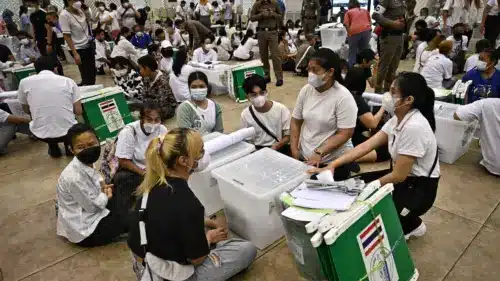

If “Yes” wins: three referendums and a longer drafting process
If “Yes” wins, the sequence is usually described like this:
- First referendum (Feb 8, 2026): Voters approve the start of the process to draft a new constitution.
- Second referendum (timing could vary): Voters approve the principles, framework, and method for drafting.
- Drafting stage (months to more than a year): A drafting body prepares the new charter under the approved rules.
- Third referendum (timing could vary): Voters approve or reject the final draft.
This structure matters because it separates public consent into stages. Some voters may support starting the process but later reject a final draft. Others may vote “No” initially because they don’t trust the process, even if they support reform in theory.
If “No” wins: what stays the same, and what could still change
If “No” wins, the 2017 constitution stays in force. The Senate and oversight bodies keep their current roles, unless changed through normal amendment procedures.
A “No” result does not freeze politics forever. Lawmakers can still propose amendments to individual articles in parliament. That path is usually narrower and slower, and it may not address the biggest structural fights. Still, it remains an option for targeted changes without replacing the entire charter.
For voters, that’s the practical choice on Feb 8: start a full replacement process with multiple steps, or keep the current rules and limit change to amendments.
What voters should know before Feb 8, 2026
For people who don’t follow politics daily, these points help frame the Thailand constitutional referendum 2026 in a realistic way:
- One vote starts the process: “Yes” begins a path, it doesn’t approve a finished constitution.
- The process can take years: Analysts often estimate two years or more will pass after the first referendum.
- The Senate question is central: Many reform debates focus on Senate powers and appointments.
- Oversight bodies can shape outcomes: Court and agency rulings can change political trajectories.
- Parties may support “Yes” with limits: Some supporters say monarchy-related sections should not change.
- Election day is busy: voters will make choices for government and the referendum on the same day.
FAQ: Thailand constitutional referendum 2026
1) What is the referendum asking, in one sentence?
It asks whether Thailand should begin drafting a new constitution to replace the 2017 charter.
2) Is Feb 8, 2026 only a referendum day?
No. It’s also general election day, so voters will choose MPs and answer the referendum question.
3) If “Yes” wins, when does Thailand get a new constitution?
Not right away. A “Yes” vote initiates a multi-step process that may include additional referendums and a lengthy drafting period.
4) Why do people focus on Senate powers?
Because the Senate is indirectly selected and has roles in oversight and key appointments, it can affect elected governments and independent bodies.
5) Can Thailand change the constitution without rewriting it?
Yes. Parliament can amend articles under the existing rules, but that is different from replacing the entire charter.
6) Where can voters confirm official instructions?
Check official guidance from Thailand’s Election Commission through its public channels and election-day materials, since procedures can vary by polling station.
Conclusion
The Feb 8 ballot asks a simple question, but the stakes are long-term. The thailand new constitution vote decides whether Thailand begins a structured path toward replacing the 2017 charter, or keeps the current system and limits change to amendments. The result won’t settle every argument about Senate powers, oversight bodies, or civil liberties, but it will set the direction of travel. For voters, the most practical step is to confirm the Election Commission’s instructions and follow post-vote updates, because Feb 8 is either the first step in a long rewrite or a decision to stay with the current rules.
SEE ALSO: People’s Party Holds a Clear Lead as Thailand Nears the February 8 General Election