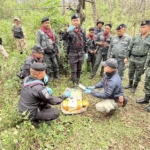





MAE SOT– Prime Minister and Interior Minister Anutin Charnvirakul visited Mae Sot to oversee the repatriation of Indian nationals on an India Air Force flight, and met the India Ambassador to Thailand to reinforce Thailand’s crackdown on cross‑border crime, human trafficking, and online scams.
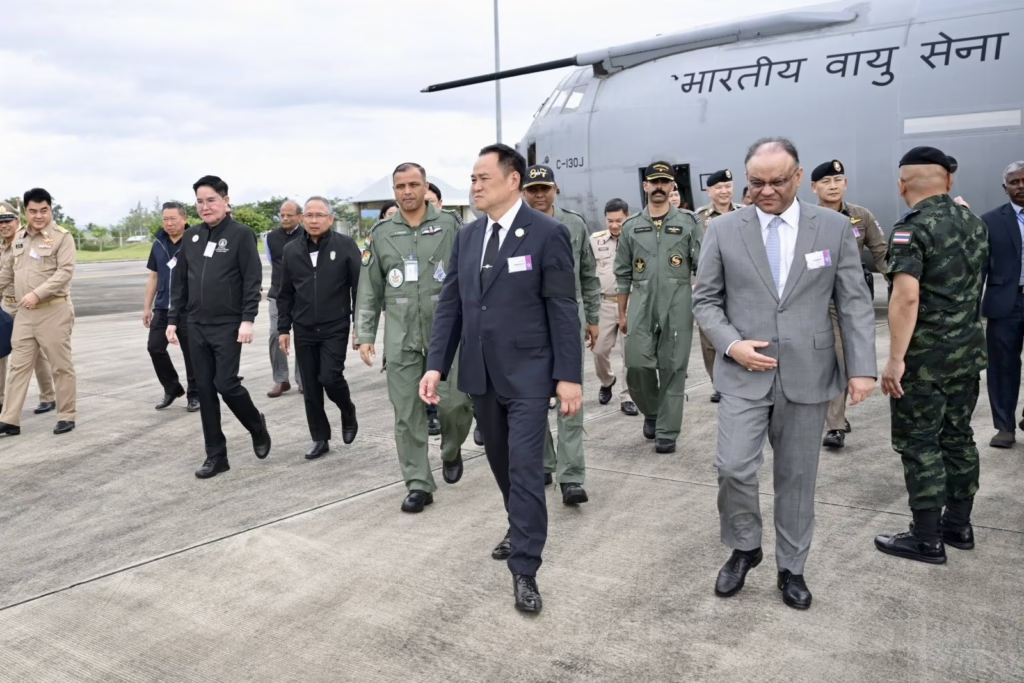
On Monday, Prime Minister Anutin led an inspection of operations at Mae Sot International Airport for the return of Indian nationals who had entered the country illegally. He was joined by Akradej Promphao, Minister of Social Development and Human Security, the Assistant to the Foreign Minister, the Permanent Secretary for Interior, deputy permanent secretaries, the Chief Inspector of the Interior Ministry, the Third Army Region Commander, the National Police Chief, Provincial Police Region 6, and the Immigration Bureau.

Local leaders in Tak also supported the visit, including Suwanit Suriyakuls Na Ayudhaya, Deputy Governor acting as Governor of Tak, Praderm Dechayontbancha, Deputy Governor of Tak, heads of state agencies and state enterprises, local administrative organisations, frontline officers, and related units.
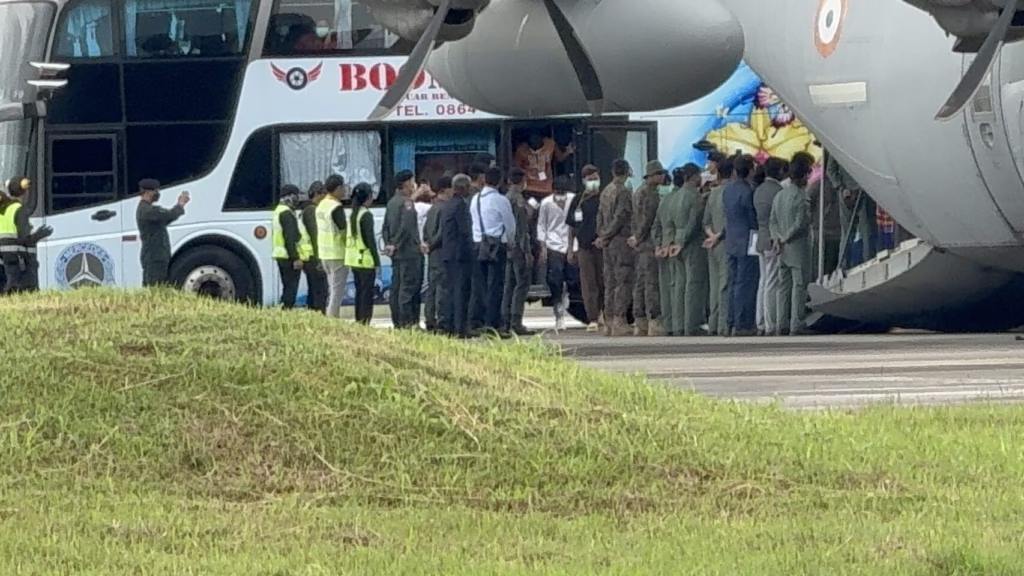
During the visit, the Prime Minister held a meeting with H.E. Mr Nagesh Singh, Ambassador of India to Thailand, at the VIP lounge on the first floor of Mae Sot Airport. He then observed the deportation process for Indian nationals who had entered illegally.
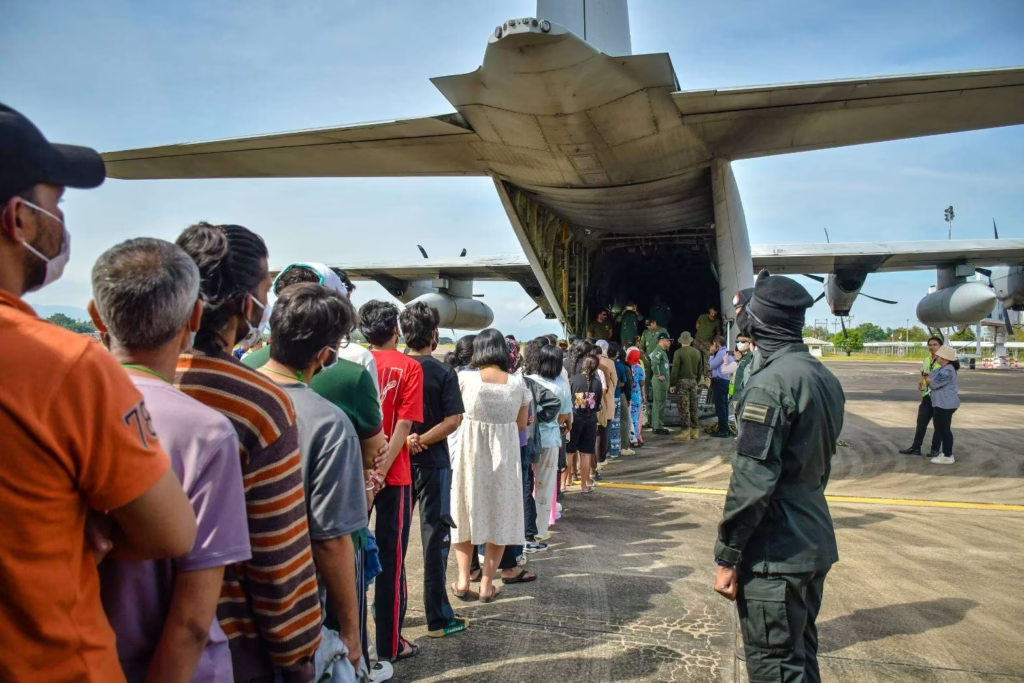

India deployed two India Air Force aircraft to collect 195 Indian scam victims from Mae Sot, following an earlier repatriation of 270 people on 6 November.
The Prime Minister received a briefing from relevant agencies on how the authorities are managing illegal entry cases. He set a clear policy, stressing that the government is prioritising the fight against transnational crime, human trafficking, and online fraud. These crimes harm large numbers of people and cause serious economic and social damage.
The government has established an Anti‑Scam Board to coordinate suppression efforts, proposed hosting an international conference on tackling transnational crime, and signed an MOU among 15 agencies declaring a full campaign against scammers and online crime.
Authorities are enforcing the law without compromise, building integrated coordination, linking intelligence and investigations, and seizing or freezing related assets at once to cut off criminal funding. Thailand will not be used as a base for money laundering.
The Interior Ministry has also set out nine measures to address the problem, including:
- Provincial governors and district chiefs are to map and study local risks.
- Formation of special operations units to tackle technology‑driven crime.
- Tighter public order operations by designated task forces.
- Damrongdhama Centres to act as coordination hubs for victim support.
- Use of kamnan, village heads, and village defence volunteers for community surveillance and prevention.
- Stronger controls at border checkpoints.
- Legal action against Thai nationals who breach conditions related to these offences.
- Public education to raise digital safety awareness.
These actions aim to protect people, shut down criminal networks, and support closer cooperation with international partners.