




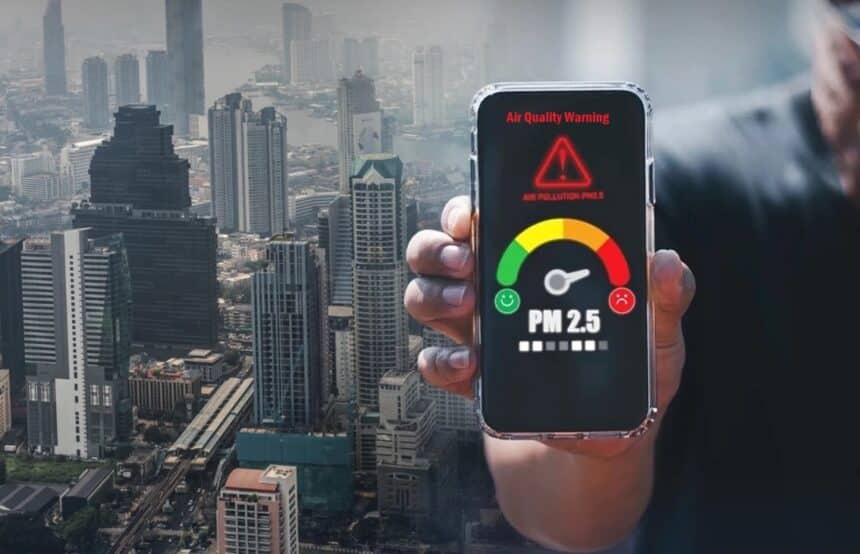
BANGKOK – As the cool season settles in, fine dust pollution, known as PM2.5, is back across large parts of Thailand. Authorities have issued an air quality alert as the haze builds. Seasonal weather and everyday sources of pollution are combining again, affecting millions and keeping air quality high on the public agenda.
Bangkok’s air has worsened through early January 2026. Data from the Bangkok Air Quality Information Centre shows PM2.5 levels spiking around 14 January. Several districts recorded readings far above the national 24-hour safety limit of 37.5 µg/m³, including Pathum Wan at 84.6 µg/m³, Sathorn at 79.3 µg/m³, and Chatuchak at 75.5 µg/m³.
By mid-January, the city’s AQI often sat in the “Unhealthy for Sensitive Groups” range, with PM2.5 AQI values around 134. The Department of Disaster Prevention and Mitigation has sent cell broadcast alerts, advising people to wear N95 or PM2.5-rated masks outdoors, cut back on heavy exercise, and stay inside when possible.
Children, older adults, and anyone with lung or heart conditions face higher risks, including coughing, a tight chest, breathing trouble, and longer-term health harm.
Air QualityAcross the North, Chiang Rai
Air quality is not the same everywhere. The north, known for intense haze seasons due to its geography, has seen very harmful red-level alerts in recent weeks in some places. More recent checks show improvement in certain areas, but hotspots still appear nationwide.
Provinces such as Lamphun have recorded pollution levels above safe limits, adding to the broader haze problem.
In Chiang Rai, conditions have been less severe than in some past peak seasons. Recent readings have placed the AQI at about 82, still “Unhealthy for Sensitive Groups” but not at crisis levels. Even so, locals are keeping a close watch. Smoke can drift across borders, and local sources can change the picture quickly. Nearby provinces have also felt the effects of the season.
Why PM2.5 Builds Up
The dry season often brings the perfect setup for poor air. Light winds, temperature inversions, and weak air flow can trap pollution close to the ground, where people breathe it in.
In northern Thailand, including Chiang Rai, agricultural burning remains a major cause. That includes slash-and-burn farming, burning crop leftovers, and forest fires. Smoke from neighbouring countries can also add to the haze.
In Bangkok and central areas, road traffic is a key source, along with industrial emissions and dust from busy streets. Some estimates put transport and related urban sources at about 60%.
Satellite checks from late 2025 into January 2026 showed thousands of hotspots, many linked to burning in rice fields. When these sources meet still weather, thick smog can form fast.
Thailand is stepping up its response. Before the 2026 haze season, officials tightened controls on farm burning and set a target to cut burned farmland by at least 15%. Support for farmers who avoid burning sugarcane and other crops has also been extended, backed by large budgets.
Tighter Rules and Shared Action
Bangkok has announced a citywide Low Emission Zone, lowered the black smoke limit for vehicles to 20%, and promoted vehicle checks through programmes such as “Green List Plus”.
Work-from-home arrangements have also been encouraged to reduce traffic on high-pollution days. Across the country, a “Single Command” system is being used to coordinate rapid action, and pollution control zones are enforcing bans on open burning.
The Pollution Control Department and partner agencies are also pushing action at the source, with tougher enforcement and more public support. Longer-term plans include moving national standards closer to WHO guidance, and calls for a Clean Air Act are growing louder.
People are also being asked to report burning, use public transport where they can, and stop burning rubbish at home.
With PM2.5 air quality warnings continuing into 2026, Thailand’s haze problem remains hard to ignore. Regional co-operation matters, especially when smoke crosses borders.
In Chiang Rai and nationwide, clearer skies will depend on shared responsibility, from farms to city streets. Keep up with official updates, protect your health, and support steps that help Thailand breathe easier.