




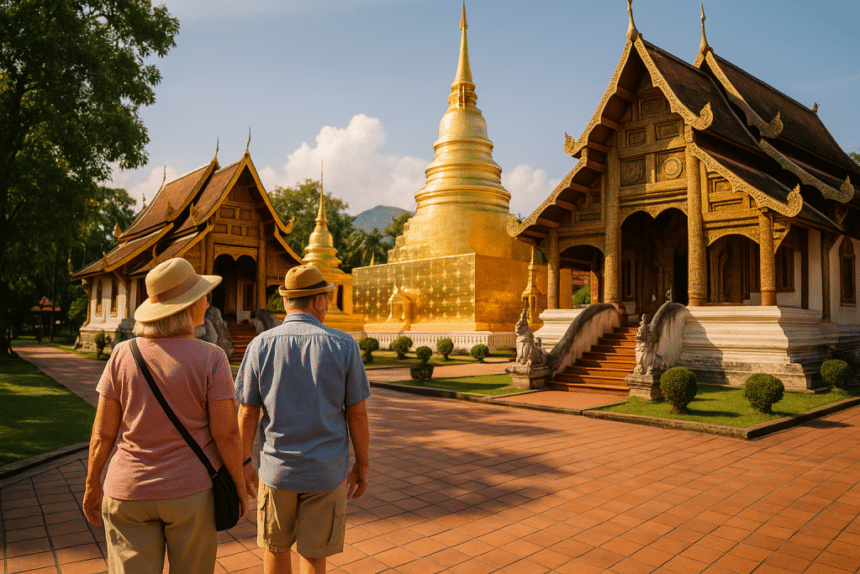
Retiring in Chiang Rai, a gem in Northern Thailand, can be a great fit in 2026 if you want a quiet, green place where day-to-day life feels simple and costs often stay reasonable. It’s not for everyone, though, especially if you need big-city energy, lots of Western comforts, or a large expat bubble.
This practical Retiring in Chiang Rai pros and cons guide is built around what matters once the honeymoon phase ends, daily life, real monthly costs, visa requirements, healthcare access, weather (including the wet season and cooler months), and what the community scene is actually like.
By the end, you’ll have a clear sense of whether you should come for a test run in Chiang Rai, rent long-term, or pick a different Thai city that matches your pace and priorities better.
What daily life feels like in Chiang Rai (pace, people, and convenience)
If you like places where the days feel roomy, Chiang Rai can be a relief with its slow-paced lifestyle. It has a small-city core with rural edges, so your week might include temple visits and café mornings, then a quick drive to fields, rivers, or foothills. Compared with Chiang Mai, it’s typically quieter and less touristy, which shows up in simple ways, like shorter waits, calmer roads, and familiar faces among the Thai people at the same market stall.
The biggest lifestyle pros: quiet streets, nature nearby, and less crowding
The first thing many people notice when retiring in Chiang Rai is how the pace shapes your routine. Errands don’t take over the day. Traffic is usually manageable, and even busy areas tend to “reset” quickly once the rush passes.
A typical week can look like this:
- Morning walks in a park or along quieter streets, with coffee afterward at a local café where staff start to recognize you.
- Local markets for fruit, herbs, grilled chicken, and ready-made meals are easy to do a few times a week because it doesn’t feel like a big production.
- Temple time that’s unhurried, whether you go for photos, quiet reflection, or just to enjoy the grounds.
- Weekend nature that’s close enough to do on a whim, hiking trails, waterfalls after rain, riverside viewpoints, botanical-style gardens, rice fields, and mountain drives that feel like a palate cleanser.
That “green is nearby” feeling matters. When your default is calm, you tend to build a low-stress routine without trying. Even local festivals and holiday events feel more like community gatherings than tourist spectacles. You can show up, snack, watch, and head home before it gets late, no planning needed.
For a general snapshot of why retirees are drawn to the area’s slower rhythm, see retirement info on Chiang Rai.
The lifestyle cons: it can feel remote, and entertainment is more low-key
The same calm that makes Chiang Rai appealing can also feel limiting. If you’re used to big concert tours, major sports events, and constant new restaurant openings, the choices here are more modest. Nights out exist, but they skew low-key, think food markets, small bars, live music in smaller venues, and cozy meetups rather than “dress up and go big.”
It can also feel remote in practical ways:
- Want a bigger selection of Western brands or specialty items? You might need to plan your shopping days.
- Craving beach weekends? That’s not a quick hop. Many popular beach areas require longer travel and often a flight.
- Need big-city services or events? Chiang Mai is a common escape valve, but it’s still a few hours away by road.
None of this is a dealbreaker, but it’s worth asking yourself if you’ll feel content with simple fun most weeks, and occasional bigger trips instead of constant variety.
Getting around: motorbike life, driving basics, and when you will want a car
Chiang Rai is walkable in pockets, but public transport has limitations, so most people mix options. Many residents rely on motorbikes, especially for quick errands, café runs, and getting across town without parking hassle. Ride-hailing can help in some situations, but it’s smart not to depend on it for every need.
A few ground rules keep daily transport easier:
- Rainy season changes everything. Roads get slick, visibility drops, and puddles hide rough patches.
- Drive defensively, assume someone will turn without signaling, and keep speeds reasonable.
- If you use a scooter, wear a good helmet every time, and avoid night rides until you’re confident.
You’ll likely want a car if you plan frequent day trips, prefer air conditioning in hot months, have mobility concerns, or live outside the center where roads get darker, and distances add up.
A simple decision tip: if you have balance issues, slow reaction time, or you feel anxious on two wheels, skip scooters and use a car orhired rides instead. In a place this calm, there’s no prize for forcing it.
The 2026 money reality: cost of living, housing, and what surprises retirees
Retiring in Chiang Rai in 2026 offers a favorable cost of living that can feel like your money finally has room to breathe. Day-to-day costs are often lower than in Bangkok and most tourist beach towns, but the exact number depends on how you live. Air conditioning, your rent style, and how often you buy imported foods can move your budget more than you expect.
Also, if you live on USD, keep currency swings on your radar. When the baht gets stronger, your dollars buy fewer baht, and your “same life” in Chiang Rai can cost more without any local price change.
Sample monthly budgets in Chiang Rai (simple, comfortable, and more Western)
These are easy, rounded ranges in USD per month, with the idea that you rent a long-term place and live a normal routine (not a constant vacation). Think of them as planning anchors, not promises.
Budget tier (USD)RentUtilitiesFoodTransportFun + extrasTypical totalSimple (local-leaning)$200 to $350$30 to $80$200 to $350$40 to $80$50 to $150$550 to $1,000Comfortable (balanced)$300 to $550$50 to $120$300 to $500$60 to $120$100 to $250$900 to $1,500More Western (bigger, imported)$500 to $900$80 to $200$450 to $750$100 to $200$200 to $500$1,300 to $2,500
A simple way to picture it:
- Single person: Many retirees land in the $900 to $1,500 range when they want comfort but still eat Thai food often.
- A couple: Often $1,200 to $2,000, mostly because rent and transport do not always double, but “fun money” and dining out usually do.
Two big drivers that change everything:
- Air conditioning use: Running air conditioning nightly can push your electricity bill up fast, especially in hotter months.
- Imported habits: Cheese, wine, certain supplements, and branded items can turn a “cheap” week into a pricey one.
For a broader Thailand-wide snapshot (useful for comparing Chiang Rai to bigger, pricier cities), see this Thailand retirement cost overview.
Housing choices: renting first, neighborhoods to explore, and what to inspect
Start by renting. It’s the safest way to learn traffic patterns, noise levels, and what “convenient” really means for your routine in Chiang Rai. A place that looks perfect online can feel far away once you’re doing pharmacy runs, grocery trips, and appointments.
Common rental styles you’ll see in Chiang Rai include options with varying monthly rent levels that align with the budget tiers above. For instance:
- Modern condos and apartments: Often easier for low-maintenance living. Some are basic, some feel modern, but soundproofing can be hit or miss.
- Traditional houses: More space, more privacy, and usually better if you want a garden or a pet.
- Garden homes (house in a small compound): A nice middle ground, but check management quality and internet reliability.
- Budget bungalows: A lifestyle choice for those living outside the city center, with affordable monthly rent for a more secluded setup.
What to inspect before you sign a lease agreement for monthly rent:
- Electric and A/C: Ask to see a recent power bill and check A/C units for age and noise.
- Hot water: Don’t assume it exists in every shower.
- Pests: Look for gaps under doors, ask about ants and mosquitoes, and check drain areas.
- Noise: Visit at night, not just mid-day. Dogs, bars, karaoke, and traffic can surprise you.
- Internet quality: Test speed in the unit if possible, or confirm the provider and package.
- Flooding risk: Heavy rain happens. Ask neighbors and check if the property sits low.
- Distance to essentials: Being “only 10 minutes away” changes when it’s raining or you don’t drive. Stay realistic about proximity to hospitals and shopping.
The hidden costs people forget: health insurance, visas, travel days, and visitors
Most retirees don’t get blindsided by rent in Chiang Rai. They get surprised by the “life admin” costs that show up in chunks.
Common hidden costs to plan for:
- Health insurance premiums: Prices vary widely by age and coverage. If you want private hospitals and less worry, budget for it early.
- Visa expenses and paperwork trips: Fees, copies, photos, transportation, and the occasional “come back tomorrow” day.
- Trips to Chiang Mai for higher-level care: Chiang Rai has solid care, but for certain specialists, retirees still do Chiang Mai runs.
- Flights back to the US: Even one family event can reshape your annual budget.
- Replacing electronics: Heat, storms, and daily use can shorten the life of phones, routers, laptops, and small appliances.
- Hosting visitors: Guests often mean extra A/C, more meals out, side trips, and maybe a short-term rental upgrade.
A simple rule that keeps stress low: keep a buffer fund of 3 to 6 months of spending, plus a separate “travel and visas” pot. If the baht strengthens and your USD stretches less, that buffer can be the difference between staying calm and penny-pinching.
Visas and paperwork in 2026: what is realistic, and what can change
If you’re retiring in Chiang Rai in 2026, treat immigration like routine maintenance. It’s not hard, but it is picky. The realistic part is that you’ll be proving the same themes again and again: you’re old enough, you can support yourself, you live where you say you live, and your paperwork matches.
The part that can change is the details: which documents they accept, how they want financial proof shown, and whether extra requirements (like insurance or stricter bank history) get emphasized. Plan your move with time for paperwork, and always verify current requirements right before you apply at the Chiang Rai immigration office.
Retirement visa basics: age 50+, money proof, renewals, and reporting
At a high level, Thailand’s retirement path is built around being 50+ and meeting a financial requirement. In 2026, the common financial proof options are typically:
- Funds in a Thai bank (often discussed as 800,000 THB on deposit)
- Monthly income (often discussed as 65,000 THB)
- A combination that meets the same overall threshold
What matters in real life is not just the number, but the paper trail. Immigration may want to see that the funds came from abroad, or that the income is consistent and documentable. Keep your bank book, updates,s and statements clean and current.
Retirement stays also tend to run on a yearly rhythm. You handle an annual extension or renewal, and you should expect repeat requests for the basics: passport pages, photos, proof of address, financial evidence, and the right forms. Some offices move fast; others send you back for one more copy, one more signature, one more photo. Build slack into your calendar.
Then there’s address reporting, often known as 90-day reporting. Even if the process feels simple, missing it can create unnecessary friction later. Put it on your calendar like a prescription refill.
A practical habit that saves headaches: keep copies of everything, including old renewals, receipts, and stamps. Think of your visa file like a spare tire. You hope you won’t need it, but when you do, you really do.
For a plain-English overview of common retirement visa requirements and documents, see Thailand retirement visa guidance.
Practical ways to make immigration less stressful
Paperwork gets easier when you stop relying on memory. The goal is to turn visa tasks into a simple checklist you can repeat each year.
A few habits that work well:
- Keep one folder (physical and digital) for passports, forms, bank letters, lease, utility bills, and past approvals.
- Track deadlines for your extension window and any reporting dates.
- Use reminders (phone alarms plus a calendar entry a week earlier).
- Keep extra passport photos on hand. It’s a small thing that prevents a wasted trip.
- Budget for help if needed, such as a reputable visa service or a translator for tricky forms. You’re buying time and fewer mistakes.
- Tap into the expat community for social support systems around paperwork.
One more stress reducer: do a test stay before you commit. A few months in Chiang Rai lets you learn where the immigration office is, how long tasks take, which documents landlords provide, and how your banking setup works. It’s like rehearsing before opening night, you catch the problems while they’re still small.
Finally, assume rules can tighten over time. Before any application or renewal, double-check the current requirements with the official channel you’re using (embassy, consulate, or local immigration office).
Healthcare and aging well: what Chiang Rai can handle, and when you will travel
When you’re retiring in Chiang Rai, healthcare is less about “Can I see a doctor?” and more about “Can I get the right level of care fast, when I really need it?” Most retirees find Chiang Rai comfortable for everyday needs and routine monitoring. The planning piece is deciding where you’ll go for higher-level specialists, complex scans, or major procedures, which often means a trip to Chiang Mai.
Everyday healthcare: clinics, routine checkups, and typical out-of-pocket costs
For day-to-day care, Chiang Rai is set up for the basics: general practitioner visits, dental work, prescription refills, blood pressure and diabetes checks, and lab tests. Many retirees use local clinics for quick issues (a rash, a cough, a sprained wrist) and private hospitals for annual physicals or anything that needs imaging.
Here are typical private, cash-pay ranges you’ll hear in Northern Thailand. Prices vary by facility, time of day, and what tests get added.
Service (private)Typical range (THB)Rough USD equivalentRoutine doctor visit1,000 to 5,000$30 to $150Specialist visit1,700 to 4,000$50 to $120ER visit (basic)5,000 to 15,000$150 to $450
Common “everyday” needs to plan for:
- Dental: cleanings, fillings, and crowns are widely available; ask for a written quote before treatment.
- Prescriptions: you might pay out of pocket, use hospital pharmacies, or compare local pharmacies for common meds.
- Labs: bloodwork is often straightforward, but the total can climb if you add thyroid panels, lipid profiles, and extra markers.
Cash pay is simple, and it can be cheaper than you expect. Insurance can still make sense, especially for inpatient and major events, but don’t assume every plan reimburses every clinic. Before you pick a policy, confirm what “outpatient” includes, whether pre-existing conditions are excluded, and how claims work in Thailand. If you need a broad picture of how Thailand’s system is structured for expats, this Thailand health care overview is a useful starting point.
Serious care planning: specialists, emergencies, and why location matters
Think of serious care like fire insurance. You don’t shop for it during the fire. In Chiang Rai, location matters because response time and transfer plans matter. You want a home base close enough to a major hospital that you won’t “wait and see” when minutes count.
Chiang Rai has hospitals that can handle many urgent problems, and it’s smart to know where the emergency department is at the facility you’d actually use. Start by bookmarking the hospital’s emergency info, such as the Bangkok Hospital Chiang Rai Emergency and Trauma Center.
For more complex specialist care, many retirees still plan for Chiang Mai referrals (cardiology subspecialties, advanced imaging, major surgery, ICU-level complexity). It’s not a failure of Chiang Rai, it’s normal “right tool for the job” thinking.
Questions to ask yourself (and your clinic) now, not later:
- What’s the nearest hospital to my home, and how long does it take at night or in the rain?
- Is there English support, or do I need a Thai-speaking friend on call?
- Where are my medical records stored, and can I get them in a shareable format?
- Who is my emergency contact, and do they know my plan?
- If I need Chiang Mai, who arranges the referral, and how do I get there fast (car, ambulance, flight)?
Health risks that surprise newcomers: smoke season, heat, and road safety
Chiang Rai can feel calm, but a few risks catch newcomers off guard.
Burning season (often Feb to Apr) can irritate lungs and strain the heart. Don’t guess, check real-time air readings. Keep Chiang Rai AQI tracking on your phone, and set simple rules, like staying indoors on bad days.
Practical prevention that works:
- Air: use a well-fitting mask on smoky days, run an air purifier in the bedroom, and choose housing with good seals and ventilation.
- Hot season (contrasting with the wet and cool months): drink before you’re thirsty, add electrolytes when you sweat, and do errands early.
- Road safety: scooters are common, but crashes are a top “life changes fast” risk for older bodies. If your balance is not great, choose a car, hired rides, or a driver, and save scooters for short trips only if you’re fully confident.
Aging well here is very doable. The key is treating healthcare like a system you set up, not a problem you solve later.
A quick self-test: Is retiring in Chiang Rai right for you
When you picture retiring in Chiang Rai, don’t picture a two-week trip. Picture a Tuesday. You wake up, the weather is doing whatever it’s doing, you need a pharmacy run, and the internet is acting up. Does that sound like a calm day you can handle, or a day that would annoy you?
Use the quick checks below to sort “nice idea” from “good long-term fit”.
You will probably love Chiang Rai if you want these things
It tends to suit retirees who like simple routines and a quieter pace. You’ll probably feel at home if most of these sound like you:
- Quiet mornings: You like slow starts, coffee, and low noise.
- Nature close by: Green views, short drives to hills and iconic landmarks like the White Temple and Blue Temple, and weekend scenic trips to the Golden Triangle along the Mekong River matter to you.
- A smaller expat scene: You want friendly faces, not a huge social circuit.
- Simple living: You’re fine with fewer choices, and you don’t need new “must-try” places every week.
- Friendly local culture: You enjoy polite interactions with Thai people, markets, community events, and proximity to international schools if moving with family or interested in educational volunteering, without needing to be the center of attention.
- Thai food as your default: You’re happy eating local most days, with some international cuisine options, and you’re curious about cooking or ordering in Thai-style places.
- Comfort with basic paperwork: You can handle copies, forms, and repeat errands without melting down.
- Patience with language gaps: You can smile, point, use a translation app, and keep moving.
If you want a snapshot of the area’s slower pace and why it appeals to many retirees, this overview helps: Chiang Rai retirement and lifestyle profile.
You may be happier elsewhere in Thailand if these are deal breakers
It is calm on purpose. If you fight that calm, you’ll feel it fast. Consider a different Thai city if several of these are non-negotiable:
- You need beach life most weeks, not “once in a while.”
- You want big-city events, major concerts, and lots of nightlife options.
- You rely on Western services (specialty groceries, large expat clubs, constant English support).
- You need top-tier hospitals next door for complex care or frequent specialist visits.
- You dislike rainy months and don’t want your routine shaped by heavy downpours.
- You don’t want to drive or ride a scooter, and you hate feeling dependent on rides.
- You don’t enjoy quieter nights, and you get restless when the town winds down early.
Best next step: a 30 to 90-day trial stay with a checklist
A trial stay turns opinions into facts. Keep it simple, and treat it like real life.
- Rent in two areas (example: closer to the city core, then a quieter outer neighborhood).
- Track real spending daily, including A/C, rides, groceries, and “small” purchases.
- Test healthcare access by doing one routine visit (even a basic checkup), so you learn the process.
- Checkthe air quality if you can visit during smoky months, and follow live readings day to day using Chiang Rai air quality updates.
- Run normal errands: pharmacy, bank, market, a home repair, and a rainy-day grocery run.
- Talk to other retirees in person at the Expat Club, not just online, and ask what surprised them after six months.
- Review visa requirements before you arrive and again before you commit, using a plain overview like this Thailand retirement visa guide.
Make the final call based on your routine, not vacation vibes. If you like your ordinary days here, you’ve got your answer.
Conclusion
Retiring in Chiang Rai in 2026 comes down to a clear tradeoff. You get a calmer daily rhythm, green scenery close by, and a cost of living that often feels more manageable than Thailand’s bigger hubs. If you enjoy markets, simple routines, and quieter nights, this can be the kind of place where your days feel lighter, and your budget lasts longer.
The flip side is real: the social and entertainment scene is smaller, beach trips take planning, and you need a grown-up plan for smoke season, transport, and healthcare beyond routine needs. Paperwork is also part of the deal: visas, reporting, and keeping your documents tidy, so your move doesn’t turn into a repeat stress loop.
If you’re serious about it, treat it like a long-term choice, not a long holiday. Do a 30 to 90-day trial stay, build a realistic budget from your own spending, and map out your healthcare and visa steps before you commit.
Thanks for reading. What would make Chiang Rai feel like home for you, quiet, savings, nature, or something else?