


If you just saw Nipah in the news and feel uneasy, that reaction makes sense. Nipah Virus Symptoms can start like a simple flu, which adds to the worry and confusion. This guide explains early symptoms, serious warning signs, the incubation period, and the next steps. Only a clinician can diagnose Nipah, and these symptoms can resemble those of many other illnesses.
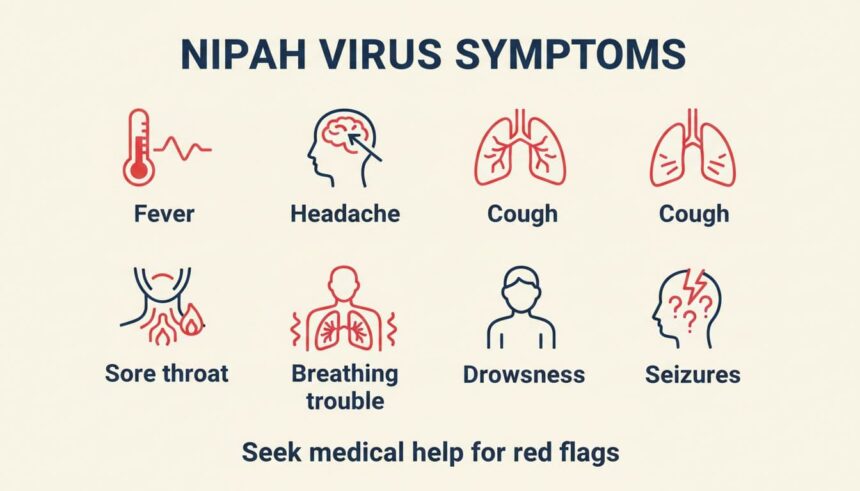
Nipah Virus Symptoms (Quick List)

Nipah virus infection often begins with general “sick” symptoms, then some people develop serious brain or breathing problems. According to major health agencies like the World Health Organization’s Nipah virus fact sheet, symptoms can range from mild to severe.
Encephalitis means swelling in the brain.
Early and common symptoms that can feel like the flu
- Sudden high fever
- Severe headache
- Muscle aches or body pain
- Tiredness (fatigue)
- Sore throat
- Cough
- Nausea or vomiting
- Chills
- Dizziness
- Mild breathing difficulty (short of breath)
These symptoms are not unique to Nipah. They can overlap with flu, COVID-19, dengue, malaria, and other infections.
Serious danger signs that need urgent care
- Confusion (not acting like oneself)
- Extreme drowsiness (hard to wake)
- Seizures
- Trouble breathing
- Worsening shortness of breath
- Loss of consciousness or coma
- Encephalitis (brain swelling), which can show up as fast changes in thinking, alertness, or behavior
These danger signs are emergencies because they suggest the brain or lungs may be affected.
How Symptoms Can Change Over Time
One reason Nipah causes so much concern is the rapid progression of symptoms. Some people may start with mild, flu-like symptoms, then worsen rapidly, especially if encephalitis or pneumonia develops. Others may stay mild. Health agencies describe a range rather than a single fixed pattern.
A simple timeline example can help explain what clinicians watch for:
Days 1–3: Fever and headache often appear first. Muscle pain, sore throat, cough, nausea, and fatigue may follow. At this stage, it can look like many routine viral illnesses.
Days 3–7: Some people begin to improve, but others may develop new problems. Breathing may become harder, or a cough may worsen. Dizziness and increasing sleepiness can show up, which is easy to miss if someone already feels exhausted from fever.
Days 7–14: Severe illness may appear in this window for some patients. Confusion, seizures, and loss of consciousness can develop if the brain becomes inflamed. Once severe symptoms begin, they can progress within 24 to 48 hours in some cases. Breathing distress can also intensify quickly if the lungs are affected.
The key point is change over time. A fever that resembles a typical cold is different from a fever accompanied by rapidly developing confusion or respiratory distress.
Why Nipah can be hard to spot early
Early Nipah virus signs in humans look like many common infections, and that’s the problem. The best “clue” early on is often exposure history plus symptom direction.
Clinicians often focus on whether someone has had possible exposure such as recent travel to an affected area, close contact with a sick person, contact with bats or sick animals, or risky food exposures during an outbreak. Reporting has highlighted screening steps in some places during recent alerts, including airport checks tied to cases in India in January 2026, as described in a CBC explainer on Nipah cases and screening.
Incubation Period (When Symptoms May Start)
The Nipah virus incubation period is the time from exposure to the first symptoms. Health agencies report it is often about 4 to 14 days, though it can vary. Rare reports describe incubation periods of up to 45 days, which is why public health monitoring windows can extend for weeks after a known exposure.
This range is important for families and travelers because it explains why someone might feel well for days after a trip or after caring for a sick person, only to develop a fever later. It also helps explain why public health teams track close contacts even when those contacts have no symptoms.
Because early symptoms can mimic common illnesses, clinicians may ask very specific questions about timing. When did the fever start, and what happened next? Was there a sudden change in breathing? Did the person become unusually sleepy or confused? These details can guide testing decisions and infection-control steps in a clinic or hospital.
For a clear public health summary, see the CDC’s overview of Nipah virus, which outlines typical timing and the kinds of exposures that raise concern.
How Nipah Spreads (Simple Explanation)


Nipah is a zoonotic virus, meaning it can spread from animals to humans. It has also spread from human to human in documented outbreaks. The route of spread shapes what health teams advise during an alert.
Animal to human risk: Fruit bats (often called flying foxes) are known reservoirs. People may be exposed through contaminated food in outbreak settings, including raw date palm sap in some regions, or through contact with infected animals. Outbreak reports have also described spread linked to sick animals in certain settings.
Human to human risk: Spread has been reported through close contact with an infected person, especially exposure to body fluids and respiratory secretions. This is why caregivers and healthcare workers face higher risk without protective measures.
Airborne spread: Reliable summaries do not clearly confirm long-range airborne spread. Guidance typically emphasizes close contact and droplets or secretions. Recommendations can change during active outbreaks, depending on new evidence and local conditions.
For a plain-language discussion of what’s known and what’s still being studied, the UK Health Security Agency explainer on Nipah offers a careful overview.
A quick, Explanation of transmission (what is known, what is not)
Nipah spreads most often when the virus from an infected animal or person gets into another person’s mouth, nose, or eyes. That usually happens through close contact.
Risk declines with basic steps that public health teams routinely implement during outbreaks: hand hygiene, avoiding contact with sick people’s body fluids, and following local health guidance on food and caregiving.
When to Seek Emergency Care (Do Not Wait)
Serious Nipah illness is not something to “watch at home” once danger signs begin. If you see confusion, seizures, or trouble breathing, treat it as an emergency.
Confusion, seizures, or trouble breathing can appear suddenly.
Emergency care is urgent because the brain and lungs can fail quickly. Supportive hospital treatment may include oxygen, IV fluids, seizure control, and intensive care monitoring. There is no widely approved vaccine or specific cure available as of January 2026; care focuses on keeping the patient stable while the body fights the infection.
Emergency warning, do not wait if these show up
Call emergency services right away if severe symptoms appear, especially after a possible exposure.
Key actions that can help in the moment:
- Call emergency services or local emergency numbers.
- Don’t drive yourself if you feel faint, confused, or very drowsy.
- Tell staff about recent travel, close contacts, and possible animal or outbreak exposures.
What to Do If You Think You Were Exposed
Worry can spread faster than any virus, so it helps to stick to a calm plan. If someone believes they may have been exposed, the goal is to reduce close contact, monitor for symptoms, and seek guidance from local health services. Calling ahead, when possible, gives clinics time to prepare and helps protect other patients.
Exposure doesn’t always lead to illness. It does mean symptoms should be taken seriously if they appear within the expected time window. Keep notes on fever readings and respiratory changes, and be prepared to provide a timeline of contacts and travel.
A simple plan if you think you were exposed
- Stay away from close contact when possible, especially with infants, older adults, and people with health problems.
- Don’t share drinks, utensils, towels, or toothbrushes.
- Wash hands often with soap and water.
- Clean high-touch surfaces (phones, door handles, counters).
- Watch for fever and breathing changes, and note any rising sleepiness or confusion.
- Call a healthcare provider or local health services for guidance before arriving, if possible.
- Follow public health instructions during any local outbreak response.
How to Lower Your Risk in Real Life
Most people will never face Nipah exposure, but practical habits still matter during travel or outbreak alerts. Basic hygiene reduces risk for many infections, not just Nipah. Handwashing after caregiving, after using the bathroom, and before eating is a simple step with real impact.
Food choices can matter in outbreak settings. Public health guidance has warned against consuming raw foods that may be contaminated by bats in certain regions, and it often emphasizes avoiding contact with sick animals. People working in healthcare or caregiving roles should follow local infection-control guidance, especially around respiratory secretions and bodily fluids.
During an outbreak, the safest approach is to rely on official public health updates and follow any local recommendations on screening, isolation, and monitoring.
Myths and Mistakes That Make People Less Safe
Misinformation can lead individuals to make risky choices. One common mistake is assuming that any fever means Nipah. Fever is common in many infections, and panic can delay the right care for the actual cause.
Another risky choice is self-medicating heavily and ignoring changes in alertness or breathing. Fever medicine may lower a temperature, but it doesn’t address a worsening brain or lung problem. Hiding symptoms, especially after travel or after caring for a sick person, can also raise risk for family members and healthcare workers.
Rumors can spread fear and stigma. They can also lead people to avoid clinics, which slows diagnosis and supportive care. If a local health agency issues guidance, treat that as the main source, not social media posts or forwarded messages. For an example of formal outbreak guidance language, see the National Centre for Disease Control (India) Nipah alert PDF.
FAQs (Quick Answers)
What are the first Nipah Virus Symptoms?
Early symptoms often include fever, headache, muscle pain, sore throat, cough, and tiredness. Some people also have nausea or vomiting. Early symptoms can look like the flu.
How long is the incubation period for Nipah virus?
It’s usually about 4 to 14 days after exposure, but it can vary. Rare reports describe longer incubation up to 45 days. Timing can depend on the exposure and the person.
Are Nipah Virus Symptoms the same as flu symptoms?
Many early symptoms overlap with flu, including fever and body aches. Nipah can also lead to severe brain swelling and serious breathing problems. Exposure history and red flags help clinicians tell the difference.
What are the danger signs of Nipah virus?
Danger signs include confusion, extreme sleepiness, seizures, trouble breathing, and loss of consciousness. These signs suggest the brain or lungs may be affected. Emergency care is needed.
Can Nipah spread from person to person?
Yes. Person-to-person spread has been reported, usually through close contact with body fluids and respiratory secretions. Risk is higher for caregivers and healthcare workers without protection.
Is Nipah virus airborne?
Reliable summaries do not clearly confirm long-range airborne spread. Transmission is mainly linked to close contact and droplets or secretions. Guidance can change during outbreaks as evidence develops.
When should I go to the hospital for Nipah Virus Symptoms?
Seek urgent care if symptoms are severe, getting worse, or include red flags like confusion, seizures, or breathing trouble, especially after a possible exposure. Calling ahead can help clinics prepare safely. Local public health guidance should guide next steps.
Is there a vaccine or cure for Nipah virus?
There is no widely approved vaccine or specific cure as of January 2026. Treatment is supportive, such as oxygen, fluids, and seizure control. Intensive care may be needed in severe cases.
How do doctors confirm Nipah virus?
Clinicians use lab testing, including RT-PCR, to detect the virus in clinical samples. They also consider symptoms and exposure history. Testing is done through health systems, not at home.
Can children get Nipah virus?
Children can get Nipah if they are exposed, like adults can. Symptoms to watch for are similar, including fever, worsening breathing, or unusual sleepiness. Seek pediatric medical guidance quickly if a child seems confused or struggles to breathe.
What should I do if someone in my home has Nipah Virus Symptoms?
Limit close contact and don’t share personal items like cups or utensils. Improve ventilation, clean high-touch surfaces, and wash hands often. Contact local health services for guidance because professional assessment is important.
Can I travel if Nipah is reported in a nearby area?
Check official health and travel advisories before leaving. In outbreak areas, follow careful hygiene and food safety, and avoid contact with sick people and animals. Flexible plans help if local guidance changes quickly.
Conclusion
Nipah can start quietly, which is why Nipah Virus Symptoms create so much anxiety. Early symptoms may resemble a flu-like illness, but warning signs often involve the brain (confusion, seizures, extreme drowsiness) and the lungs (worsening breathing). The incubation period is often days to two weeks, and rare reports describe longer windows. Calm action matters, call ahead for guidance, and treat red flags as emergencies.
Sources
- WHO Nipah virus infection topic page
- WHO Nipah virus fact sheet
- CDC clinical overview for clinicians
- UKHSA Nipah explainer (Jan 2026)
- NCDC (India) Nipah alert PDF (Jan 2026)
SEE ALSO: Pakistan Tightens Border Checks After Nipah Virus Cases in India