




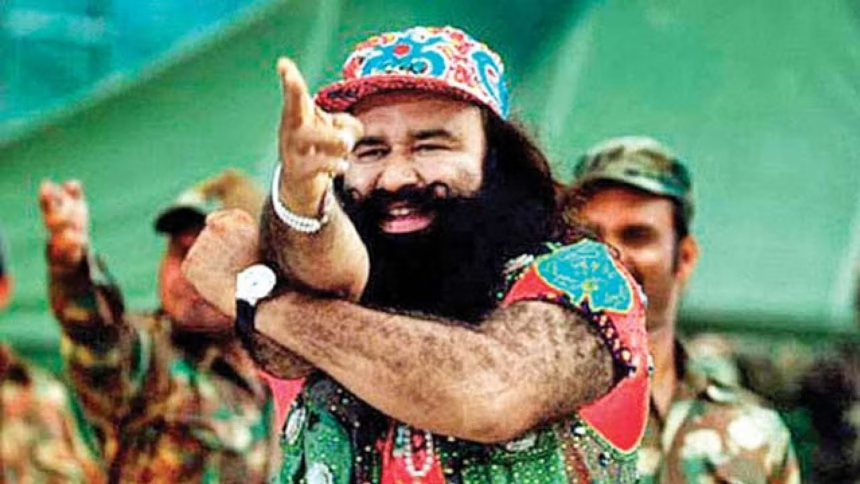
ROHTAK, India – In India, where faith often intersects with politics and justice, few figures embody contradiction more starkly than Gurmeet Ram Rahim Singh Insan. At the same time, he has been in prison since 2017, serving a 20-year sentence for raping two female disciples. Later, he received life imprisonment for the 2002 murder of journalist Ram Chander Chhatrapati.
He has also been convicted in other serious cases, including conspiracy to murder, and he received another life term in a separate matter. Even with these convictions, Ram Rahim hasn’t remained in prison continuously.
In early 2026, he left Sunaria Jail in Rohtak on 5 January on a 40-day parole, his 15th temporary release since his conviction. Officials approved this period so he could attend programmes at the Dera headquarters, including events linked to the 25 January birth anniversary of the sect’s second head, Shah Satnam Singh. The numbers stand out; he has spent more than 405 days outside jail in about eight years.
Many critics call this a “mockery of the Indian judicial system”. Reports often point out that his parole and furlough periods tend to appear around election time, which fuels claims of political backing.
Changes to Haryana’s prison rules in 2022 have also made it easier for long-term prisoners to qualify for furlough if they meet set conditions, such as good conduct, after serving part of their sentence. Courts, including the Punjab and Haryana High Court, have treated these releases as lawful under the rules, while also warning against unfair or inconsistent decisions.
Opposition parties continue to allege special treatment, tied to the Dera’s ability to sway votes in Haryana and nearby states. Many followers come from marginalised communities, which makes the group a powerful vote bank.
From Powerful Leader to Prisoner
The first major allegations surfaced in 2002, after an anonymous letter accused the Dera of sexual abuse and exploitation. The Punjab and Haryana High Court ordered a CBI investigation. In 2017, a special CBI court in Panchkula convicted Ram Rahim of raping two female disciples in 2002.
The court gave him 20 years in prison, 10 years for each case, to be served one after the other. His conviction triggered huge unrest among supporters, and violent clashes led to more than 30 deaths.
In 2019, he was sentenced to life imprisonment for planning the murder of journalist Ram Chander Chhatrapati, who had reported on alleged wrongdoing inside the Dera. In 2021, another court gave him a life term for the murder of Dera manager Ranjit Singh. He has denied the charges and pursued appeals, but higher courts have upheld the key convictions.
Still, he has left prison again and again. Authorities have granted parole for reasons such as family matters, festivals, health grounds, or religious events. The releases have ranged from a few days to 40 days at a time.
In 2025 alone, he received three temporary releases, 30 days in January (close to the Delhi polls), 21 days in April, and 40 days in August around his birthday.
Why Millions in India Still Stand by Him
Ram Rahim’s support base hasn’t collapsed, despite the rape conviction and murder sentences. Dera Sacha Sauda began in 1948 and promotes social service more than strict religious rules. Under Ram Rahim, who took charge in 1990, the organisation expanded into a large network with followers across Punjab, Haryana, Rajasthan, and beyond.
Many supporters are from lower castes and poorer families. They say the Dera gave them respect and a fairer place to belong. They also credit him with speaking against caste bias and encouraging harmony across faiths, ideas that appeal to people who feel pushed aside by older social hierarchies.
The Dera also runs welfare work, including hospitals, schools, de-addiction centres, blood donation camps, tree-planting drives, and cleanliness campaigns. During emergencies, volunteers often show up quickly with food, supplies, and labour. This has helped build an image of practical help, especially in places where state support feels slow or missing. For many, the Dera offers routine, safety, and a community they trust.
Ram Rahim’s public image also played a role. He mixed spiritual messaging with pop culture through songs, films (including the MSG series, where he cast himself as the hero), and large public talks.
That blend appealed to younger followers and to people who felt ignored by traditional religious leaders or political elites.
Researchers and sociologists often point out that groups like Dera Sacha Sauda attract people who don’t feel served by mainstream institutions. In a society where caste still shapes daily life, these groups can offer a space that claims to be more equal. Some estimates say more than 70 percent of followers are Dalits or from backward classes, drawn by the promise of dignity and a better social standing.
Politics adds another layer. The Dera has supported parties openly in past elections, including backing the BJP at times, and it can shift votes in key seats. Critics say that influence helps explain why Ram Rahim keeps getting parole.
With Ram Rahim back at the Dera headquarters on another parole, the split grows sharper. Devotees still see him as a guiding force. Others view his repeated release as proof that India’s prison and justice systems can bend under political pressure.
His prison sentences are far from over, and legal battles continue. The Gurmeet Ram Rahim Singh story remains a blunt test of how India handles faith, power, and accountability.