





BANGKOK – Over the past few weeks, Thailand’s public health teams have stepped up public updates to calm worries about the Nipah virus. The concern grew after a small outbreak was reported in India’s West Bengal state.
As of late January 2026, the Department of Disease Control (DDC) under the Ministry of Public Health has repeated a clear message: Thailand has no confirmed human cases of Nipah virus.
That point matters because false claims online have tied the virus to bats in Thailand. Some posts have stirred fear by comparing the situation to early COVID-19 panic.
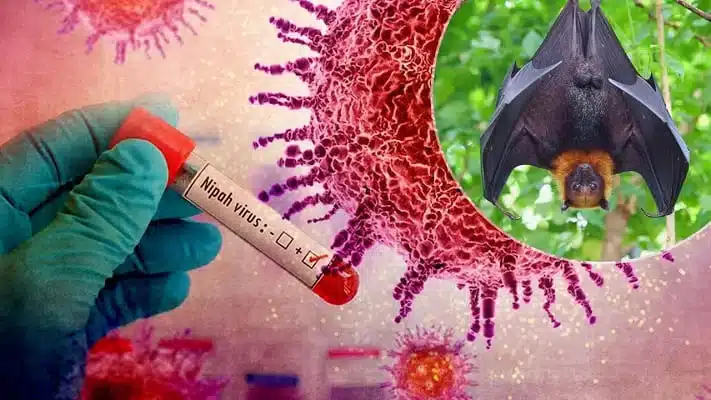
Nipah virus was first found in Malaysia in 1998. Fruit bats (often called flying foxes) are the main carriers. People can get infected through contact with sick animals, food touched by bats (like fruit with bite marks), or, in rare cases, through close contact with bodily fluids from an infected person.
The virus can be deadly, with reported fatality rates of about 40% to 75%, depending on access to care. There’s no approved vaccine or specific treatment, which is why outbreaks draw global attention.

Social Media Misinformation Sparks Unneeded Alarm
A large part of the anxiety in Thailand has come from unverified posts shared on Facebook, Line, and other channels. Some messages claim Thai bats are heavily infected and that a major outbreak is imminent. Many of those posts use dramatic photos of bats in caves or near temples. The result has been real unease, from people avoiding tourist sites to worries about everyday habits like eating fruit.
Health experts, including virologists from Chulalongkorn University, have pushed back with more context. They’ve said some Thai fruit bats have shown antibodies or traces tied to Nipah at about 10% to 16%.
That’s far below levels seen in areas where outbreaks occur more often, where rates can reach 40% to 50%. Officials also say there’s no sign of the virus spreading from bats to pigs or to people in Thailand. They point to long-running safety steps, including limits on pig farms near bat habitats.
Some posts have tried to frame Nipah as the next COVID-19. Officials and experts stress key differences. Nipah does not spread easily through the air the way COVID-19 does. It typically needs close contact with infected fluids, which makes wide community spread less likely unless there’s direct exposure.


Targeted Nipah Virus Screening to Reduce Import Risk
After confirmed infections in West Bengal, Thailand has brought back focused health screening at major airports. Starting January 25, 2026, added checks began at Suvarnabhumi, Don Mueang, and Phuket airports. The screening focuses on travelers arriving from West Bengal, India.
Measures include temperature checks, health declaration forms, and symptom reviews. Staff watch for fever, headache, muscle pain, sore throat, cough, breathing trouble, drowsiness, confusion, or seizures.
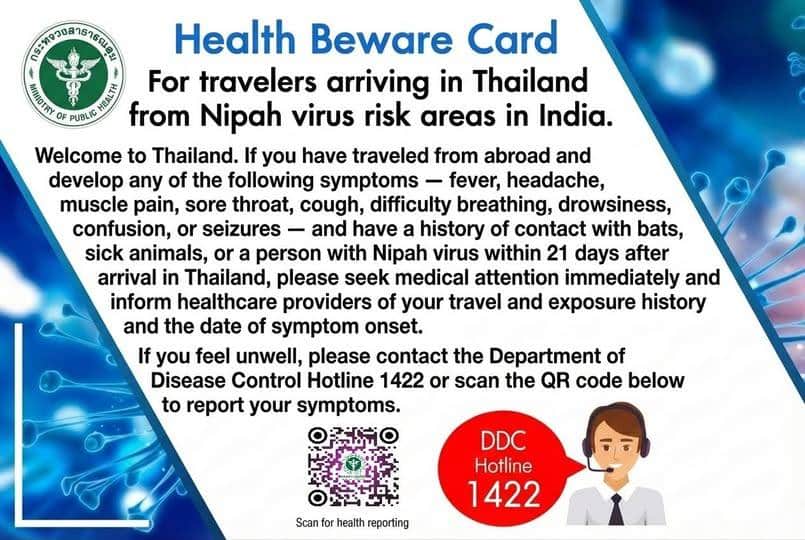
Travelers with symptoms may be sent for further checks in quarantine settings, with results possibly ready in six to eight hours. Arrivals from the affected area also receive Health Beware Cards with symptom guidance and a reminder to call the DDC hotline (1422) if they feel ill within 21 days.
Prime Minister Anutin Charnvirakul has described the plan as similar to COVID-19 monitoring, with closer watchfulness but no broad restrictions. The extra screening applies to routes linked to the West Bengal situation, not to all travelers from India, since the outbreak remains limited to that state.

Nationwide Steps Follow a One Health Plan
Thailand has also activated wider safety actions using a One Health approach that links human health, animal health, and the environment. The Department of National Parks, Wildlife, and Plant Conservation has increased screening and guidance for cave tourism and nature sites. Visitors are advised to avoid contact with bat droppings or fluids and to wash well after any exposure.
Public guidance has also been repeated in simple terms:
- Wash your hands after handling animals.
- Wash and peel fruit; avoid fruit with bite marks or fruit picked up from the ground.
- Avoid raw date palm sap and products that could be contaminated.
For people traveling to India, officials advise following current updates, staying away from outbreak areas, and keeping up strong hygiene habits.
Hospitals across the country have been told to review readiness, including isolation rooms, trained staff, and testing support. At the same time, routine checks continue in bat populations and pig farms to reduce the chance of spillover.
Calm, Clear Messaging Alongside Close Monitoring
Thailand’s health officials keep returning to the same point, Nipah virus is serious where it appears, but Thailand has not reported human cases. With airport checks, public education, and wildlife and farm monitoring, officials say the risk remains controlled.
Since the World Health Organization lists the Nipah Virus as a priority pathogen, Thailand is keeping a close watch without feeding panic. Officials continue to urge residents and visitors to trust updates from the Ministry of Public Health and the DDC, not viral posts with no proof.
With regular monitoring and layered safeguards, Thailand says it can stay prepared without repeating the disruption seen during COVID-19.