




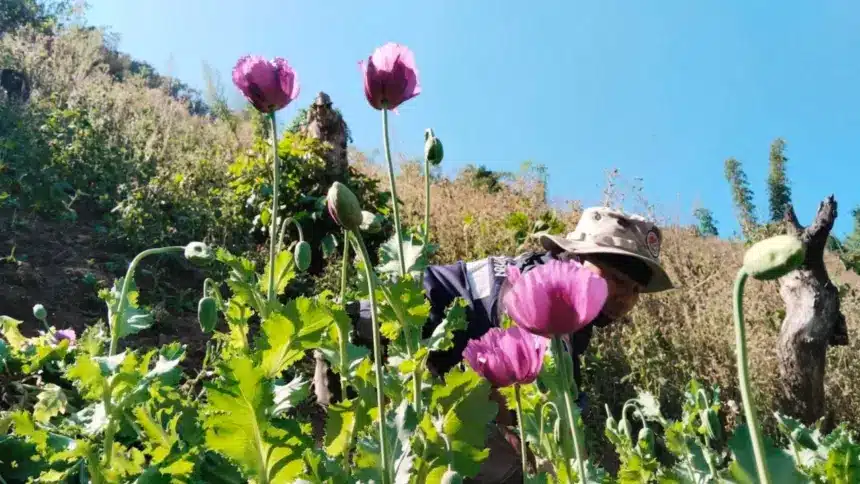
CHIANG RAI – The Task Force Pha Muang carried out an operation in the Doi Phu Wae area of Thung Chang District, Nan Province, to destroy a 1 Rai opium poppy field. The poppies were in full bloom and close to the stage where they could be cut to collect raw opium.
The mission was led by the 32nd Ranger Regiment Task Force commander, Col. Piyapong Porda, working with the Thung Chang district administration, officers from Thung Chang Police Station, and Border Patrol Police Unit 325. About 30 personnel joined the patrol.
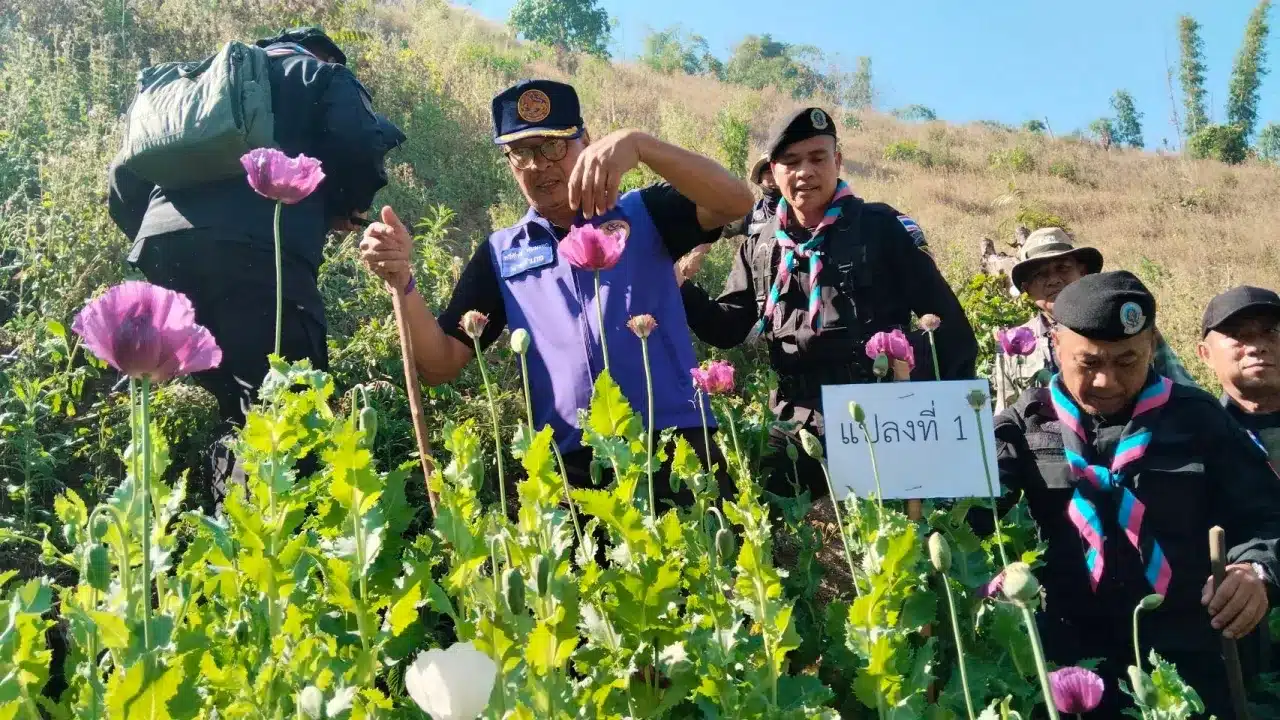

The team moved in after receiving a tip that illegal opium poppies were being grown in the area. Officers traveled on foot to inspect a site near Ban Pang Kae, Village 7. The terrain was steep and difficult, with slopes over 40 degrees and high heat during the mission.
At the location, officers found an opium poppy field of about 1 rai (around 0.4 acres). The crop was in strong condition, estimated at 90 percent healthy overall. Most plants were about 60 to 80 centimeters tall and around three months old, covering roughly 80 percent of the plot.
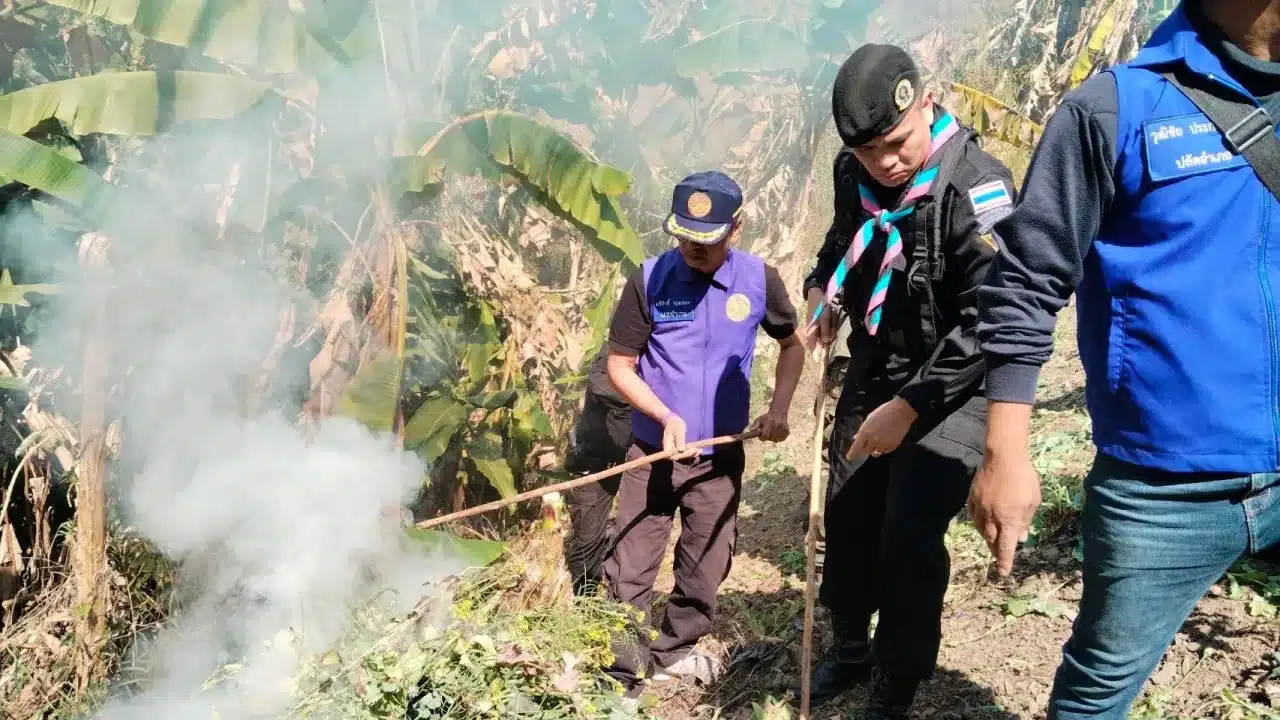
No suspects were found at the site, and authorities believe the crop was planted in secret. Officers destroyed the entire field by cutting and burning the plants. They also began follow-up investigations to identify those responsible and said patrols would continue to prevent replanting and curb drug-related activity in the area.
Opium Poppy Cultivation in Northern Thailand
In 2026, opium poppy cultivation in northern Thailand is still close to zero, a big change from its past in the Golden Triangle. Years of firm government action, including the well-known Royal Project started under the late King Bhumibol Adulyadej, pushed illegal poppy growing to the margins by the mid-2010s.
Alternative development efforts helped many hill tribe farmers in Chiang Mai, Chiang Rai, and Mae Hong Son, including Karen, Hmong, and Lahu communities, switch to legal crops. Coffee, tea, fruits, and flowers now bring steadier income and tie remote villages more closely to the wider economy.
Small, isolated plots still show up at times, with recent ASEAN surveys finding about 13 hectares. Thai officials usually remove them quickly using monitoring, local support, and strict enforcement.
Across the border, Myanmar is seeing record opium output during the ongoing conflict, which adds pressure along the border areas. Northern Thailand’s approach still stands out for putting long-term development ahead of drug production.