




BANGKOK – In the past few years, Thailand’s consumer habits have clearly shifted. Many families are smaller now, and homes, especially in cities, have less space. At the same time, daily life takes more planning, both for time and for money. Because of that, people think more carefully about what they buy. They look for the right amount, fair value, and smarter use of resources.
Food waste remains a major concern. It shows how everyday eating, and even holiday celebrations, can lead to extra food that no one uses. Thailand’s Ministry of Natural Resources and Environment reported that the country generated about 10 million tons of food waste in 2024.
This waste releases methane, a greenhouse gas with 28 times the warming impact of carbon dioxide. As a result, many shoppers have started to rethink how they eat, what they purchase, and how they manage food at home.
This change shows up strongly during big festivals like the Chinese New Year. In the past, many families linked good fortune with large offering tables packed with savory dishes, sweets, and fruit. Now, the idea of prosperity feels more practical. Instead of focusing on volume, people choose items with more care. They still want a complete ritual, but they also want to use the food well after the ceremony.
TOPS’ Chinese New Year 2026 consumer insights, under Central Retail, reflect that shift. About 63% of shoppers plan to control the amount they buy for offerings to help cut food waste.
Meanwhile, 18% worry about leftovers after the festival, and 15% look for offering sets that reduce plastic packaging. Together, these numbers show that conscious consumption now shapes decisions, even during a tradition-filled holiday.
Right-Sizing Lifestyle: Offering Tables That Fit Modern Living
As city households get smaller and condo living becomes more common, many working adults put more weight on choosing the right size. That thinking goes beyond daily shopping. It also changes how families plan the Chinese New Year, offering tables to match real life.
TOPS applied these insights to its Chinese New Year 2026 offering sets. Each set supports a complete ritual, while also keeping life after worship in mind. The selections come in different sizes, so customers can match them to family size, worship style, and living space. Even so, cultural meaning stays central, guided by the “Four Auspicious Powers”: Luck, Wealth, Health, and Love.
Mini Mu, Big Meaning: Light on Ritual, Rich in Significance
This small set suits first-time worshippers, Gen Z, and first-jobbers living in condos or smaller homes. It includes a portioned sa-sae assortment, a selection of auspicious fruits, and a compact Chai Xing Ye worship kit. The idea is simple: worship first, then enjoy right away. That helps reduce food waste and fits a busy city routine.
Just Enough, Just Right: Prosper with Elegance, Complete in Every Detail
This mid-sized set pairs a traditional ngow sae assortment with premium imported fruits. It signals abundance, but in balanced portions. The ritual stays complete, and the items can still serve a purpose later. For example, families can cook with them, share them with loved ones, or give them as auspicious gifts after worship.
Full Blessings, Zero Guilt: Celebrate Abundance, Responsibly
This larger set works well for bigger households that want to keep tradition in full. TOPS selects premium items, including high-grade imported fruits and quality ngow sae assortments, to meet ritual expectations and quality standards.
At the same time, the set supports mindful use after the ceremony. Families can turn the food into meals, remake it into new dishes, or share it with others. In other words, it keeps the feeling of abundance, without leaving unnecessary waste behind.
Alongside these core sets, TOPS also offers a wide mix of premium option sets. This gives shoppers more ways to reflect personal taste and beliefs through ingredients such as caviar, lobster, or imported fruits.
These choices add another style of celebration, one that focuses on meaning, quality, and the overall offering table experience, while still fitting modern lifestyles.
Post-Ritual Thinking: Prosperity That Lasts After Worship
Another clear trend is that shoppers now plan for what happens after the ritual, even before buying offerings. Today, a sustainable Chinese New Year celebration is not only about a beautiful table. It also depends on how well families manage food once the ceremony ends.
To support this mindset, TOPS encourages households to follow a Four-Step Cycle of Sustainable Auspiciousness.
1) Eat: Plan to Finish, Finish with Purpose
Planning starts before shopping. When families map out meals early, they reduce waste and get more value. They can also turn offerings into new dishes. For example, worshipped duck and chicken can become shredded spicy chicken stir-fry or crispy five-spice duck with basil.
Pork belly can become crispy chili-salt pork. Nian gao can turn into pan-fried egg-coated rice cake slices. When people plan from the start, ingredients last longer and waste drops.
2) Share: Extend the Value Through Giving
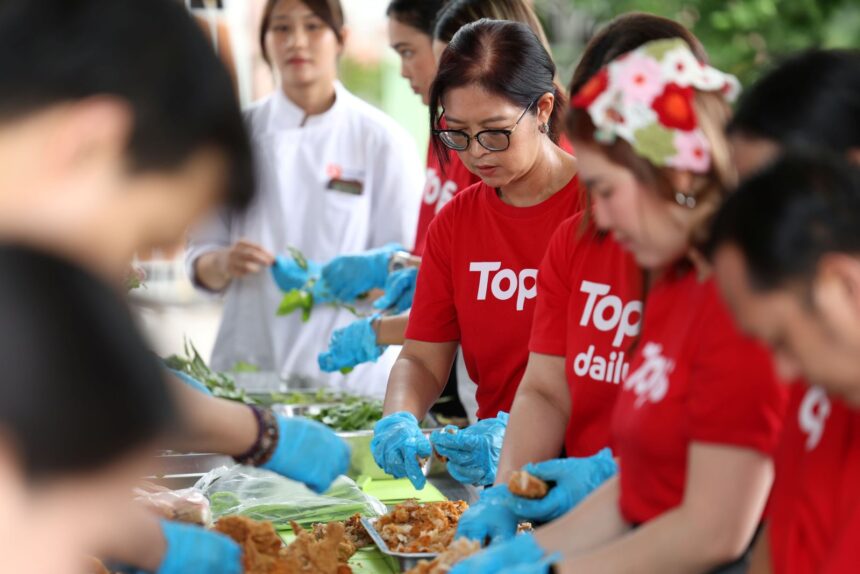
If fruits and holiday treats stay in good condition, families can share them with neighbors, local groups, or social organizations. Even orange peels can be reused, for example, in natural cleaning mixes. Sharing also broadens the holiday spirit, turning a family celebration into a community act of goodwill.
3) Feed: Support Life Within the System
Some food scraps can go to animal feed when handled safely and cleanly. This cuts organic waste and reminds people that food still has value, even when it no longer fits on the table.
4) Return to Earth: Give Back to Nature, Responsibly
Fruit peels and vegetable scraps can become compost. That helps reduce greenhouse gas emissions linked to food waste. Source separation may feel small, but over time, it creates real change, and it turns routine habits into better outcomes for the environment.
These steps do more than reduce food waste. They help families treat leftovers as sustainable blessings, carrying value into daily meals, local communities, and the planet.
Conscious Spending: Shop Mindfully, Prosper Sustainably
To keep Chinese New Year joyful and realistic, TOPS highlights mindful spending through the “TOPS Gives 3 Auspicious Rewards for Chinese New Year” promotion under The Great Chinese New Year 2026 campaign. The promotion supports simpler, more intentional shopping. Customers can plan with confidence, buy what fits their needs, and avoid overbuying.
Members of The 1 can access discount coupons up to 15%, redeem points for extra savings up to 20%, or earn and redeem points for up to 20% cashback through participating credit cards.
This approach keeps value tied to right-sizing, so prosperity can reach beyond the offering table and into everyday spending with peace of mind. Chinese New Year 2026, the Year of the Horse, becomes not only a time to keep tradition, but also a chance to celebrate responsibly, with full blessings, a thoughtful spirit, and care for the planet.
Auspicious offering sets are available at TOPS, TOPS FOOD HALL, TOPS FINE FOODS, TOPS DAILY (at participating branches), and via TOPS ONLINE from today through February 17, 2026.