





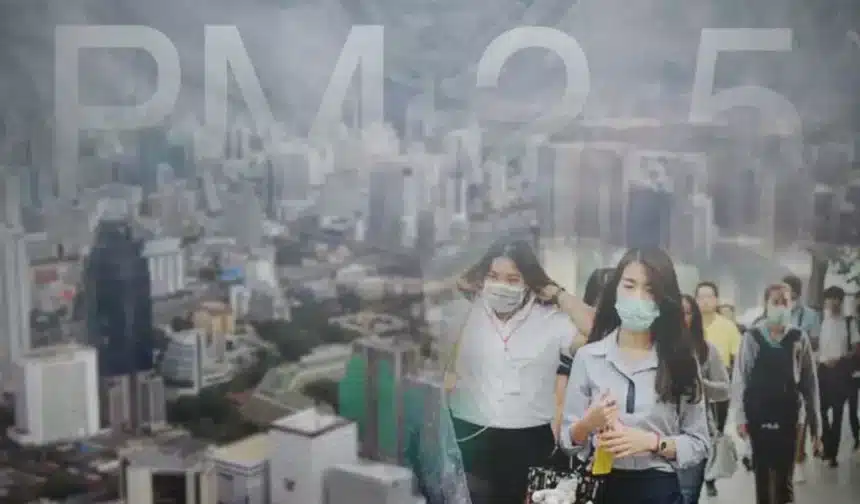
BANGKOK – At 07:00 on Jan 19, 2026, Bangkok woke up to a familiar dry-season problem: fine particulate matter (PM2.5) lingering close to the ground. The Bangkok-wide average was 33.7 µg/m³, compared with Thailand’s daily standard of 37.5 µg/m³.
That average can sound reassuring, but it hides the local spikes. Several districts were already in a range where sensitive people may feel effects first, even if the city average stays under the limit.
This update breaks down the worst-hit districts, explains the numbers in plain language, and concludes with a simple safety plan for residents, parents, outdoor workers, and tourists.
Morning snapshot: the Bangkok districts with the highest PM2.5 right now
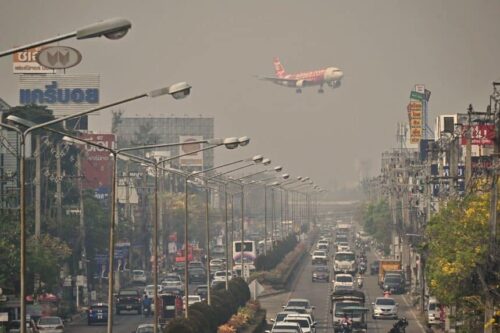

The readings below are PM2.5 in micrograms per cubic metre (µg/m³). These are small particles that can reach deep into the lungs, and they tend to rise and fall with street traffic flow and time of day.
Top readings by district (07:00, Jan 19): Chatuchak leads at 49.0 µg/m³
| Rank | District | PM2.5 (µg/m³) |
|---|---|---|
| 1 | Chatuchak | 49.0 |
| 2 | Pathum Wan | 45.3 |
| 3 | Lat Krabang | 44.4 |
| 4 | Bang Rak | 41.6 |
| 5 | Lak Si | 40.5 |
| 6 | Sathon | 40.2 |
| 7 | Ratchathewi | 39.6 |
| 8 | Khlong Sam Wa | 39.1 |
| 9 | Phra Nakhon | 38.9 |
| 10 | Bang Sue | 38.5 |
| 11 | Prawet | 38.4 |
| 12 | Sai Mai | 37.9 |
Takeaway: most hotspots sat in the upper-30s to 40s, a range that can bother sensitive groups and make long outdoor time feel harder than usual.
For context on how quickly readings can shift day to day, The Nation’s prior update on Jan 18 reported several areas above the standard, with Chatuchak also among the highest (Bangkok PM2.5 rises on Jan 18).
By zone: what “moderate” vs “starting to affect health” means in plain English
Bangkok’s district readings were also summarized by zone:
- North Bangkok: 31.5 to 49.0 (beginning to affect health)
- East Bangkok: 28.9 to 44.4
- Central Bangkok: 27.1 to 39.6
- South Bangkok: 27.2 to 45.3
- North Thonburi: 25.7 to 36.6
- South Thonburi: 23.4 to 34.0 (mostly moderate)
“Moderate” does not mean “no impact.” It often means many people feel fine, while others notice a scratchy throat, irritated eyes, or heavier breathing. Conditions can also vary block by block, especially near busy roads, construction sites, and traffic choke points.
How bad is 49 µg/m³, and who should change plans today?
A number like 49 µg/m³ is not just a statistic. It’s closer to the level where some people start changing routines, the same way a heavy rain forecast changes a commute. The risk is not equal for everyone.
Many people track pollution using AQI in apps. AQI is a scoring system that translates pollution into categories. This report sticks to µg/m³ because it’s the value used in Bangkok’s district updates, but the key point is simple: sensitive groups often feel symptoms before “average” conditions look serious.
A quick guide to PM2.5 levels: what most people feel vs what sensitive groups feel
- In the mid-30s: often feels OK for most people, except near traffic.
- Mid-30s to mid-50s: can trigger symptoms for sensitive groups (asthma, allergies, heart or lung disease, older adults, pregnant people, young children).
- Higher than that: raises risk for more people, especially with long outdoor exposure or hard exercise.
Bodies give feedback faster than charts do. If breathing feels tight or eyes sting, it’s a signal to reduce exposure.
Symptoms to watch for (and when to get medical help)
Common symptoms linked with higher PM2.5 exposure include:
- cough, sore throat
- eye irritation
- shortness of breath
- chest tightness
- wheezing
- unusual fatigue
Get medical help now if there is severe breathing trouble, chest pain, or asthma symptoms that worsen quickly or do not improve after using prescribed medication.
What to do today: a simple PM2.5 safety checklist for Bangkok
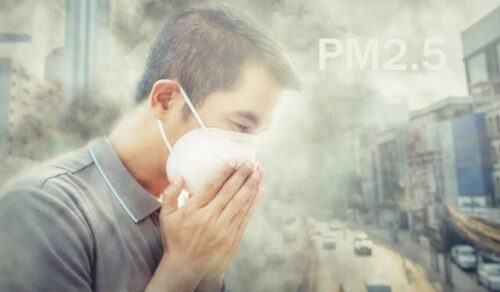

This is not about panic. It’s about cutting exposure in practical ways, especially in districts in the high 30s to 40s this morning.
- General public: reduce long outdoor stays, avoid peak-traffic walking routes, and keep windows closed during dirtier hours.
- At-risk groups: prioritize masks outdoors, choose indoor errands, and keep meds (inhalers) close.
- Schools and parents: scale back hard outdoor activity when local readings sit in the high-30s to 40s, watch for coughing or wheezing.
- Outdoor exercise: shorten duration, lower intensity, and avoid routes along roadsides.
- Tourists: adjust schedules, add indoor stops, and take breaks in filtered spaces.
Mask basics that actually work for PM2.5 (N95 or KN95)
Cloth and surgical masks were not built to filter fine particles well. N95 or KN95-style respirators usually perform much better for PM2.5 when worn correctly.
A fast fit check:
- Cover nose and chin
- Press the nose wire to seal
- Keep straps snug
- Exhale gently; air should not leak around the edges
Who should prioritize respirators today: older adults, pregnant people, people with asthma or heart disease, and outdoor workers. Children should only wear masks that fit safely and comfortably.
Indoor air that feels better: filtration, sealing gaps, and a safe DIY option
Indoor air can be cleaner than outdoor air, but only if pollution isn’t drifting in.
Practical steps for today:
- Close windows during peak pollution, especially near traffic
- seal gaps with towels or simple weatherstripping
- Run a true HEPA air purifier sized for the room
- If using AC, switch to recirculate when possible
- avoid indoor smoke, incense, and candles
A DIY option is a box fan plus a high-quality filter. It can help in a pinch, but it needs care. Use a stable setup, keep it away from curtains, and do not leave it unattended around children.
For schools and offices: set up one “cleaner air” room, keep doors closed, and replace or clean filters on schedule.
Why Bangkok’s PM2.5 spike in January, and how to track it day by day
January often brings weather that traps pollution near street level. When that happens, daily routines and traffic patterns matter more because the air does not clear as quickly.
The usual drivers: weak winds, temperature inversions, traffic, and the regional haze season
In the cool season, weak winds can let pollution build up. Temperature inversions (a layer of warmer air above cooler air) can act like a lid, trapping pollution close to the ground.
Local sources, such as traffic and construction activity, add particles. Regional haze can also add to the mix during the dry season. Day-to-day conditions change, so it’s best to track actual readings rather than guess.
How to monitor Bangkok air quality so you can plan your day
Official and widely used sources help with planning:
- Bangkok’s AQI and station updates from the Bangkok Air Quality (AirBKK) AQI page
- Citywide and neighborhood views from IQAir’s Bangkok air quality page
- Another real-time AQI view at AQICN’s Bangkok page
Simple planning tips: move workouts indoors, pick routes away from curbside traffic, and schedule outdoor errands when readings dip.
FAQ: quick answers about Bangkok PM2.5 today
Do I need an N95 in Bangkok today?
In districts with high-30s to 40s µg/m³, an N95 or KN95 is a good choice for sensitive groups and for anyone spending hours outdoors. For others, it can be optional, depending on symptoms and time outside.
Is it safe for kids to do PE or sports outside?
When local PM2.5 is in the high 30s to 40s, schools may move PE indoors or reduce intensity. Staff should watch for coughing, wheezing, or unusual tiredness, and check the nearest local reading, not a citywide average.
Can I still run or cycle outdoors, and what is a safer approach?
Outdoor exercise is possible, but a safer approach is to keep sessions short, keep intensity low, and choose routes away from main roads. Indoor cardio is often the better option on mornings when multiple districts are near 40-50 µg/m³.
What’s the difference between PM2.5 and AQI?
PM2.5 is the measured concentration of fine particles (µg/m³). AQI is a score that converts pollution into health categories that are easier to scan in apps.
What should tourists do if they plan to visit temples, markets, or parks?
Early hours can sometimes feel better, but conditions vary. Tourists can add indoor stops, take breaks in malls or museums, and wear a respirator in crowded outdoor areas. People with asthma should keep their meds handy and avoid heavy exertion.
What air purifier should I buy for a condo room?
Look for a true HEPA purifier and match it to the room size. A simple buying rule is to choose a unit rated for a slightly larger room than the actual space, then replace filters on schedule.
Conclusion
Bangkok PM2.5 readings at 07:00 showed a citywide average of 33.7 µg/m³, under Thailand’s 37.5 µg/m³ daily standard, but several districts reached levels where sensitive groups may feel effects.
Chatuchak had the highest at 49.0 µg/m³, with many hotspots clustered in the upper 30s to 40s. The practical focus today is simple: check local readings, use N95 or KN95 when needed, scale back outdoor exertion, and clean indoor air with filtration.
Sources and reporting notes: District and zone readings cited from Bangkok Air Quality Information Centre (BMA) reporting, with health context aligned to Thailand Pollution Control Department guidance and WHO guidance on PM2.5 health risks.