




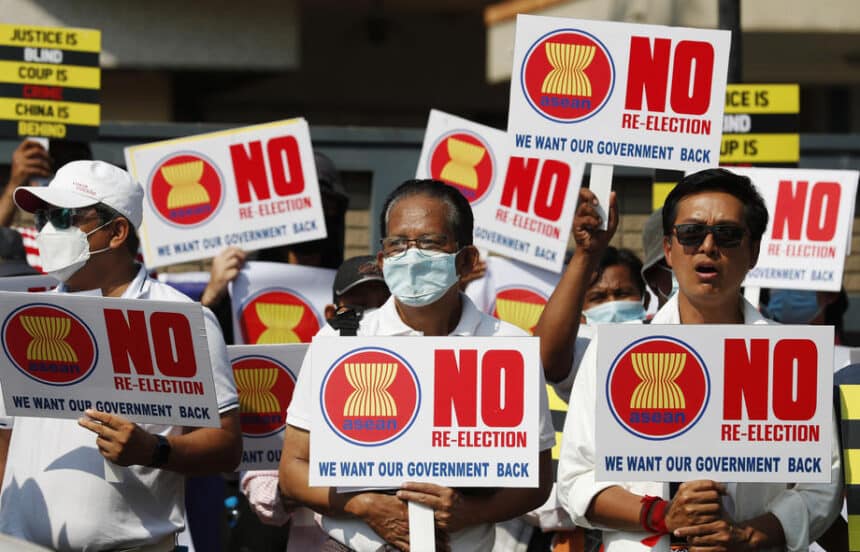
KUALA LUMPUR- ASEAN has refused to endorse Myanmar’s ongoing elections under military rule, dealing a blow to the junta’s push for regional acceptance. Malaysia’s Foreign Minister, Mohamad Hasan, said on 20 January 2026 that the 11-member group would not certify the vote, pointing to the lack of free and inclusive participation.
The position follows talks between ASEAN leaders at the Kuala Lumpur summit in October 2025. At that meeting, the bloc turned down Myanmar’s request for official ASEAN election observers, saying the situation on the ground did not support a credible process. Some member states chose to send their own bilateral observers, but ASEAN as a bloc stayed out.
“We didn’t send observers and by virtue of that, we don’t certify the election,” Mohamad Hasan told parliament in Kuala Lumpur. He said ASEAN had pushed for full and open participation, not a staged process carried out under tight limits that shut out major political figures and parties.
Voting began in late December 2025 and is being held in three phases, with the final round expected soon. The military leadership, led by Senior General Min Aung Hlaing since the February 2021 coup, has presented the elections as a return to multi-party democracy and a way to ease tensions during a brutal civil war.
Human Rights Groups and Opposition call the Vote a “Sham.”
Human rights organisations, opposition groups, and activists in exile have rejected the process, saying it cannot be called free or fair. They argue the vote is mainly designed to dress up military control with the appearance of legitimacy.
Major opposition parties, including the National League for Democracy (NLD), have been dissolved or blocked, and thousands of political prisoners remain detained.
Critics also point to harsh crackdowns linked to new election rules. They say people have been arrested for criticising the polls, and even social media activity, including “likes”, has led to detention.
Large parts of the country remain outside voting plans because of fighting and because areas are controlled by ethnic armed groups and resistance forces, which further weakens any claim that the results represent the whole nation.
Several Western governments have made the same case, describing the vote as a sham meant to cement military rule. The United States, the United Kingdom, the European Union, and others have refused to send observers and have criticised the elections as lacking legitimacy.
Human Rights Watch called the polls a “fraudulent claim for credibility”, while UN experts urged ASEAN and other international partners not to lend support to what they described as a “charade”.
Aung San Suu Kyi’s detention
The European Parliament and other bodies have pointed to missing basics, including freedom of expression, press freedom, and broad participation. They argue that accepting the outcome would reward abuses by the junta and weaken support for pro-democracy voices in Myanmar.
International concern also centres on the continued detention of Aung San Suu Kyi, the Nobel Peace Prize winner and Myanmar’s best-known pro-democracy leader. Removed from office in the 2021 coup, she has been held ever since. She is serving a 27-year sentence, reduced from an earlier 33 years, on charges widely seen by critics as politically driven, including incitement, corruption, and election-related offences.
By January 2026, Suu Kyi had spent about 20 years in detention across her life, around 15 years under earlier military rule and five more since the coup. She is now 80 and reported to be in poor health.
She is said to be held under strict prison conditions with little access to family, legal support, medical care, or personal items such as books and her piano. Her son, Kim Aris, has voiced worries about her welfare, while the junta says she is “in good health” without independent checks.
Even in isolation, Suu Kyi remains a strong symbol for many who oppose military rule. Calls for her release are often tied to demands for an end to the civil war and a return to civilian government. The junta’s refusal to engage with key opposition figures like her adds to claims that the elections are built on exclusion.
The Five-Point Consensus
ASEAN’s refusal to endorse the polls underlines how hard the bloc has found it to respond to Myanmar since the coup. The Five-Point Consensus, agreed in 2021, called for dialogue, humanitarian access, and an end to violence, but the military authorities have not met those commitments in full. By not certifying the election, ASEAN has taken a clearer line than usual, though critics say stronger pressure is still needed.
Myanmar’s civil war continues to uproot millions and deepen suffering. Resistance forces have made gains in some areas, challenging the military’s hold. Rather than calming the crisis, the elections may harden divisions and extend the conflict.
Neighbouring countries, including Thailand, are watching closely. ASEAN’s position could shape future diplomacy, but the message for now is plain: legitimacy in Myanmar will not come from controlled elections under military rule; it will require real participation and respect for human rights.