





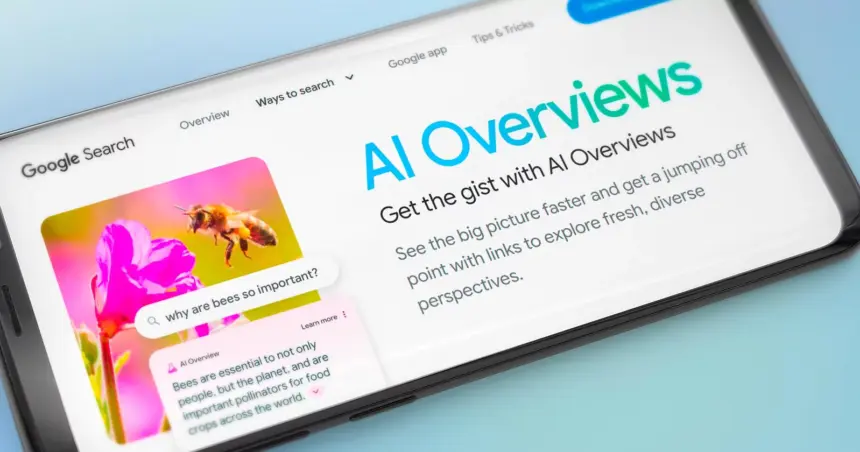
Google’s AI Overviews are short, AI-written summaries that appear at the top of some search results, with links meant to show where the information came from. A new analysis of German health searches found that YouTube was cited more than any medical website in those summaries.
That matters because health is “Your Money or Your Life” content, where a wrong detail can cause real harm. The practical takeaway is simple: treat AI summaries as a starting point, check claims against trusted health authorities, and talk to a clinician when symptoms or medication decisions are involved.
What the study actually measured
The research looked at 50,807 health-related search queries and recorded what appeared in Google results in a single sweep. The searches were run from Berlin, in German, and captured as a one-time snapshot in December 2025. That matters because AI Overviews change over time, can vary by location, and can shift when a query is phrased slightly differently.
In this context, a “citation” means a source linked or credited inside the AI Overview itself, not the traditional blue-link ranking. The dataset counted those citations across all queries and then compared which domains appeared most often.
A key limit is scope. One city, one language, one capture window. The numbers describe what Google showed under those conditions, not a fixed rule for every country or every month. The details were published by SE Ranking’s analysis of health AI Overviews, which has driven wider discussion about Google AI Overviews medical citations.
Why Germany was a useful test case
Germany is often seen as a strong environment for studying health information quality because the system operates under EU rules, with tight expectations around medical claims and consumer protection. Researchers can use that setting to see whether AI summaries still lean toward broad platforms instead of classic medical references.
At the same time, the results shouldn’t be treated as universal. Search features vary by market, and health content ecosystems differ by language. The Germany snapshot is best read as a clear signal that citation behavior can surprise people, even in a regulated healthcare context.
Key findings (with numbers) from the YouTube citation study
The headline is reaching. AI Overviews appeared on more than 82% of the health queries sampled. That makes health one of the most AI-saturated search categories in the dataset.
Here are the core numbers reported:
| Metric | Reported result |
|---|---|
| Health queries analyzed | 50,807 |
| Total AI Overview citations counted | ~465,823 |
| AI Overviews shown | 82%+ of queries |
| YouTube citations | 20,621 |
| YouTube’s share of all citations | ~4.43% |
The domain ranking also stood out. YouTube was the most cited domain, ahead of well-known medical and publisher sites. Other frequently cited domains included NDR.de, MSD Manuals, NetDoktor, and Praktischarzt, which creates a clear contrast between a video platform and more traditional health references.
The analysis also found that AI citations don’t always match classic ranking. Only about 36% of AI-cited links appeared in the top 10 organic results for those queries. The overlap rose to about 54% in the top 20, and about 74% in the top 100. The message is straightforward: AI Overviews may credit sources that many users would not see if they scrolled through standard results.
More coverage of the same dataset and its implications appears in industry reporting, including Search Engine Journal’s summary of the study and Search Engine Land’s write-up.
What “YouTube is the top source” does, and does not, prove
A high citation count doesn’t automatically mean the information is wrong. YouTube includes reputable content from hospitals, universities, and licensed clinicians, alongside content from creators with no medical training.
The study also points to an important nuance: among the top 25 cited YouTube videos, 96% were from medical channels. That sounds reassuring, but those videos made up under 1% of all YouTube links cited in the dataset. The wider set of cited videos could include a much broader mix, and the study doesn’t claim otherwise.
So the finding is less about “YouTube is bad,” and more about how Google AI Overviews medical citations may tilt toward a platform where quality varies widely.
Why YouTube shows up so often in Google AI Overviews
There are several plausible reasons YouTube appears so often in AI Overviews and YouTube citations, without assuming intent or misconduct.
First, video can answer common health “how-to” questions fast. People often search for things like stretches, symptom explanations, or how a test works. A short video can seem more direct than a long article.
Second, YouTube is one of the strongest domains on the web. It has broad visibility, massive coverage across health topics, and a consistent technical structure that machines can parse well.
Third, medical professionals do publish there. Many clinics and hospitals use video to explain procedures, rehab routines, and medication basics. If a system is trying to pull from multiple formats, YouTube becomes an easy candidate.
Finally, engagement signals may play a role. Watch time, shares, and strong user interaction can correlate with visibility, even when those signals don’t track medical accuracy.
Platform strength vs medical reliability: the ranking mismatch problem
The citation mismatch in the study highlights a basic tension. A powerful platform can be highly visible even when a smaller, expert source has better medical review practices. That’s not unique to YouTube, but it becomes more visible when a summary is pulled from it.
AI systems can also pick citations that aren’t the top organic results. That makes it harder for users to rely on familiar cues, like “the first few blue links are usually the most vetted.” In practice, the AI layer can create a new pathway for algorithmic amplification, where reach and convenience compete with medical authority.
Why this is risky for health searches (and what can go wrong)
Health searches are classic YMYL (Your Money or Your Life) content. The bar is higher because the downside is higher. Even a small error or a missing warning can cause harm.
Common failure modes are easy to imagine:
- Self-diagnosis that delays care for serious symptoms.
- Misreading lab results and assuming everything is fine.
- Confusion over dosing, timing, or mixing medicines.
- Ignoring “red flag” symptoms because a summary sounds calm.
- Choosing “natural cures” instead of proven treatment plans.
This isn’t about scaring people. It’s about recognizing that generative AI summaries can compress complex topics into a few sentences. Compression can remove safety context, and health often depends on context.
The confidence problem: when a summary sounds certain but is missing context
AI summaries often read like a final answer. That tone can mask the fact that health advice depends on age, existing conditions, pregnancy status, other medications, and many other factors.
The Guardian’s January 2026 reporting described cases where AI-generated health summaries produced claims that medical experts criticized as unsafe or misleading, and it reported that Google removed some summaries after review. The broader worry is simple: a confident paragraph can feel like medical advice, even when it’s missing the key details that a clinician would ask first.
What Google says vs what critics worry about
Google’s position is that AI Overviews are meant to help people get oriented quickly and that high-quality information can come in many formats, including video. In health topics, it’s also true that credible organizations publish on YouTube, and videos improve understanding for many users.
Critics focus on structural risk. If popularity and platform strength outweigh medical authority, AI Overviews may steer attention toward sources that don’t have consistent expert review. Others point to past examples of misleading AI outputs in health contexts, and to reports that some medical AI Overviews were reduced or removed after scrutiny. The concern is not that errors happen once, but that small errors at scale can shape behavior.
For publishers tracking traffic shifts, this also links to a practical question: if summaries answer the query, fewer people may click through to carefully reviewed medical pages, which changes incentives across the health information ecosystem.
How to use Google AI Overviews safely for medical questions
A short checklist can reduce risk without adding much effort:
- Treat AI Overviews as orientation, not a diagnosis.
- Verify key claims with official health authorities (CDC, WHO, NHS, or local equivalents).
- Cross-check with at least two independent sources.
- Prefer pages that cite clinical guidelines or peer-reviewed references.
- Check author credentials, medical review details, and review dates.
- Be cautious with symptoms, medication changes, dosing, and interactions.
- Use the summary to generate questions to ask a clinician, not decisions.
- Don’t change prescription or supplement use based on a summary.
- Take extra care with content about children and pregnancy.
- For urgent warning signs, seek immediate medical care rather than searching.
For a broader look at everyday AI tools and how people use them for quick answers, see Top free AI tools for 2026 and Best AI tools for 2025, with the same basic rule in mind: speed is helpful, but verification matters more in health.
A quick “trust test” for any cited YouTube video
A fast screen can catch many problems:
- Who runs the channel, and are credentials clear?
- Does the description cite guidelines or reputable references?
- Are there obvious sponsors or conflicts that shape claims?
- Is the video current, or tied to old guidance?
- Do the claims match what major health bodies publish?
- Do comments show repeated corrections (a clue, not proof)?
How creators and health publishers should respond (without gaming the system)
The data creates pressure on responsible publishers to meet audiences where they are, including on video, while keeping standards high.
Practical steps that support trust:
- Put author credentials and roles in plain view.
- Add a medical reviewer with a visible review date.
- Cite guidelines and studies, and keep references current.
- Update older pages and video descriptions when guidance changes.
- Avoid sensational thumbnails and absolute claims.
- Include a plain-language summary, plus clear safety disclaimers.
- Publish both video and text versions, so people can verify details.
- Correct errors quickly and visibly.
For health organizations, the goal isn’t to chase citations. It’s to publish content that holds up when condensed into short summaries, and to make sources easy to check.
FAQ: quick answers about AI Overviews and medical citations
Why does Google AI Overviews cite YouTube so much for health queries?
Video matches many health searches, and YouTube is a dominant domain with huge coverage. Many clinicians and hospitals publish there, which can raise the share of usable health content. The platform also includes unverified creators, so citation volume alone doesn’t guarantee quality.
Is AI Overviews safe for medical advice?
It can help as a starting point for a basic background. The risk rises sharply for symptoms, medication decisions, dosing, and urgent conditions. For those topics, verification and professional care matter more than speed.
Can Google AI Overviews be wrong?
Yes. Summaries can be incomplete, outdated, or incorrect, and they may miss key exceptions. That’s why cross-checking matters, even when the language sounds confident.
What should I do if an AI Overview conflicts with my doctor?
Clinical guidance should take priority. Saving a screenshot or link can help support a follow-up conversation, but self-adjusting treatment based on a summary is risky.
How can I turn off AI Overviews?
Options vary by region and account, and they change over time. When available, using “Web” results filters can reduce AI features, and more targeted searches (including “site:” queries or adding “PDF”) can help steer results toward official documents.
What sources should I trust for health info online?
Government health agencies, major hospital systems, medical associations, and patient guidance pages with clear authorship and review dates are strong starting points. Clinical guidelines and peer-reviewed references matter most for treatment claims.
Sources and reporting notes
This article is based on reporting about Google AI Overviews, medical citations,s, and the SE Ranking analysis of German health queries. The study details and statistics come from SE Ranking’s research post, and the broader public debate has been shaped by journalistic reporting, including the Guardian’s January 2026 coverage and follow-up discussion in search industry outlets such as Search Engine Journal and Search Engine Land.
This article is for information only, not medical advice. For symptoms, medication questions, or urgent concerns, seek professional medical care.
Conclusion
The study’s main point is clear: Google AI Overviews medical citations for health searches often point to YouTube more than dedicated medical sites. That creates opportunity, because expert video can explain complex topics quickly. It also creates risk, because the platform mixes vetted medical content with content that has no consistent review.
The safest habit is also the simplest one: verify before acting. A short AI summary can be useful, but it shouldn’t be the final step for health decisions.
As AI Overviews evolve, citation patterns will likely shift again. The public will be watching which sources rise, which fall, and whether the system rewards medical authority as strongly as it rewards reach.